Tag

Manhattanhenge

All articles tagged with #manhattanhenge

Manhattanhenge 2026: Four Sunset Alignments Across NYC's Grid
space8 days ago

Manhattanhenge 2026: Four Sunset Alignments Across NYC's Grid

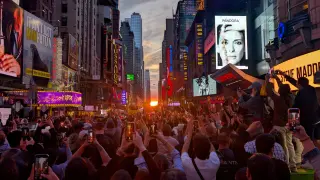
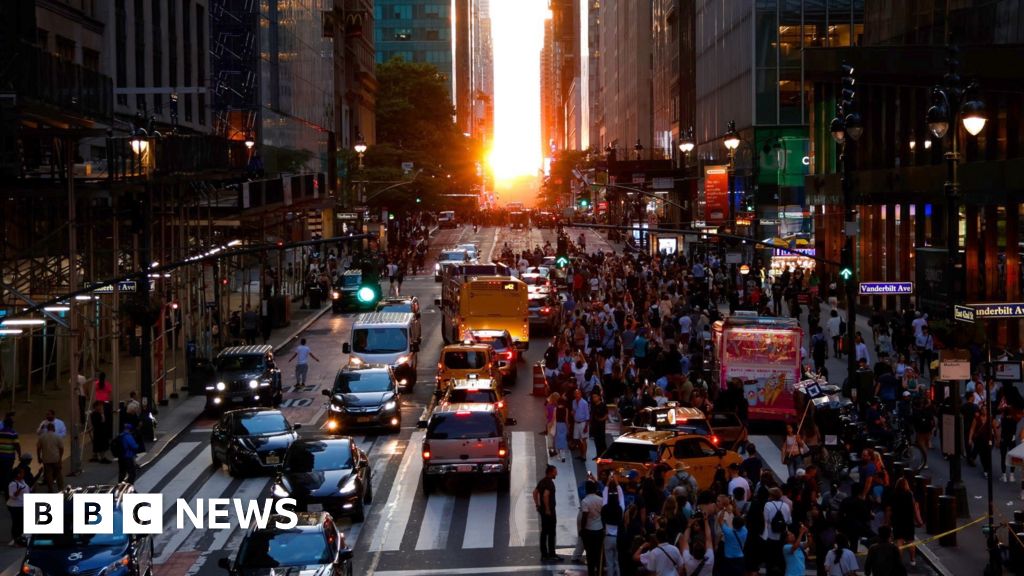
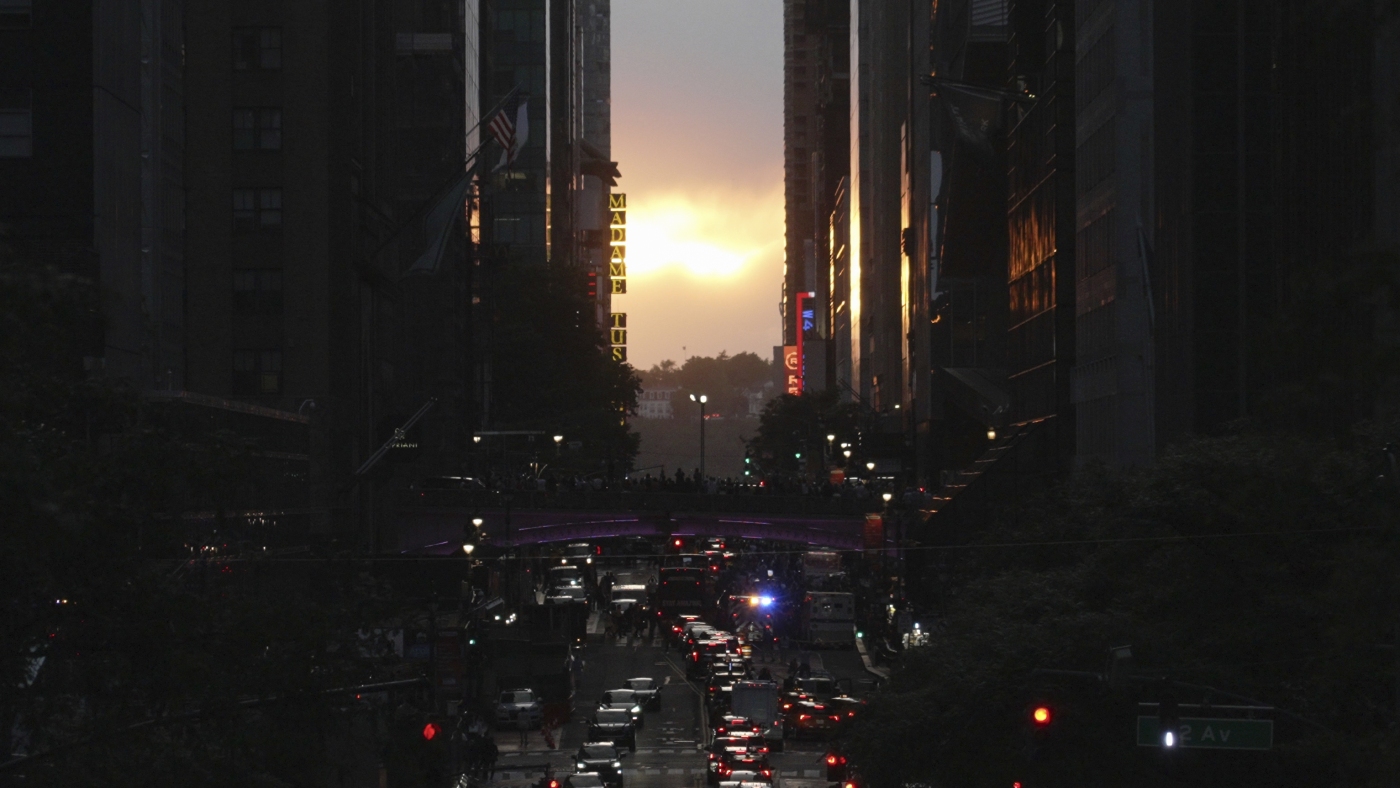
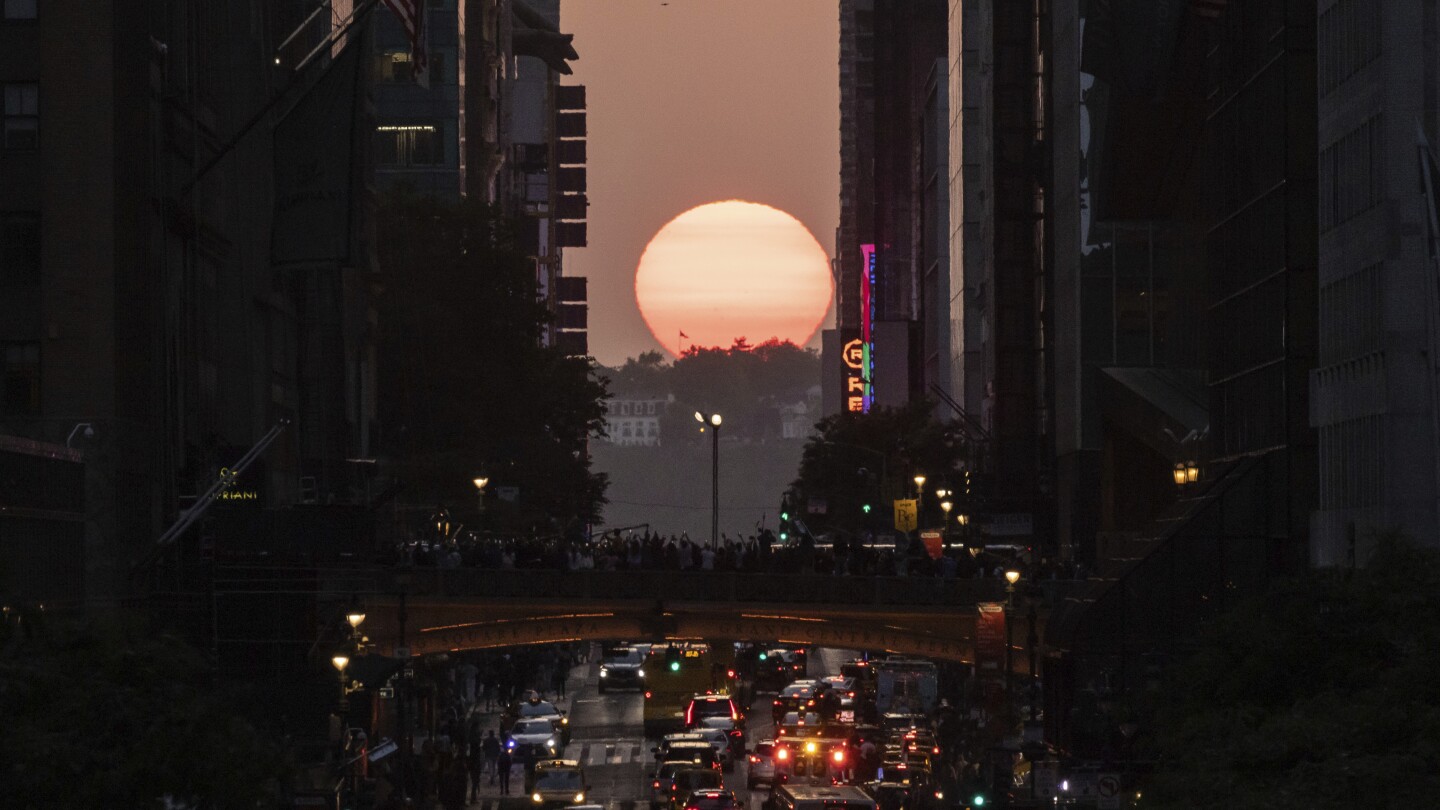
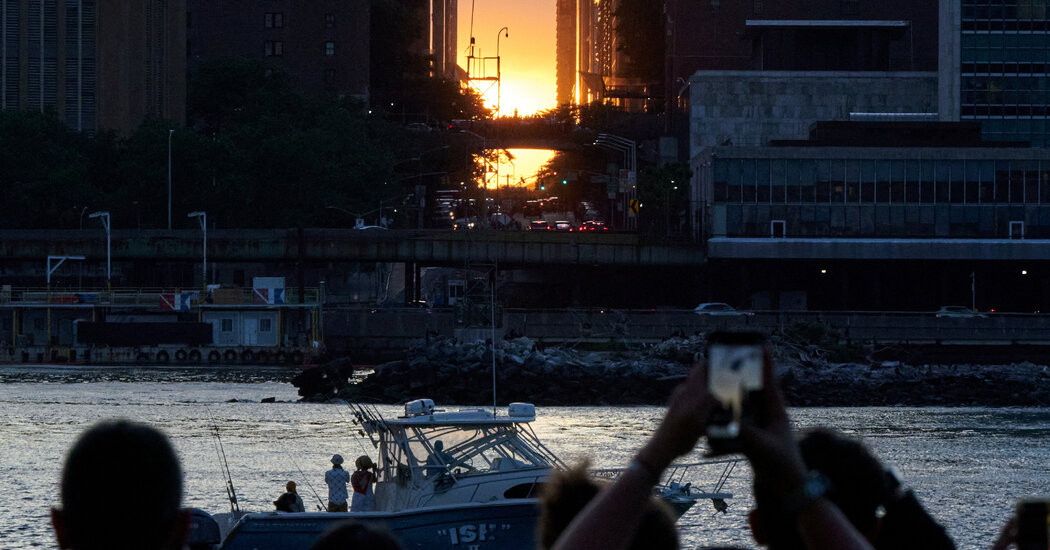
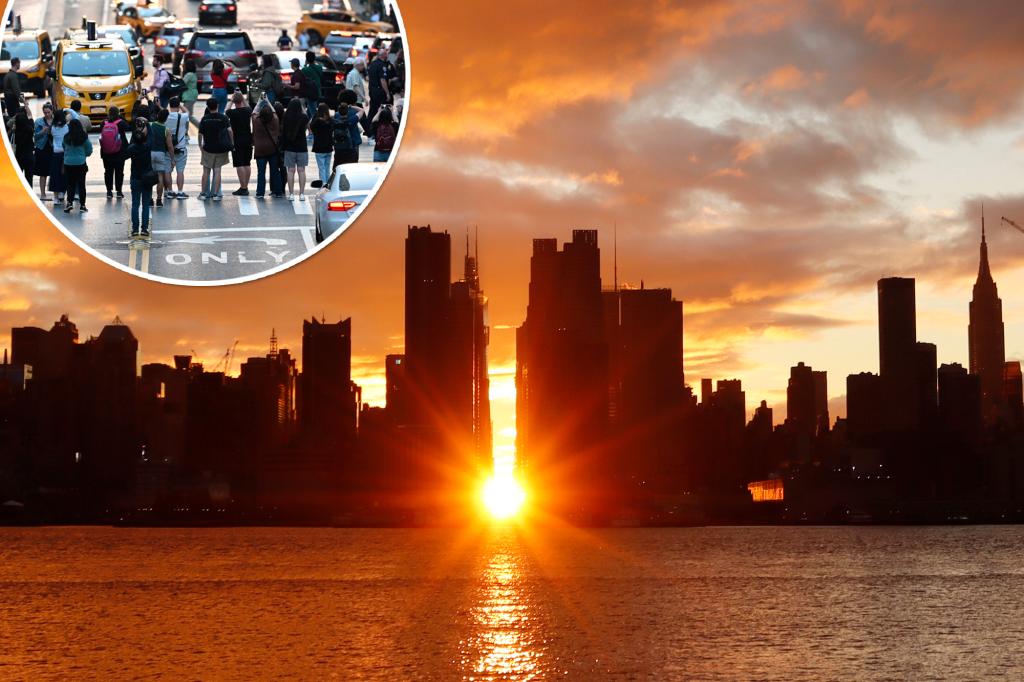
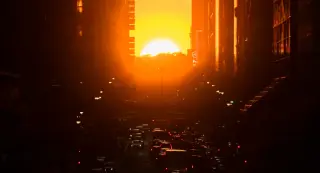
Manhattanhenge 2026 offers four opportunities to see the sunset align with Manhattan's cross streets: May 28 (half sun, 8:14 p.m. EDT), May 29 (full sun, 8:13 p.m. EDT), July 11 (full sun, 8:20 p.m. EDT), and July 12 (half sun, 8:21 p.m. EDT). Best viewing spots are the east–west cross streets at 14th, 23rd, 34th, 42nd and 57th Streets looking west toward New Jersey, with the Empire State Building and Chrysler Building providing striking backdrops. The effect arises from Manhattan’s 1811 grid tilted about 30 degrees east of true north, so the alignments occur in late May and early July. A separate morning Manhattanhenge occurs around December 9–10 and January 1, though visibility is more hindered by buildings and colder air. Arrive about 30 minutes early to secure a good view.

"Manhattanhenge 2024: NYC's Iconic Sunset Returns"
science-and-nature2 years ago

"Manhattanhenge 2024: NYC's Iconic Sunset Returns"

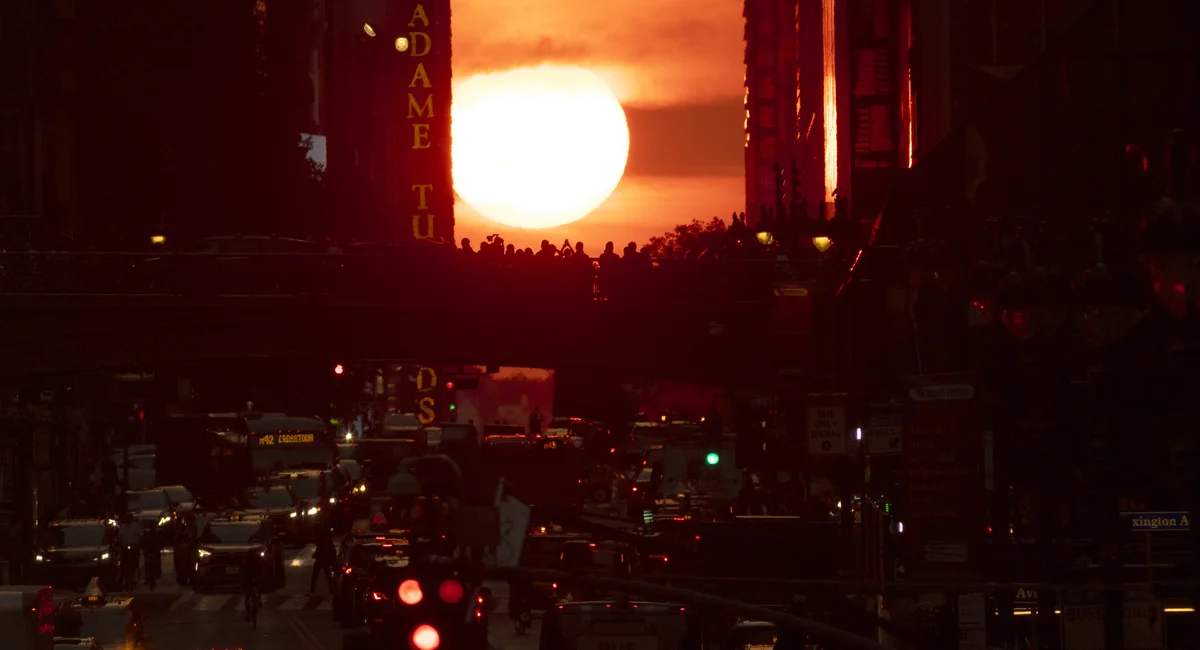
Manhattanhenge is a biannual event where the setting sun aligns perfectly with Manhattan's street grid, creating a stunning visual effect. Coined by astrophysicist Neil deGrasse Tyson, this phenomenon occurs around the summer solstice and draws large crowds eager to capture the golden hour light framed by the city's skyscrapers. The best viewing spot is on 42nd Street, but it can be challenging to see from below 14th Street.

"Manhattanhenge 2024: When and Where to Watch NYC's Sunset Spectacle"
science-and-nature2 years ago

"Manhattanhenge 2024: When and Where to Watch NYC's Sunset Spectacle"

Manhattanhenge is a biannual event where the setting sun aligns with Manhattan's street grid, creating a striking visual framed by skyscrapers. Coined by astrophysicist Neil deGrasse Tyson, this phenomenon occurs around three weeks before and after the summer solstice. Key viewing dates are May 28-29 and July 12-13, with popular spots including 14th, 23rd, 34th, 42nd, and 57th Streets. Similar events occur in other cities with grid systems, but Manhattanhenge is unique due to the city's tall buildings and clear view to the Hudson River.

Manhattanhenge 2024: Best Viewing Spots and Times in NYC
events2 years ago

Manhattanhenge 2024: Best Viewing Spots and Times in NYC

Manhattanhenge, the phenomenon where the Sun aligns perfectly with Manhattan's east-west streets, returns on May 28, 2024. This event, which occurs twice a year, offers stunning sunset views and photo opportunities. The best viewing spots include 14th, 23rd, 34th, 42nd, and 57th Streets. The term was coined by astrophysicist Neil deGrasse Tyson, inspired by Stonehenge. If missed, the next Manhattanhenge will be on July 12 and 13.

"Unveiling the Phenomenon: The Reverse Manhattanhenge Explained"
astronomy2 years ago

"Unveiling the Phenomenon: The Reverse Manhattanhenge Explained"

On Thursday morning, a rare "reverse" Manhattanhenge event will occur in New York City as the sun rises between skyscrapers, offering a unique spectacle for early risers. Unlike the traditional westbound Manhattanhenge, this event will be visible from the east and is best viewed at street level around 7:11 a.m. The intersection of 41st Street & 5th Avenue and spots along the Weehawken waterfront are recommended for optimal viewing. Additionally, upcoming full and half-sun Manhattanhenge events are scheduled for May and July, with specific dates and viewing locations provided.

"July 2023 Skywatching Guide: NASA's Tips and Must-See Celestial Events"
astronomy2 years ago

"July 2023 Skywatching Guide: NASA's Tips and Must-See Celestial Events"

July 2023 offers several exciting opportunities for astrophotographers, including the chance to capture the Milky Way high in the sky, the Super Buck Moon, the Manhattanhenge phenomenon in New York City, the bright Venus, the dark sky window for photographing the Milky Way, the Perseid meteor shower, and the Delta Aquariids meteor shower peak. Photographers are advised to plan their shoots carefully, considering moonrise times and locations with minimal light pollution.