Cantwell Proposes Six-Point AI Safety Framework for Commerce Committee
Sen. Maria Cantwell has released a six-point framework for AI safety, positioning her as a potential leader on the issue if Democrats win the 2026 midterms.

All articles tagged with #nist
Sen. Maria Cantwell has released a six-point framework for AI safety, positioning her as a potential leader on the issue if Democrats win the 2026 midterms.

Anthropic reports that Zhipu AI's GLM-5.3 is the first open-weight model capable of autonomously building end-to-end cyber exploits without effective safeguards. While its capabilities match Anthropic's restricted 'Claude Mythos Preview,' GLM-5.3 is freely downloadable and its safety filters can be easily bypassed, significantly lowering the barrier for malicious cyberattacks.

After a decade of blind testing and meticulous analysis, NIST researchers reported G = 6.67387 × 10^-11 m^3 kg^-1 s^-2, about 0.0235% lower than the 2007 BIPM result, a small but persistent discrepancy that leaves big G less precisely known than other fundamental constants; the experiment used a torsion balance with copper and sapphire masses, included air-pressure corrections, and the blinding correction was recovered from a sealed envelope.

NIST researchers transmitted polarization-entangled photons across 62 kilometers (38.5 miles) of existing, above-ground fiber in real-world conditions, maintaining entanglement despite environmental noise by using a laser reference to calibrate corrections. The setup operated with 200–1,500 entangled photons per second, showing feasibility for practical quantum networks and potential uses in quantum-secure communications and distributed telescopes, though faster hardware and better software are needed for a full quantum internet.
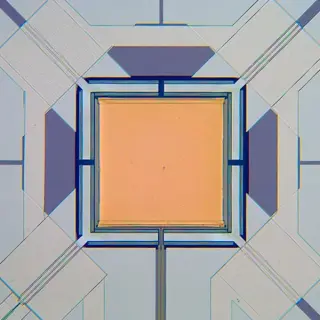
NIST and SRI International are creating the Quantum Manufacturing Engineering Center (QMEC) with an initial $20 million to accelerate the scalable manufacture of high‑performance quantum components and systems, address manufacturing barriers, and strengthen the U.S. quantum industry through public‑private collaboration and connections to the Quantum Economic Development Consortium (QED-C).

The White House is fast-tracking the U.S. shift to post‑quantum cryptography with a new executive order that requires agencies to appoint PQC leads within 30 days, move high‑value assets to quantum‑resistant keys by end‑2030 and adopt PQC digital signatures by end‑2031. NIST will launch a PQC migration pilot within 180 days, and OMB must issue new guidance within 90 days, while procurement reforms and centralized support are also mandated. While the move addresses long‑term security against quantum threats, experts warn funding gaps, data‑lifecycle concerns, and the scale of cloud, vendor, and contractor transitions present major challenges ahead.

The White House issued an executive order to speed up the adoption of quantum-resistant cryptography, requiring high-value assets to switch to PQC key establishment by December 31, 2030 and to PQC digital signatures by December 31, 2031. The move shortens timelines by about 4–5 years and establishes government-wide coordination, new procurement rules for contractors, and guidance on a cryptographic bill of materials, all in response to advancing quantum computing and the risk of future decryption of stored data. The plan relies on collaboration with NIST, DoD, DHS, and other agencies, and marks a shift from earlier 2035–2033 targets for many systems.

The final NIST report says the 2021 Surfside Champlain Towers South collapse began weeks earlier, with failing garage connections and an inadequately designed pool deck, worsened by later alterations that stressed an already weak structure. Noncompliant design with code standards, plus corrosion and leaks, left margins too narrow and set the stage for the disaster that killed 98 and spurred condo-reserve reforms.

A final NIST report says the Surfside Champlain Towers South collapse began weeks before it fell, when two garage-to-pool-deck connections started failing around early June. The building’s design did not meet code, later alterations and long‑term corrosion further reduced margins against failure, contributing to a slow, deadly collapse that killed 98 people and spurred settlements and Florida maintenance-law changes for condo associations.

Federal investigators found that Champlain Towers South’s collapse was preceded by a three-week period of progressive failures: cracks grew as the pool-deck garage columns failed and weight was redistributed to weaker adjacent slabs, ultimately causing part of the 12‑story building to fall in June 2021, killing 98 people.

A NIST investigation into the Surfside, Florida condo collapse found warning signs weeks earlier, including a long crack in a planter wall on the pool deck, water leaks in the parking garage, and corroded reinforcing steel, with the destruction unfolding as sections failed in sequence; lawmakers later enacted laws to bolster condo reserves and maintenance requirements.

The White House issues an executive order mandating a federal shift to post-quantum cryptography to protect national security against quantum threats. It assigns PQC migration leads, requires HVAs and high-impact systems to migrate to PQC for key establishment by 2030 and for digital signatures by 2031, and launches a NIST pilot by 2027. The plan emphasizes cross‑agency coordination (OMB, National Cyber Director, CISA, NSA), updated procurement rules, a cryptographic bill of materials, and international engagement to accelerate PQC adoption across federal agencies and critical infrastructure.

The National Institute of Standards and Technology added 41 new cannabinoid spectra to its mass-spectral library (Standard Reference Database 1A), increasing cannabis-related entries to 121. The update emphasizes rare side-chain homologs and derivatives to improve identification of uncommon cannabis compounds for forensics, biomedical research, food science and environmental testing.
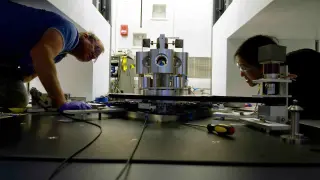
An NIST redo of the 2007 BIPM measurement of the gravitational constant G, using a blinded-envelope approach to avoid bias, yields a result close to the French value but with a 0.0235% discrepancy after adjustments; Schlamminger also identifies a newly observed spurious torque driven by temperature gradients and residual gas in the vacuum, suggesting unaccounted biases in the uncertainty budget and underscoring the ongoing challenge of precisely measuring G and the importance of reproducibility.
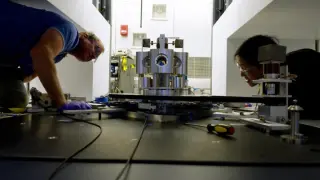
NIST researchers spent a decade replicating a Cavendish-style experiment to measure Big G, testing copper and sapphire masses with an electrostatic twist, and report G = 6.67387×10^-11 m^3/kg/s^2—about 0.0235% lower than the BIPM value. The result adds another data point but does not resolve the long-standing discrepancy, highlighting gravity’s weakness and Earth’s background noise as ongoing challenges — while advancing precision instrumentation and metrology.