Meta Platforms’ shares rose about 7% after Amazon blocked Muse, Meta’s AI shopping agent, from operating on Amazon’s marketplace, highlighting how platform gatekeeping can curb the monetization potential of AI shopping tools even as META’s stock momentum remains strong.
Meta reached a landmark multi-billion-dollar settlement with 29 states over alleged teen harm from Instagram and Facebook, agreeing to safeguards such as daily time limits, pauses for notifications during school hours, stronger parental controls, age-appropriate content restrictions, and independent audits. A portion of the payout may be reserved for YouTube and TikTok to implement parallel safeguards; the case is seen as a major test of the tech industry’s responsibility for youth welfare, with CEO Mark Zuckerberg expected to testify. Meta says the settlement is a fraction of its 2025 revenue.
Meta Platforms’ shares slipped about 1.6% as a high‑stakes Oakland trial opened, with 29 states accusing Meta of improperly collecting and using children’s data and four states pushing broader challenges to platform design and safety claims. The trial, expected to run seven weeks and feature testimony from Mark Zuckerberg and Instagram chief Adam Mosseri, could lead to remedies targeting Meta’s engines of engagement—such as age restrictions, removal of infinite scrolling, and changes to algorithms and AI models using kids’ information. Reuters cites a possible $1.4 trillion damages figure as a worst‑case scenario, though investors should treat it as not a forecast; the stock also trades well below GuruFocus’s fair value, highlighting a valuation gap but leaving the outcome uncertain for Meta’s ad-driven business.
Mark Zuckerberg published a 6,500-word manifesto urging minimal AI regulation and arguing Meta's open AI approach can expand human capabilities and spread American values globally, even as policymakers push for more oversight.
A spokesperson for Mark Zuckerberg said his yacht did not hear a distress call from a small skiff, indicating there was no emergency on board and clarifying the incident as reported by AP and other outlets.
Meta Platforms reported Q2 revenue of $61 billion (up 28% year over year) while net income declined 14% to $6 billion. The company raised its 2026 capital expenditure forecast to $130–$145 billion to scale AI infrastructure, models, data centers, and AI-powered products, signaling expectations of future returns from AI tools and APIs. However, free cash flow fell to $784 million—the lowest in about five years—due to higher infrastructure costs, prompting investor concern about the pace and timeline of AI-driven gains as the stock traded lower.
Meta Platforms’ stock fell after Q2 results showed diluted EPS of $6.18 (miss vs $7.22 expected) despite revenue rising 28% to $60.80B. Costs surged 55% to $42.03B, including $2.4B in legal charges and $1.18B in severance, driving operating margins down to 31% from 43%. Free cash flow collapsed to about $0.78B as capex totaled $31.08B; operating cash flow rose 25% to $31.9B, while debt jumped to $83.66B and buybacks were zero vs $10.17B a year earlier. Reality Labs lost $4.62B on $431M in revenue. For Q3, revenue guidance of $61–64B missed consensus, and full-year capex guidance narrowed to $130–145B, with Zuckerberg noting insufficient compute for demand.
China’s National Development and Reform Commission banned Meta’s acquisition of Manus AI and ordered the unwinding of the transaction, in Beijing’s most aggressive move yet to stem AI talent loss to the United States. It’s unclear how the order could be enforced on a completed deal, and Manus AI is now based in Singapore and integrated with Meta, after export-control probes and other actions by Chinese authorities.
A Los Angeles jury found Meta negligent and awarded damages in a child-safety case, following a separate ruling against YouTube; advocates say two back-to-back verdicts show courts are willing to hold major platforms accountable for social media harms to children, potentially reshaping Silicon Valley regulation.
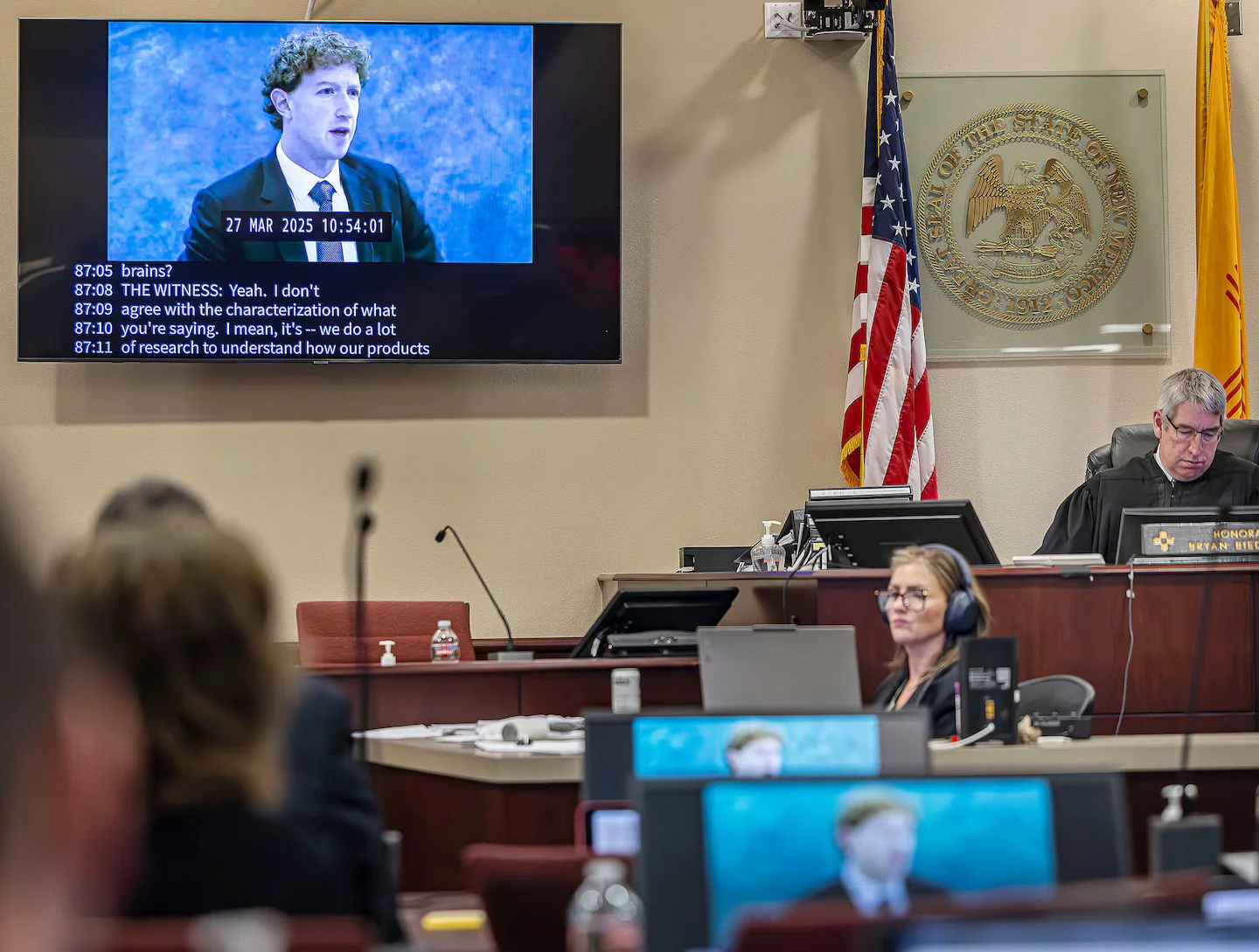
A New Mexico jury ordered Meta to pay $375 million for allegedly allowing child predators to target young users on Facebook and Instagram, citing algorithms and weak protections; Meta plans to appeal and says it remains committed to user safety.
A seven-week Los Angeles trial ended with jurors finding Meta responsible for harming children by prioritizing profits over safety and by making false or misleading statements, under California's Unfair Practices Act. Meta plans to appeal. The verdict adds momentum to lawsuits against other platforms (e.g., YouTube, TikTok) and could influence ongoing and future cases about how social media design and algorithms impact kids, with potential years of litigation ahead.
Meta Platforms may cut up to 20% of its workforce as AI-driven productivity gains are believed to offset heavy AI spending; Reuters cited planning but Meta called the report speculative. Analysts see potential EPS upside if savings are redirected to AI initiatives, even as Meta pursues about $135 billion in AI investment for 2026.
Mark Zuckerberg successfully avoids personal liability in multiple lawsuits accusing Meta Platforms Inc. and other social media companies of addicting children to their products, as US District Judge Yvonne Gonzalez Rogers dismisses him as an individual defendant without affecting claims against Meta as a company.
Meta Platforms Inc. has unveiled a new in-house AI chip, the Meta Training and Inference Accelerator (MTIA), in an effort to reduce its dependence on Nvidia and other external semiconductor companies. The chip is designed to power Meta's AI services, including content ranking and recommendation on Facebook and Instagram, and follows the release of the first MTIA product last year.
Mark Zuckerberg surpassed Elon Musk to become the third-richest person in the world as Meta Platforms Inc. soared, with Zuckerberg's net worth at $186.9 billion compared to Musk's $180.6 billion. Musk's wealth has shrunk by $48.4 billion this year, while Zuckerberg has added $58.9 billion to his fortune. The reversal of the wealth gap reflects the rise of big tech and artificial intelligence over once-hot electric vehicle stocks. Additionally, the ongoing public spat and rivalry between the two billionaires has intensified, with Musk's net worth potentially facing further impact after a Delaware judge struck down his $55 billion Tesla pay package.