NASA-funded SPARK project aims to deploy a swarm of lighter-than-air aerobots with electrohydrodynamic propulsion to explore Titan’s subsurface caves, in a NIAC feasibility study that could precede future missions alongside Dragonfly.
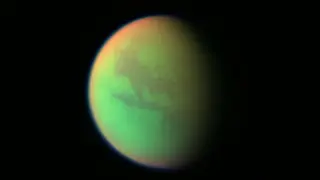
NASA’s NIAC program is funding SPARK Aerobots (Solid-state Propulsion for Autonomous Reconnaissance of Karst) to develop small, spherical flying robots with electrohydrodynamic ion thrusters to explore Titan’s methane- and ethane-filled caves. The Phase 1 grant will run about nine months, with a potential Phase 2 of up to two years, and the team hopes SPARK could serve as a cave-exploration forerunner to the Dragonfly mission (targeted for 2028). Led by Daniel Drew (University of Hawaii) with JPL collaborators, SPARK aims for persistence and maneuverability in Titan’s near-cryogenic conditions, while acknowledging efficiency limits compared with conventional propulsion.
NASA's Innovative Advanced Concepts (NIAC) program has awarded $175,000 to University of Washington astronomer Matthew McQuinn to develop a solar-system-scale interferometer for measuring cosmological distances with unprecedented precision. The proposal involves deploying a constellation of radio dishes more than 10 AU apart in deep space to detect fast radio bursts from beyond the Milky Way. This Phase I grant will allow McQuinn to refine the mission concept and assess its feasibility. NIAC has also funded 12 other innovative projects, including a Venus sample return mission, an electric airplane for Mars, and miniaturized spacecraft for interstellar travel.
NASA has announced the 2024 Phase I awardees for the NASA Innovative Advanced Concepts (NIAC) program, selecting 13 pioneering technology concepts from across the U.S. for funding. These early-stage studies, which received a maximum of $175,000 each, range from exploring Venus and Mars to sending a swarm of probes to Proxima Centauri. The awarded concepts include a fixed-wing craft for Mars, a sample return mission from Venus, and a novel approach to interstellar travel. While these studies are not official NASA missions, they represent the agency's commitment to pushing the boundaries of space exploration and technology development.