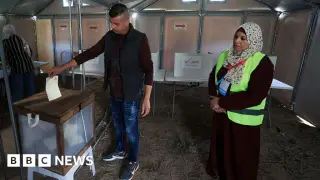
Palestinians vote in local elections across the West Bank and Gaza—the first Gaza-wide poll since 2006—with Hamas barred from standing and Fatah dominant in the West Bank; more than a million eligible voters, including about 70,000 in Deir al-Balah where 12 polling stations operate, and results expected late Saturday or Sunday amid ongoing factional tensions.
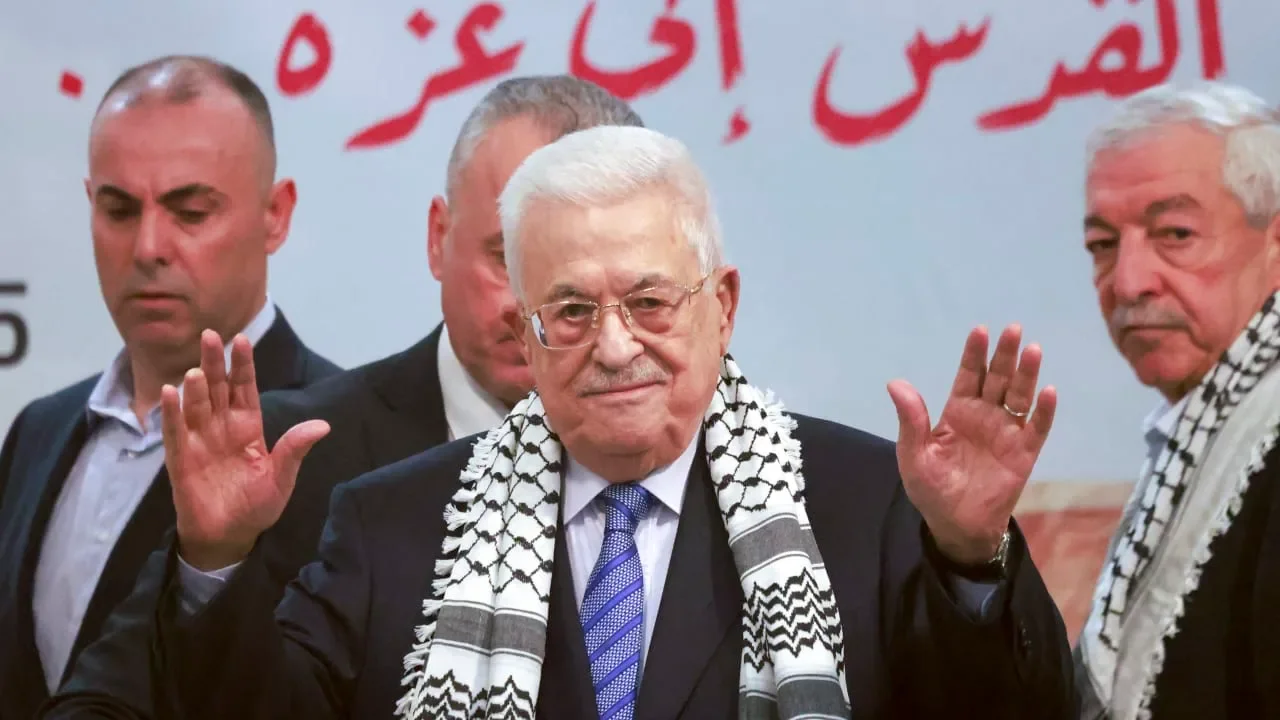
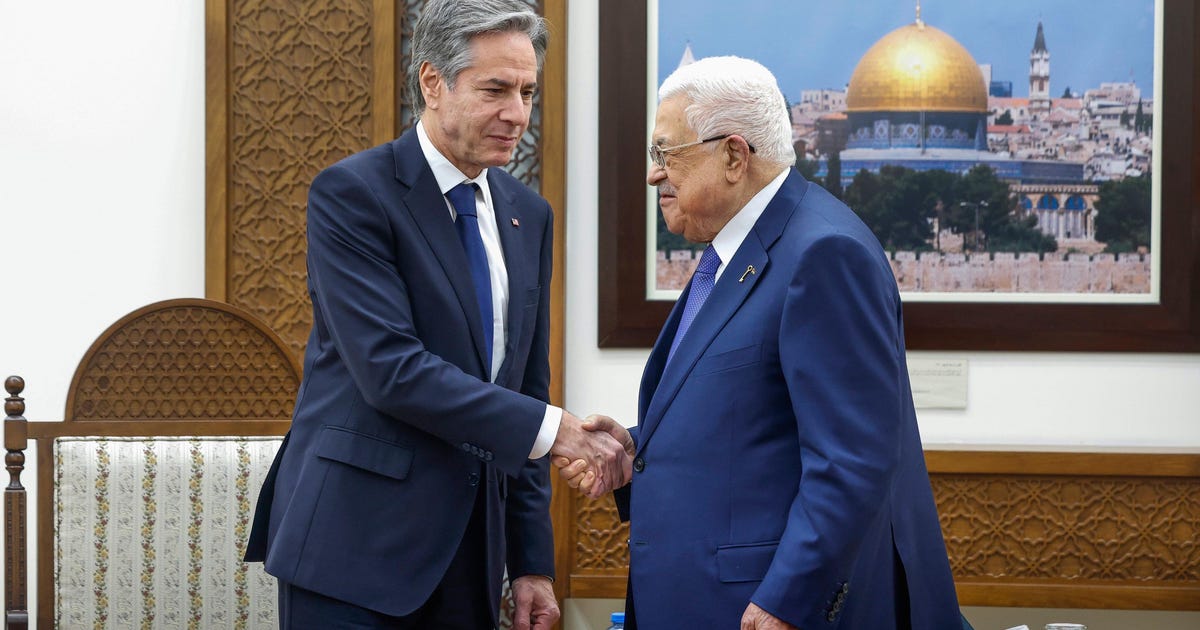
Palestinian Authority President Mahmoud Abbas published a draft constitution for a future Palestinian state, establishing Islam as the official religion with Sharia as the primary source of legislation and designating Jerusalem as the capital and religious center while omitting any direct reference to Judaism. The draft reaffirms the PLO as the sole legitimate representative, guarantees the right of return for refugees, and includes provisions to care for families of martyrs, prisoners, and exiles (the pay-for-slay policy). It sets a civil-overseen security framework, bans non-government militias, imposes two five-year presidential terms with nationality/age restrictions, and envisions a Palestinian Monetary Authority. Public comment is invited for 60 days; Macron had offered to help, and Hamas criticized the draft as a rights violation.
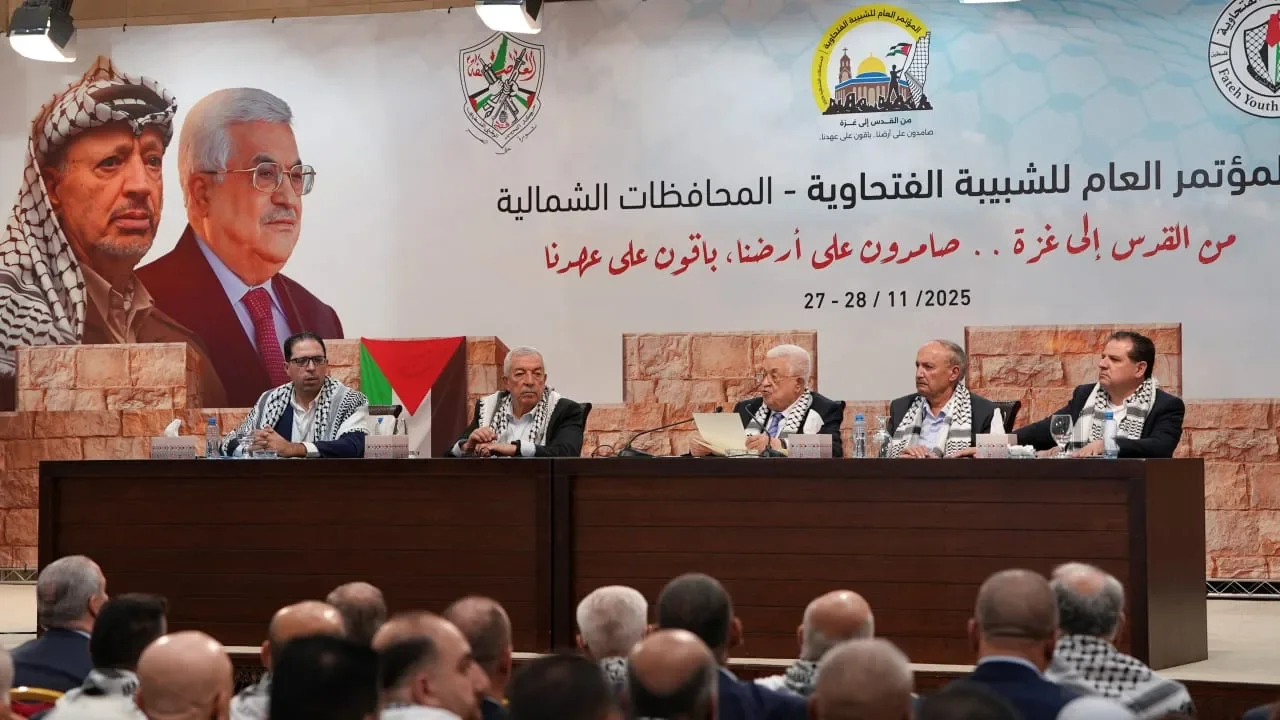
Palestinian Authority president Mahmoud Abbas announced that the Palestinian Liberation Organization’s parliament, the Palestinian National Council, will hold its first vote-based elections on November 1, aiming for broad participation inside and outside Palestine. He also set May 14, 2026 for Fatah’s 8th General Conference and April 25, 2026 for local West Bank elections; the PNC has not convened since 2018, and the vote abroad logistics remain unclear amid a shrinking Fatah base and rising distrust of the PA.
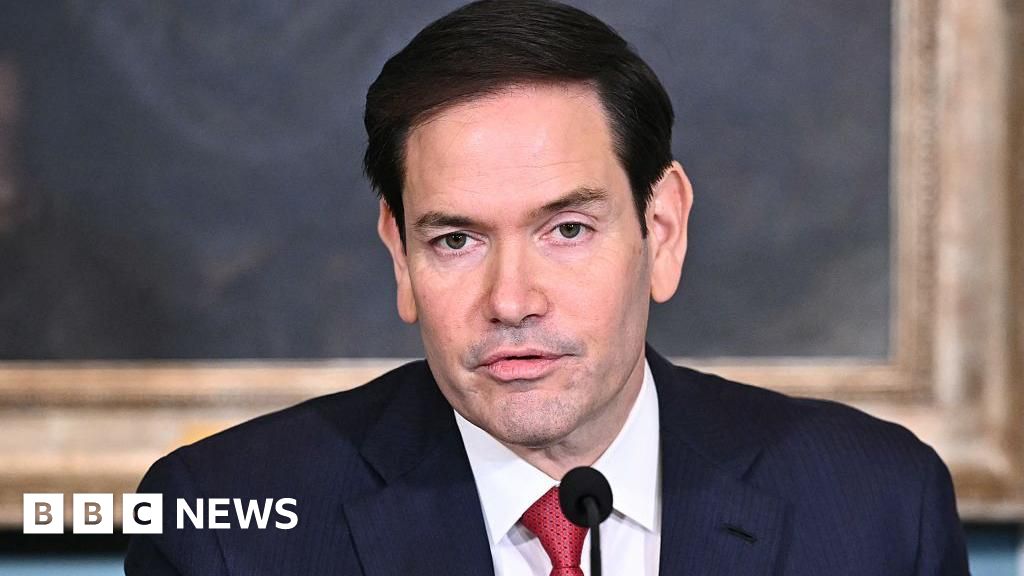
The US announced sanctions on the Palestinian Authority and PLO, including visa bans, citing support for terrorism and efforts to internationalize the conflict with Israel, amid rising international recognition of Palestinian statehood and US diplomatic tensions.
The US Department of State announced sanctions against the Palestinian Authority and PLO for non-compliance with peace commitments, supporting actions that undermine peace efforts, and supporting terrorism, including visa bans on PLO and PA officials.
The PLO is willing to give up historic rights over all of Palestine, including the right of return of refugees, in order to establish a Palestinian state, while Hamas insists on continuing armed struggle against Israel. European foreign policy chief Josep Borrell emphasized the need for the PLO to disengage from Hamas in order to end the conflict and achieve a resolution between Israel and the Palestinians.
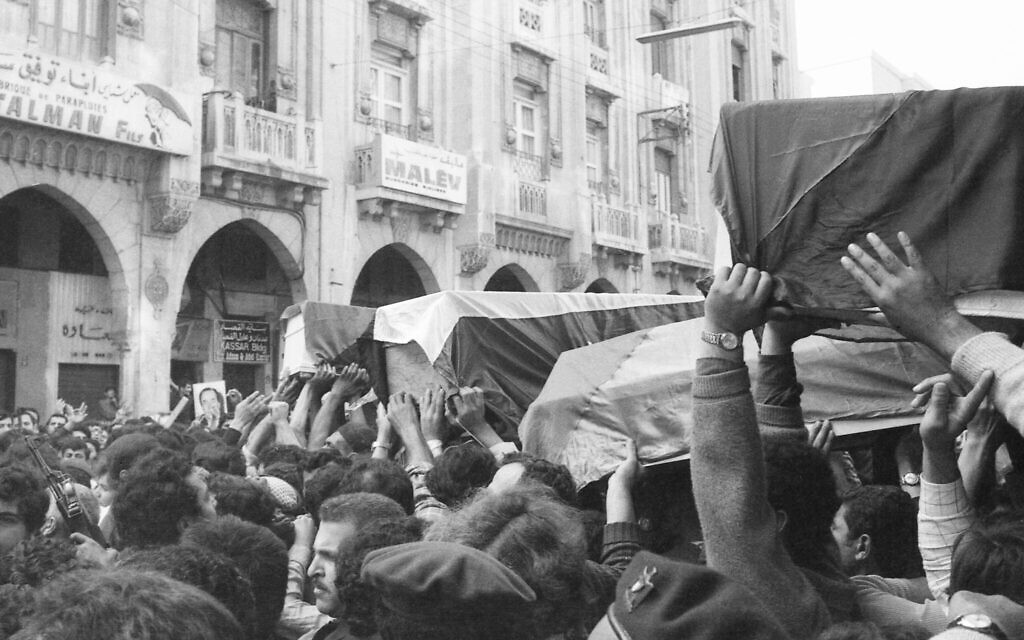
50 years after an Israeli commando team killed three top officials from the Palestine Liberation Organization in Beirut, Lebanon remains a battleground for Israel and its opponents. Last week, there was an exchange of rocket fire and airstrikes across the border between Israel and Palestinian terror groups in Lebanon. The raid in 1973 signaled a new era in which regional powers repeatedly intervened in Lebanon. Since the end of the civil war, Hezbollah has stepped in as Israel’s main adversary in Lebanon, while Palestinian factions also still have a presence.