Tag

Polyploidy

All articles tagged with #polyploidy

Nine genome-doubling waves helped flowering plants weather Earth's crises
science23 days ago

Nine genome-doubling waves helped flowering plants weather Earth's crises

A Cell study of 470 flowering-plant genomes uncovered 132 independent whole-genome duplication events over the last 150 million years, organized into at least nine bursts that line up with major environmental upheavals such as global cooling/warming and mass extinctions. These genome doublings produce polyploids, often called hopeful monsters, which can enhance survival under stress despite cellular and fertility costs. The findings imply that repeated genome duplications helped flowering plants endure Earth’s climatic and ecological crises and may influence how crops respond to climate change, though future bursts would take millions of years to emerge.

Peanut genomes illuminate domestication, subgenome evolution, and oil traits
science1 month ago

Peanut genomes illuminate domestication, subgenome evolution, and oil traits

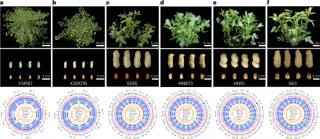
Six telomere-to-telomere peanut genomes (two diploids and four allotetraploids) reveal asymmetric transposable element activity and centromere evolution between subgenomes, catalog thousands of structural variants linked to domestication, and, from 521 resequenced accessions, illuminate population structure, introgression, and trait genes. GWAS and functional analyses pinpoint AhWRI1 and AhGSA1 as regulators of oil content and seed size, while transcriptomic and metabolomic profiling tie lipid and anthocyanin pathways to seed development—providing genomic levers for peanut improvement.

Decaploid pitcher plant genome uncovers subgenome dominance and novel gene evolution
science2 years ago

Decaploid pitcher plant genome uncovers subgenome dominance and novel gene evolution

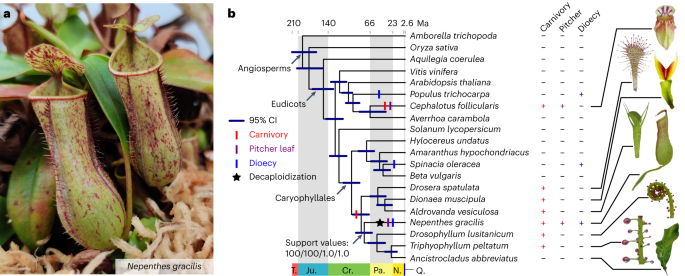
A study on the decaploid pitcher plant Nepenthes gracilis reveals that subgenome dominance plays a crucial role in shaping novel gene evolution. Polyploidy, the presence of multiple sets of chromosomes, has been linked to the diversification of angiosperms. The researchers found that one subgenome in Nepenthes gracilis exhibited higher expression levels and functional enrichment of genes involved in carnivory, while the other subgenome showed higher expression of genes related to flower development and sex determination. This subgenome dominance may have contributed to the adaptation and evolution of the pitcher plant's unique traits.

The Reproduction Mystery of Seedless Fruit Plants Unveiled
science2 years ago

The Reproduction Mystery of Seedless Fruit Plants Unveiled

Seedless fruits, such as bananas and watermelons, are the result of various reproductive mechanisms. While most fruit plants require fertilization through the transfer of pollen from a male plant to a female plant, some plants have both male and female reproductive structures, allowing for self-fertilization. However, in rare cases, fruits can develop without fertilization through a process called parthenocarpy. This natural phenomenon has been harnessed in modern agriculture, leading to the cultivation of seedless fruits like navel oranges and grapes. Seedless watermelons and bananas are created through complex processes involving polyploidy, where plants have multiple copies of chromosomes. These seedless fruits have become successful due to human intervention, even though they are unable to persist on their own in the wild.