Tag

Population Growth

All articles tagged with #population growth

Migration slump slows U.S. county growth as immigration plummets
economy16 days ago

Migration slump slows U.S. county growth as immigration plummets

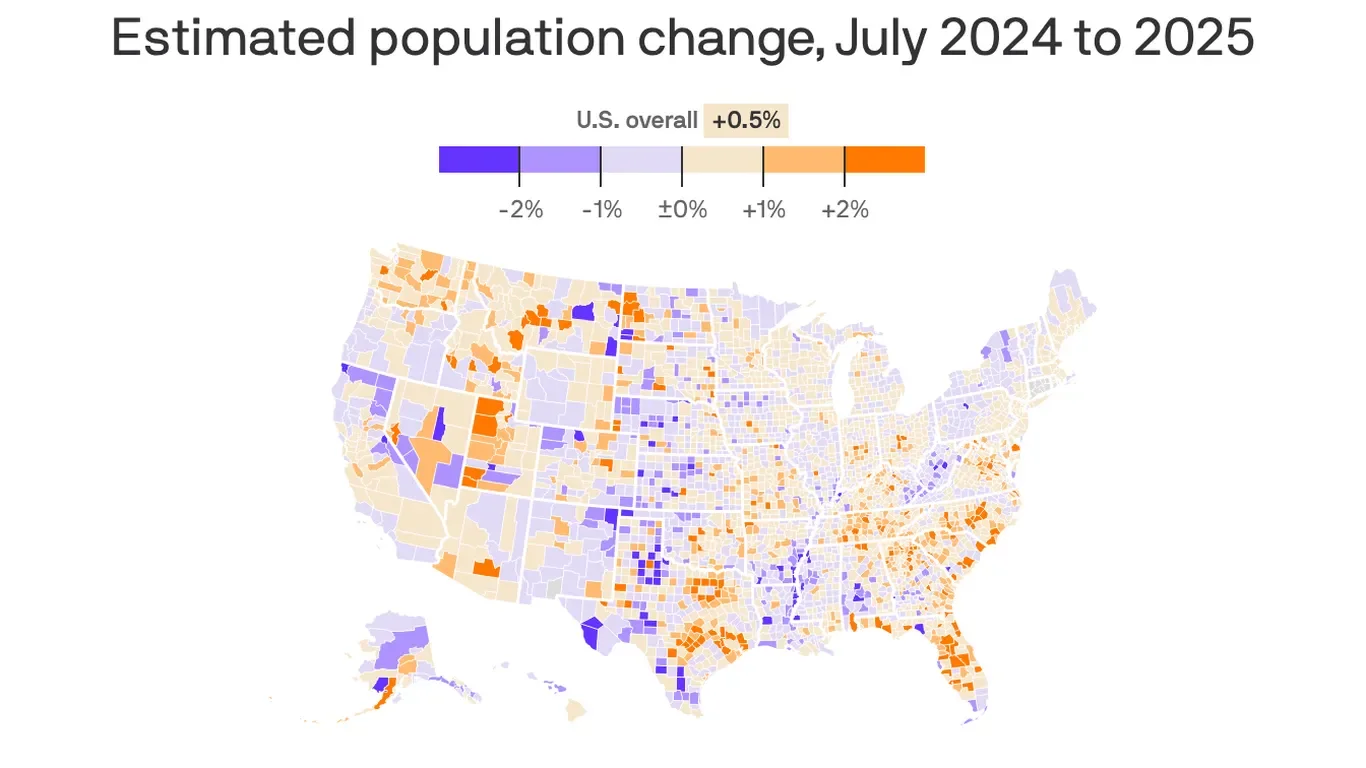
New Census Bureau data show international migration fell in about 9 out of 10 U.S. counties from 2024-25, dampening growth in large counties such as Los Angeles County, which lost roughly 54,000 people (-0.6%) to about 9.7 million; the national growth slowed to 0.5% as births minus deaths stayed steady and international migration plunged from about 2.8 million to 1.3 million (roughly a 55% drop). The fastest‑growing metros over 2024-45 were Ocala, Fla.; Myrtle Beach, S.C.; and Spartanburg, S.C.

Border-area metros lead 2025 slowdown as immigration drops
demographics16 days ago

Border-area metros lead 2025 slowdown as immigration drops

The 2025 U.S. Census estimates show slower population growth across U.S. metro areas, driven by weaker international migration and hurricane-driven departures; growth fell from 1.1% in 2024 to 0.6% in 2025, with the sharpest declines in border regions like Laredo, Yuma, and El Centro, while Houston, Dallas–Fort Worth, Atlanta, Phoenix and Charlotte led growth. Some Florida and South Carolina midsize metros posted notable gains, and exurban counties continued attracting migrants as housing costs rise and remote work persists.

Texas Suburbs Drive Population Boom as Immigration Slows, Census Finds
society16 days ago

Texas Suburbs Drive Population Boom as Immigration Slows, Census Finds

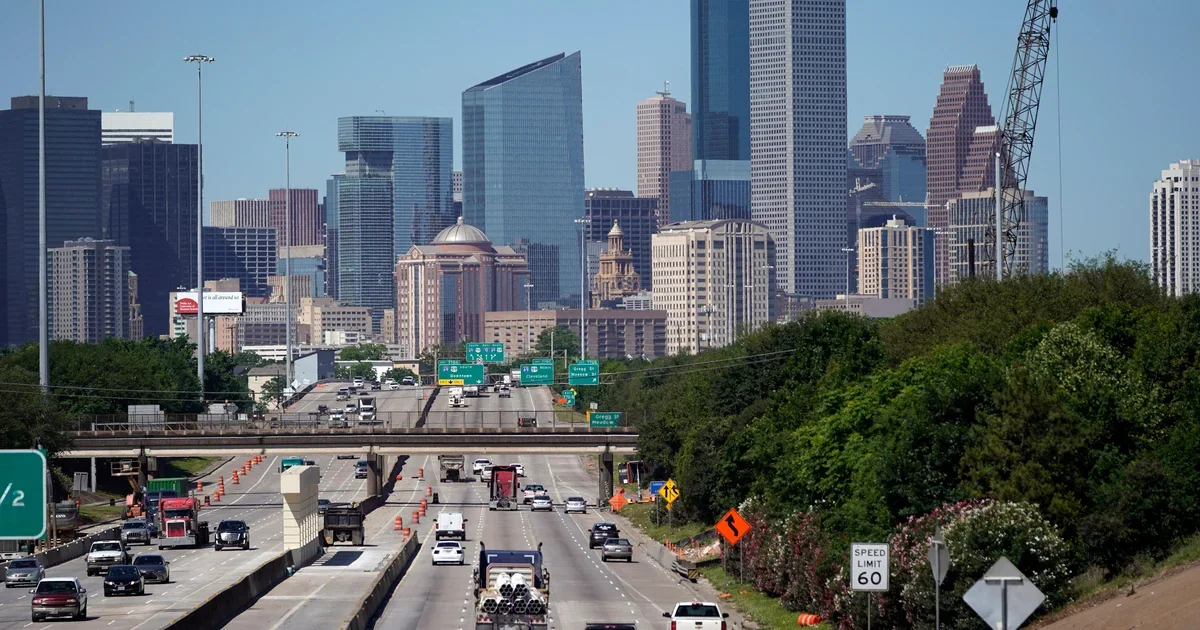
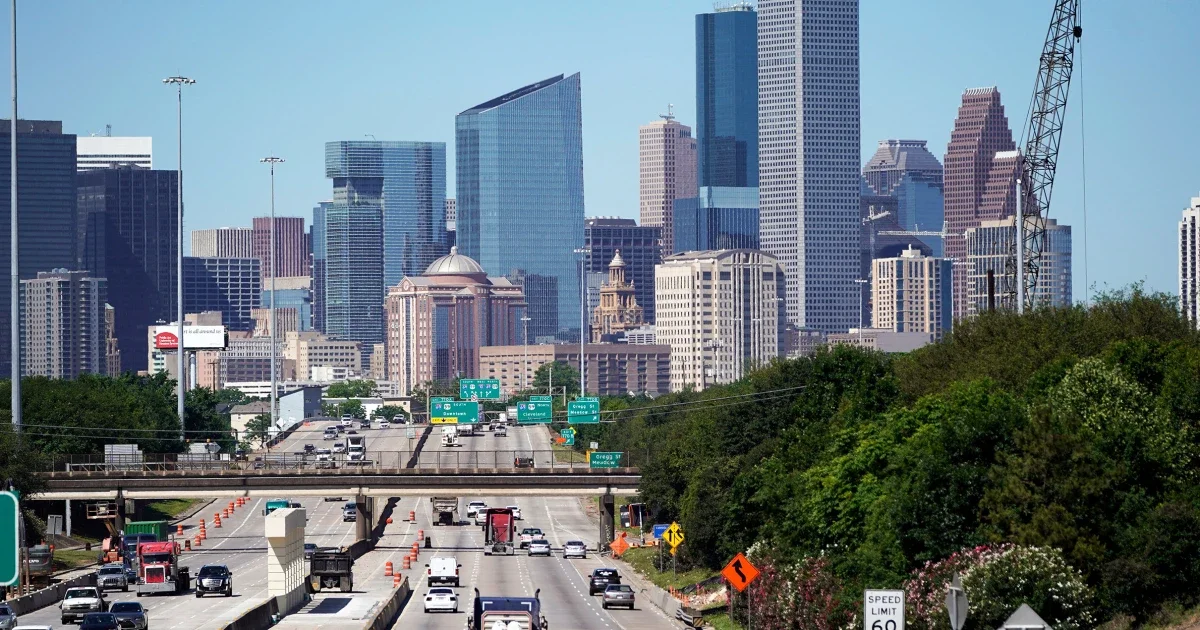
Texas added about 391,243 residents (1.2% growth) between July 2024 and July 2025, with suburban areas outside Austin, Dallas, and Houston leading the gains as international migration slows. Urban centers like Dallas County declined while suburbs such as Waller County near Houston surged, keeping Texas’ metro areas growing even as immigration wanes; Houston and Dallas–Fort Worth remained the largest contributors to overall population gains.

Border Regions Drive Sharp Slowdown in 2025 U.S. Metro Growth
society16 days ago

Border Regions Drive Sharp Slowdown in 2025 U.S. Metro Growth

New Census Bureau estimates show U.S. metro-area population growth slowed to about 0.6% in 2025, with the steepest declines along the U.S.–Mexico border as immigrant inflows dropped, and Florida’s Gulf Coast counties losing residents after Hurricanes Helene and Milton. Nine of ten counties saw lower immigration in 2025 than in 2024, while growth leaders shifted to Houston, Dallas–Fort Worth, Atlanta, Phoenix and Charlotte. Despite the slowdown, births outpaced deaths in places like New York, underscoring shifting demographic dynamics that shape long-term urban growth.

Immigration slump drags US population growth to pandemic-era lows
demographics-and-population16 days ago

Immigration slump drags US population growth to pandemic-era lows

US population growth slowed to its weakest pace since the Covid-19 era as net international migration plunged by more than 50% in 2024-25, leaving the population at about 342 million after a 1.8 million increase. County data show most areas slowed or posted losses (roughly 40% of counties experienced net outflows); large cities that rely on international arrivals are seeing growth stall amid affordability-driven domestic outmigration, with New York City’s international inflows down sharply while domestic migration rose. Growth is strongest in some southern counties near Dallas and Houston. Economists warn the immigration drop could have lasting economic costs, potentially reducing consumer spending and GDP growth as immigrant inflows support the labor force and entrepreneurship.

U.S. Population Growth Slows as Net Migration Dives
demographics2 months ago

U.S. Population Growth Slows as Net Migration Dives

U.S. population grew 1.8 million (0.5%) from July 2024 to July 2025, the slowest pace since the pandemic, driven mainly by a historic drop in net international migration (2.7 million to 1.3 million); births and deaths were relatively stable. Growth slowed across regions and states, with the Midwest the only region where all states gained population and South Carolina the fastest-growing state, while Puerto Rico declined. Net international migration is projected to fall further, to about 321,000 by July 2026.

Austin's Growth Slows as International Migration Surges and Local Residents Depart
local-news9 months ago

Austin's Growth Slows as International Migration Surges and Local Residents Depart

Austin's population growth has slowed due to economic and affordability challenges, with a decline in domestic migration and shifts in demographic composition, though international migration continues to support overall growth. The city faces future challenges in housing and transportation as it projects significant population increases by 2060.

Southern States Lead as Americans Relocate for Affordability and Family
us-news1 year ago

Southern States Lead as Americans Relocate for Affordability and Family

Americans are increasingly moving to southern states like Florida, Texas, North Carolina, South Carolina, and Georgia, driven by factors such as housing affordability, family proximity, and employment opportunities. A National Association of Realtors survey highlights that housing reasons are the primary motivator for 42% of movers, with lower taxes and warmer climates also playing roles. The South's growing population contrasts with states like California and New York, which are experiencing outflows due to high costs and taxes.

NASA Validates Hawking's Imminent End of World Prediction
science1 year ago

NASA Validates Hawking's Imminent End of World Prediction

Stephen Hawking predicted that if current trends in population growth and energy consumption continue, Earth could become uninhabitable by 2600, turning into a 'giant ball of fire.' He highlighted global warming, climate change, nuclear war, artificial intelligence, and pandemics as existential threats. Although NASA has not confirmed Hawking's specific claims, they acknowledge the importance of studying global threats. Hawking emphasized the need for change to prevent these dire outcomes.