New Census data show real median household income rose 2.6% in 2025 to $87,460—the inflation-adjusted peak since 1967—while the poverty rate fell to 10.2% (34.5 million people) and child poverty dropped to 13.4%; gains were concentrated among high earners, health costs pushed 7.7 million more people below the supplemental poverty line, and the uninsured rate remained near historic lows at 7.9%.
Based on 2025 Census data, the U.S. poverty rate fell slightly as incomes rose amid higher prices, but the data does not reflect this year’s cuts to social safety nets, which experts fear could push poverty higher in the near term.
New Census data show median U.S. household income rose to $87,460 in 2025 (2.6% real increase), the highest inflation-adjusted level since 1967, even as prices for groceries, utilities, housing and other essentials keep households squeezed. Poverty fell to 10.2% and child poverty to 13.4%, but earnings for full-time workers were broadly flat while women’s earnings rose 3.2%, narrowing the pay gap to about 83.9% of men’s. The gain reflects income from various sources beyond wages, including Social Security and pensions, and officials caution future Census data could be affected by safety-net cuts.
President Trump’s administration proposed changes to the 2030 census that would exclude non-U.S. citizens from the apportionment count and drop race/ethnicity data, a move intended to shift House seats and Electoral College votes toward Republican‑controlled states. The proposal, tied to the 2024 election and directed by Trump, would be open to public comment until Oct. 13 and has drawn lawsuits and threats from Democrats and civil rights groups who say it would undermine constitutional and Voting Rights protections. Critics warn it would deprive marginalized communities of representation, while supporters argue it reflects an originalist reading of the Constitution.
The Trump administration proposed a rule to count only U.S. citizens and permanent residents in the decennial census, excluding undocumented immigrants and those on temporary lawful status, and to drop race/ethnicity questions; the proposal, open to public comment for 30 days, could reshape how seats in Congress and federal funding are allocated, with experts warning it would distort data and undermine civil rights protections.
The Commerce Department proposed counting only citizens and permanent residents in the decennial census, excluding certain noncitizens, and trimming race/ethnicity questions, arguing fewer questions would boost participation and fairer representation; it would cross-check citizenship with federal records. Critics warn the changes could chill participation, distort representation and billions in federal funding, and depart from long-standing 1790 precedent.
The Trump administration proposed a sweeping 2030 census overhaul that would exclude undocumented immigrants from the population totals used to apportion House seats and could bar questions on race, ethnicity, and sexual orientation on the short form, potentially reshaping representation, federal funding, and civil-rights enforcement. The proposal expands beyond past efforts to exclude unauthorized residents, involves how “usual residence” is defined, and faces legal and political pushback as planning for the decennial census progresses under ongoing scrutiny from state officials and courts.
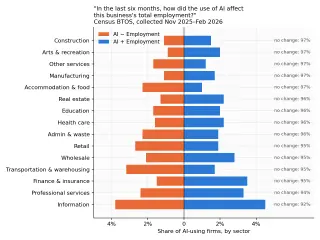
Census data tracking AI use in U.S. firms shows a jump from about 3.7% using AI in 2023 to roughly 18% using AI in any function by early 2026, yet the measured effect on total employment remains minimal: in late 2023–early 2024, 2.8% of firms reported employment increases and 2.6% decreases (94.6% unchanged); in late 2025–early 2026, 2.3% reported increases and 2.0% decreases (95.7% unchanged). Adoption is still concentrated in the minority of firms, and information-sector activity shows more variation. Among adopters, 44% say AI augments existing work, 10% say it performs tasks humans used to do, and 11% introduce new tasks; generative AI use centers on writing/emails (85%), information search (about 50%), summarizing (45%), and coding (13%). Most firms (64%) made no changes to operations to deploy AI; 15% trained staff, another 15% redesigned workflows, and ~1% hired AI-skilled workers. The share of firms where AI replaced a large or moderate share of tasks is still small, suggesting AI-driven employment disruption is not yet evident, consistent with the authors’ prior views.
A Financial Times analysis of US Census data from the American Time Use Survey shows about 10% of Gen Z adults (ages 23–29) have zero face-to-face interactions on an average day, up from 3% before the pandemic and peaking at 10% in 2023; while the most social cohort recovered to about 83% of the day spent with others by 2025, the bottom quartile's in-person time remained essentially zero, with Americans also spending more time on screens and remote work rising to roughly 35% of workers in 2025.
Australia’s census now includes optional questions on gender identity and sexual orientation to better map LGBTQ+ communities; responses are voluntary and privacy protections apply, with data intended to inform policy and services.
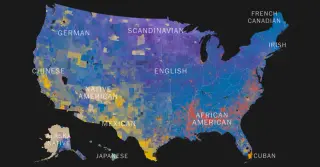
NYT’s interactive map uses the Census Bureau’s 2019–2024 American Community Survey to show how Americans identify their ancestry across the country. Tap any area to see the blend of origins, with colors representing mixed ancestries. Data allow multiple ancestries and percentages may not sum to 100, with figures rounded; read more for full context.
Japan’s 2025 census shows total population falling to 123.05 million—down about 3.09 million (2.5%) from 2020—marking the steepest decline on record. The drop occurred in 45 prefectures, while Tokyo and Okinawa grew. Tokyo added about 199,000 people to stay the most populous, and households rose 2.3% to 57.12 million as average household size fell to 2.15, signaling more single-person homes.
Nearly 3 million records from Ireland's 1926 census—the first full census of the independent state—are being released online for free, offering new insight into post-1922 life and a global diaspora of about 80 million people with Irish ancestry. The data, which include each person’s name, age, birthplace, language (including Irish), religion and occupation, show regional patterns (about 53% of those over 12 employed in agriculture, from 0.9% in Dublin to 75% in counties like Galway) and a low overall unemployment rate (~6%). The release helps recover records lost in the 1922 Public Record Office fire and enables genealogical and migration research, while noting privacy protections (initials for hospital, prison, and other sensitive records).
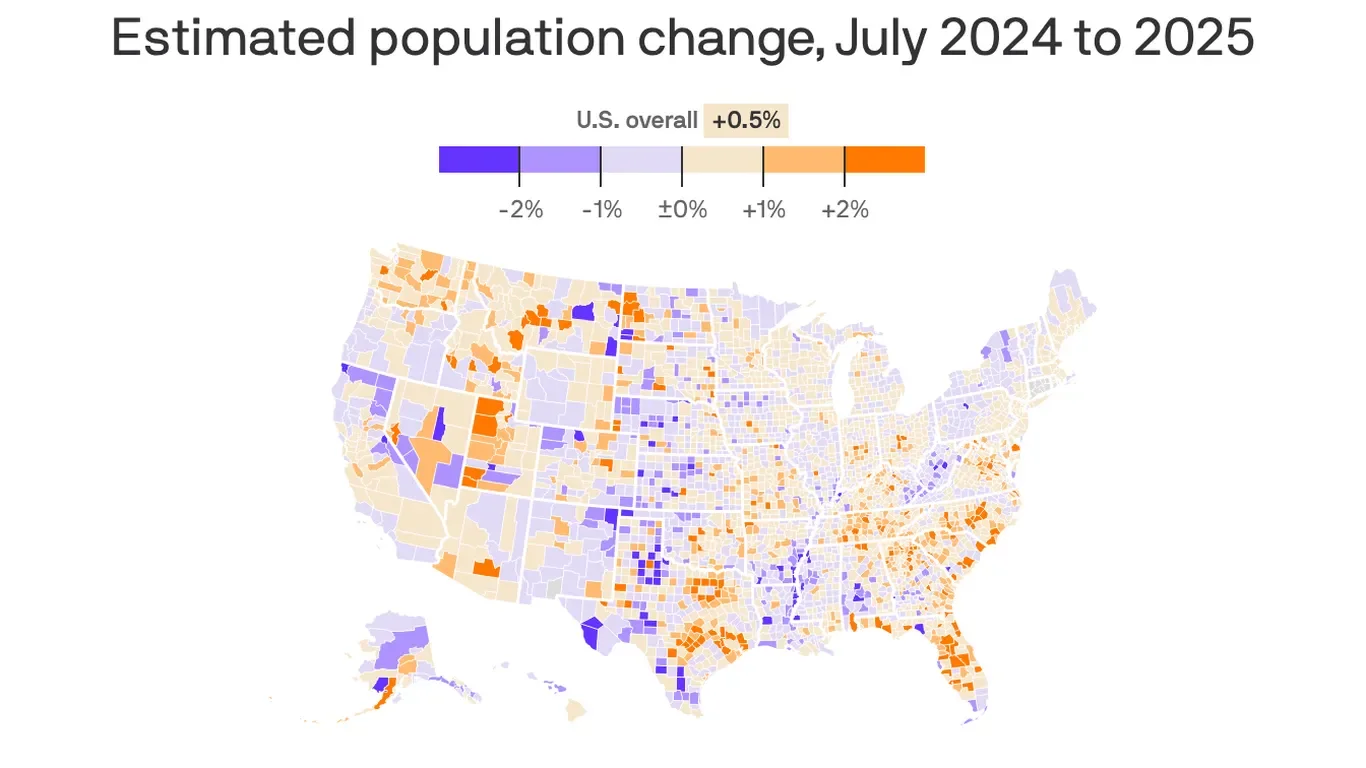
New Census Bureau data show international migration fell in about 9 out of 10 U.S. counties from 2024-25, dampening growth in large counties such as Los Angeles County, which lost roughly 54,000 people (-0.6%) to about 9.7 million; the national growth slowed to 0.5% as births minus deaths stayed steady and international migration plunged from about 2.8 million to 1.3 million (roughly a 55% drop). The fastest‑growing metros over 2024-45 were Ocala, Fla.; Myrtle Beach, S.C.; and Spartanburg, S.C.
The 2025 U.S. Census estimates show slower population growth across U.S. metro areas, driven by weaker international migration and hurricane-driven departures; growth fell from 1.1% in 2024 to 0.6% in 2025, with the sharpest declines in border regions like Laredo, Yuma, and El Centro, while Houston, Dallas–Fort Worth, Atlanta, Phoenix and Charlotte led growth. Some Florida and South Carolina midsize metros posted notable gains, and exurban counties continued attracting migrants as housing costs rise and remote work persists.