
Tag

Project Suncatcher

All articles tagged with #project suncatcher

Google Launches First Orbital AI Test Satellite in Project Suncatcher
technology21 hours ago

Google Launches First Orbital AI Test Satellite in Project Suncatcher

Alphabet launched its first orbital AI test satellite on October 1, 2026, via a SpaceX Falcon 9 rocket. The mission, part of Project Suncatcher, aims to validate the performance of Google’s custom Tensor Processing Units (TPUs) in low Earth orbit. While the prototype faces significant cooling and radiation challenges, the move signals a major push by tech giants to bypass terrestrial power constraints and regulatory opposition by moving data centers into space.
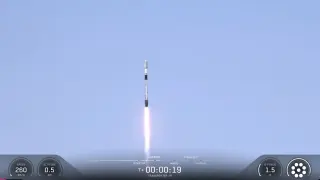

SpaceX Transporter-18 Delivers Google's Orbital AI Prototype and 129 Other Payloads
space1 day ago

SpaceX Transporter-18 Delivers Google's Orbital AI Prototype and 129 Other Payloads

SpaceX successfully launched the Transporter-18 rideshare mission on October 1, 2026, from Vandenberg Space Force Base. The Falcon 9 rocket carried 130 payloads to low Earth orbit, including a prototype satellite for Google's Project Suncatcher. The first stage booster completed its 25th flight, landing safely at the launch site approximately 7.5 minutes after liftoff. The upper stage deployed the payloads over an 11-minute period, marking the second leg of a planned spaceflight tripleheader.

Google Launches First Orbital AI Test Satellite on October 1
technology7 days ago

Google Launches First Orbital AI Test Satellite on October 1

Google is launching its first experimental satellite, dubbed MVP, on October 1 to test if AI hardware can operate in low Earth orbit. The refrigerator-sized device, built by Planet Labs, carries four custom Tensor Processing Units (TPUs) and will run for only 15-minute intervals due to cooling limitations. This initial test aims to validate radiation resistance and thermal management before a planned 2027 launch of dual-satellite constellations.

Google Launches First Orbital AI Test Satellite on October 1
technology8 days ago

Google Launches First Orbital AI Test Satellite on October 1

Google is launching its first experimental AI satellite, dubbed MVP, on October 1 via a SpaceX Falcon 9 rocket. The refrigerator-sized device, built by Planet Labs, carries four Tensor Processing Units to test hardware durability in space. The mission aims to validate cooling and radiation resistance for future orbital data centers, with two more satellites planned for 2027.

Google's First Orbital AI Test: A 15-Minute Sprint in Space
technology8 days ago

Google's First Orbital AI Test: A 15-Minute Sprint in Space

Google is launching its first experimental orbital data center, dubbed MVP, on October 1. The refrigerator-sized satellite, built by Planet Labs, carries four TPUs to test if AI hardware can survive space conditions. It will run for only 15 minutes at a time due to cooling limits, marking the first step toward a future constellation of orbital AI centers.

Space-Based AI Data Centers: Musk's Gamble to Burst the Cloud Bubble
technology6 months ago

Space-Based AI Data Centers: Musk's Gamble to Burst the Cloud Bubble

Elon Musk’s plan to deploy AI data centers in space within 30 months could spark a SpaceX-driven monopoly and potentially boost its IPO–valuations ($80B–$1T) in 2026, but faces major technical and cost hurdles—radiation damage, extreme cooling challenges in vacuum, and prohibitive launch/operational costs—while Alphabet pursues a parallel effort (Project Suncatcher); the concept could upend cloud computing, yet profitability and geopolitical considerations remain significant risks.

Google's Moonshot: Space-Based, Solar-Powered AI Data Centers
technology11 months ago

Google's Moonshot: Space-Based, Solar-Powered AI Data Centers

Google is exploring a bold 'moonshot' project called Project Suncatcher to create space-based AI data centers powered by solar energy, aiming to harness continuous, clean power for AI computing and reduce Earth's energy demands. The project involves launching TPUs on satellites with advanced communication and radiation resistance, with prototypes planned for 2027, and could make space-based data centers cost-competitive by the 2030s.