Two separate research teams used OpenAI’s GPT-5.6 Sol Ultra to independently solve the same open problem in unclonable encryption, submitting their proofs to arXiv within three hours of each other. This convergence raises questions about scientific credit and the future of independent discovery.
A Science perspective shows how quantum mechanics evolved from a puzzling 20th‑century idea to the foundation of lasers, microchips, secure communications, and emerging quantum computers, driven by coherence and entanglement; the piece highlights quantum heat engines that may exceed classical limits and notes expanding applications in biology, gravity, and turbulence, with open questions about quantizing gravity and the future impact of quantum technologies.
Researchers are exploring quantum jamming—a hypothetical way to alter entanglement without breaking causality—to probe whether deeper principles than quantum mechanics (like no-signaling) govern reality. This work challenges the foundations of device-independent quantum key distribution, which relies on monogamy of entanglement, by asking whether such jamming could undermine security or reveal new physics. Scientists including Ramanathan, Weilenmann, Popescu, Grunhaus, Eckstein, and others are collaborating to identify fundamental rules that constrain or permit these phenomena and to understand what a more complete theory of nature might look like.
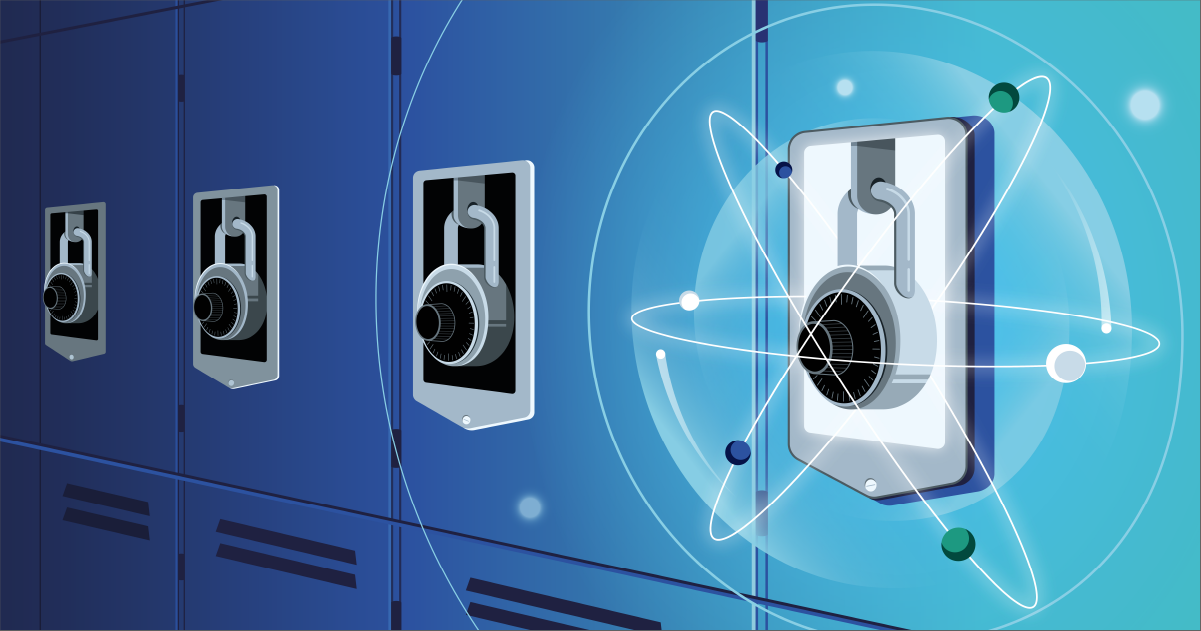
Experts warn that a looming Q-day—when quantum computers could break current cryptography—may arrive sooner than expected, spurred by new but not yet verified preprints from Google and a Caltech spinoff. While no quantum computer has proven Shor’s algorithm at scale, the risk of harvest now, decrypt later means urgent migration to post-quantum cryptography (PQC) and building crypto-agility across systems. NIST standards exist, but full adoption will take years, requiring coordinated effort from industry, governments, and researchers; individuals should consider safeguarding or removing long-term sensitive data, and organizations should begin migrating protocols such as TLS and SSH and improving key management while continuing security research.
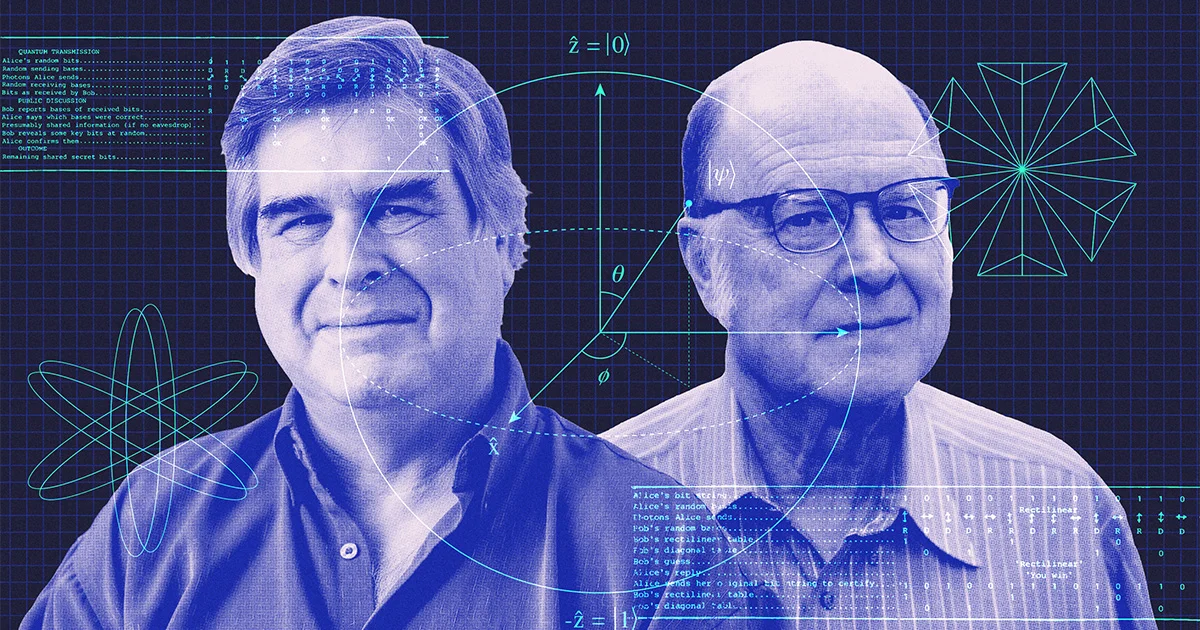
US physicist Charles Bennett and Canadian computer scientist Gilles Brassard win the ACM Turing Award for the BB84 quantum cryptography scheme, a breakthrough that uses quantum physics to detect any eavesdropping and may secure future digital communications; the prize includes $1 million.
Charles Bennett and Gilles Brassard win the Turing Award for foundational work that launched quantum information science, notably the BB84 quantum key distribution protocol, and for connecting quantum physics to cryptography—sparking a global surge in quantum computing and secure communications.
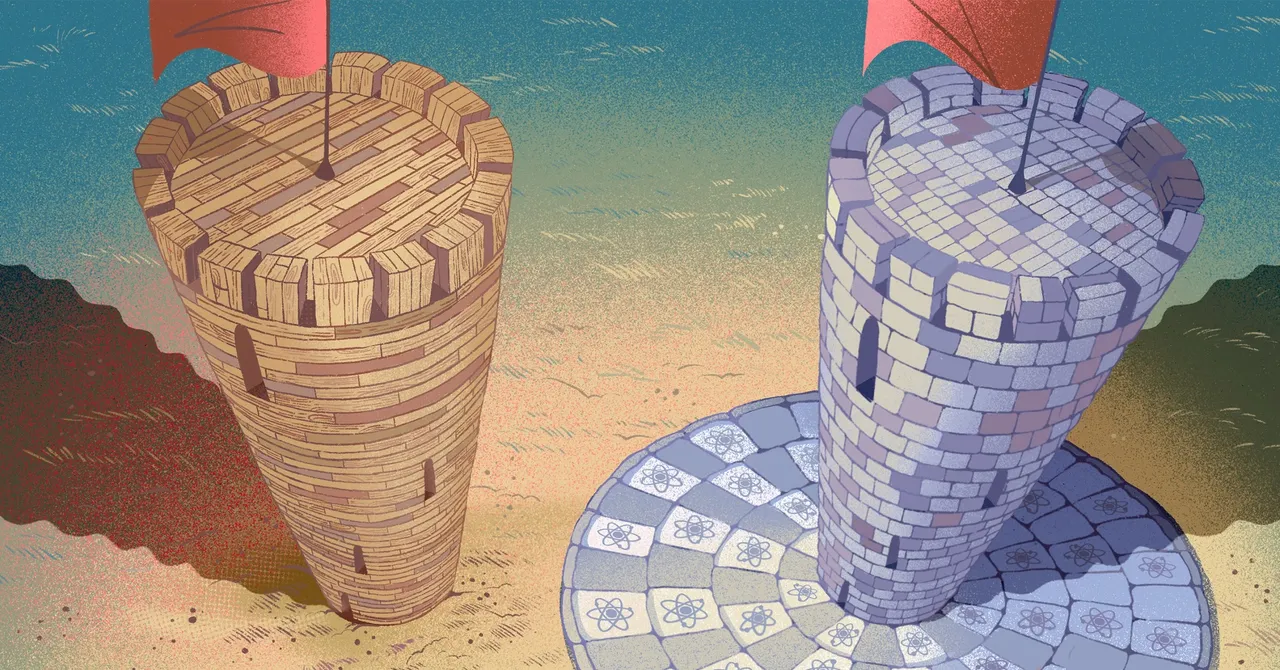
Researchers are developing a new foundation for quantum cryptography that relies on quantum properties and complex mathematical problems, potentially creating more secure encryption methods that could withstand future computational advances, though practical implementation remains in the future.
Researchers have developed a new theoretical framework for quantum cryptography that relies on quantum-based mathematical building blocks called one-way puzzles, potentially supporting more secure cryptographic systems even if classical hard problems are solvable, though practical implementation remains distant due to current technological limitations.
Researchers have discovered that secure quantum encryption can be achieved even in hypothetical scenarios where all classical computational problems are easy, relying instead on the inherent difficulty of distinguishing certain quantum states. This breakthrough suggests that quantum cryptography could remain secure even if classical cryptography fails, potentially requiring a new theoretical framework to fully understand quantum information.
Scientists are proposing a new "space encryption" technology that uses light particles beamed around the world via satellites to protect sensitive communications from potential decryption by future quantum computers. This approach, known as "quantum cryptography," leverages the principles of quantum mechanics to secure data transmission. A mission called "Quick3" aims to use photons to transmit data through a massive satellite network, with the system set to be tested in space in 2025. This technology could potentially provide a secure means of communication that is resistant to interception and decryption by quantum computers.
Scientists are proposing a new "space encryption" technology that uses light particles beamed around the world via satellites to protect sensitive communications from potential decryption by future quantum computers. This quantum cryptography system, known as "Quick3," encodes information into individual light particles, making it impossible to intercept without detection. The system involves transmitting data through a massive satellite network and is set to be tested in space with a satellite launch scheduled for 2025.
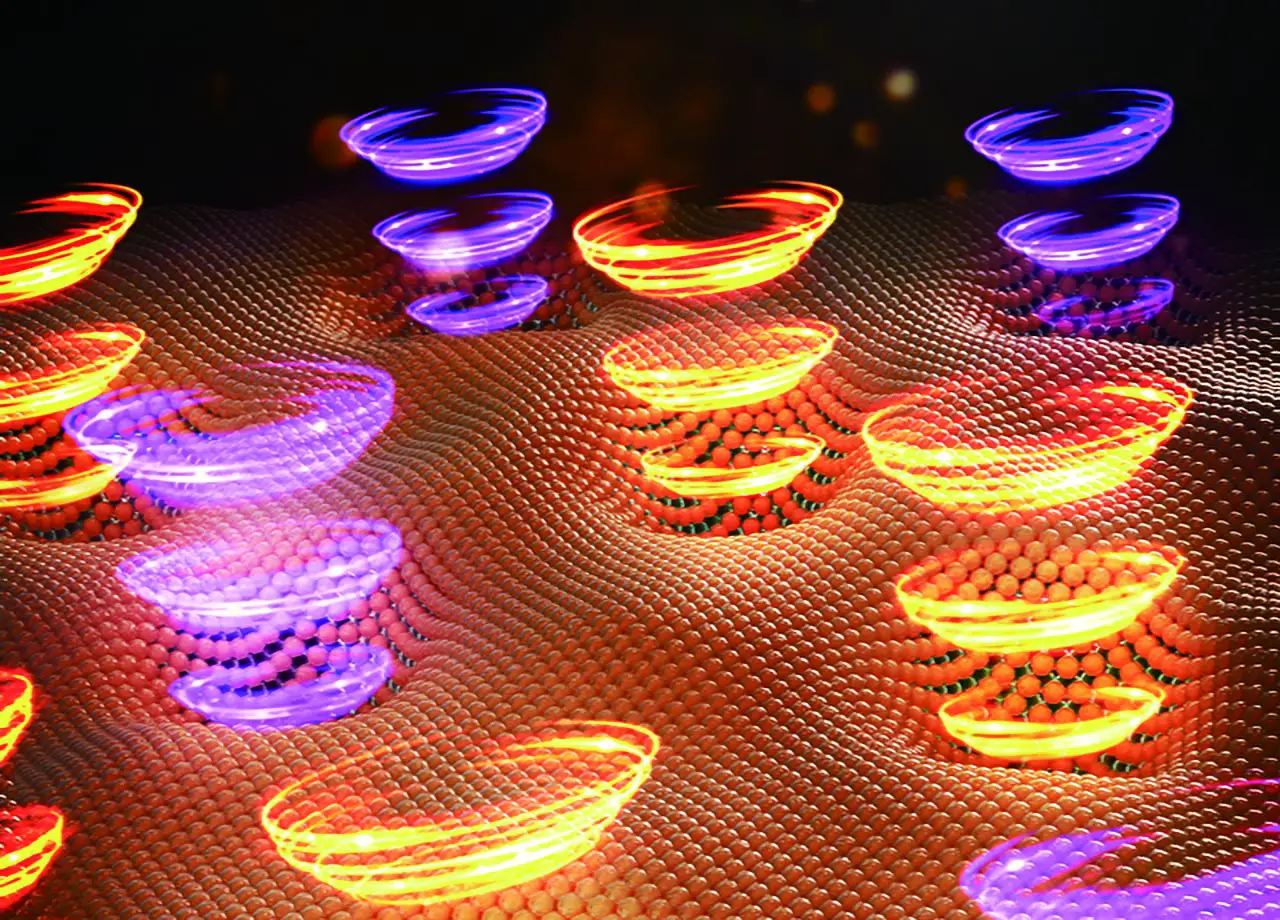
Scientists at Los Alamos National Laboratory have developed a new technique to generate circularly polarized single photons, a crucial step towards quantum communication and information processing. By using nanometer-scale indentations on a stack of atomically thin materials, the researchers were able to emit circularly polarized light without the need for an external magnetic field. This breakthrough could pave the way for advancements in quantum cryptography, communication, and the development of a hyper-secure quantum internet.