Tag

Post Quantum Cryptography

All articles tagged with #post quantum cryptography

Global Regulators and Tech Giants Accelerate Deadlines as Quantum Threats Loom
technology1 day ago

Global Regulators and Tech Giants Accelerate Deadlines as Quantum Threats Loom

International and US authorities are urging immediate action to secure financial and government systems against quantum computing threats. While quantum computers are not yet commercially viable, experts warn that 'harvest now, decrypt later' attacks are already compromising data. Regulatory bodies like IOSCO and NIST have set strict deadlines for migration to post-quantum cryptography, though many agencies and organizations remain unprepared.
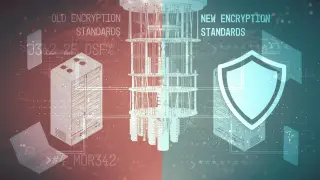

NIST Releases Roadmap for Federal Transition to Post-Quantum Cryptography by 2035
technology27 days ago

NIST Releases Roadmap for Federal Transition to Post-Quantum Cryptography by 2035

NIST published NISTIR 8547, a technical roadmap guiding organizations through the transition to quantum-resistant encryption standards. The report outlines timelines and strategies for replacing vulnerable algorithms, aligning with federal mandates that require migration by 2030-2035. It emphasizes the urgency of addressing 'harvest now, decrypt later' threats and offers hybrid encryption options for complex supply chains.

Lazarus Group Leverages Post-Quantum Encryption in New South Korean Cyber Espionage Campaign
cybersecurity27 days ago

Lazarus Group Leverages Post-Quantum Encryption in New South Korean Cyber Espionage Campaign

The North Korea-linked Lazarus Group has launched Operation FlashHole, a cyber espionage campaign targeting South Korean construction, software, and wire-communication firms. Active since July 2025, the operation exploits vulnerabilities in mandatory financial security software like Initech’s INISAFE CrossWeb EX to deploy sophisticated malware. Notably, the attackers utilize ML-KEM-1024, a post-quantum cryptographic algorithm, to secure communications with command-and-control servers, a capability reportedly in use since September 2024. The campaign features a complex, in-memory infection chain involving multiple new and updated malware families, including TechHub, TouchHub, and ClientHub, designed to steal data and maintain persistence while evading detection.

Cloudflare to Launch Quantum-Safe Web Certificates in 2027
technology1 month ago

Cloudflare to Launch Quantum-Safe Web Certificates in 2027

Cloudflare announced plans to become a public certificate authority (CA) issuing quantum-resistant Merkle Tree Certificates (MTCs) starting in Q1 2027. This move addresses the threat of quantum computers breaking current encryption by using a hybrid system that maintains compatibility with legacy devices. The company is acquiring a trusted root from GlobalSign to ensure broad device support and aims to make the transition transparent and free for all users.

AWS Cryptographer Proposes Quantum Algorithm That Could Impact Lattice-Based Post-Quantum Cryptography
technology3 months ago

AWS Cryptographer Proposes Quantum Algorithm That Could Impact Lattice-Based Post-Quantum Cryptography

Daniel R. Simon of Amazon Web Services has released a preliminary paper claiming a polynomial-time quantum algorithm for the Dihedral Coset Problem. If validated, this could theoretically allow quantum computers to efficiently solve certain lattice problems that underpin modern post-quantum cryptography standards. However, the paper is theoretical, does not demonstrate a practical attack on deployed systems, and requires rigorous peer review to confirm its mathematical proofs and hardware feasibility.

US Sets Firm Deadlines for Government’s Post-Quantum Crypto Shift
technology5 months ago

US Sets Firm Deadlines for Government’s Post-Quantum Crypto Shift

The White House is fast-tracking the U.S. shift to post‑quantum cryptography with a new executive order that requires agencies to appoint PQC leads within 30 days, move high‑value assets to quantum‑resistant keys by end‑2030 and adopt PQC digital signatures by end‑2031. NIST will launch a PQC migration pilot within 180 days, and OMB must issue new guidance within 90 days, while procurement reforms and centralized support are also mandated. While the move addresses long‑term security against quantum threats, experts warn funding gaps, data‑lifecycle concerns, and the scale of cloud, vendor, and contractor transitions present major challenges ahead.

US tightens path to quantum-proof crypto with 2030–2031 deadlines
technology5 months ago

US tightens path to quantum-proof crypto with 2030–2031 deadlines

The White House issued an executive order to speed up the adoption of quantum-resistant cryptography, requiring high-value assets to switch to PQC key establishment by December 31, 2030 and to PQC digital signatures by December 31, 2031. The move shortens timelines by about 4–5 years and establishes government-wide coordination, new procurement rules for contractors, and guidance on a cryptographic bill of materials, all in response to advancing quantum computing and the risk of future decryption of stored data. The plan relies on collaboration with NIST, DoD, DHS, and other agencies, and marks a shift from earlier 2035–2033 targets for many systems.

IonQ Poised for Federal Quantum Push Under 2028 Security Deadline
technology5 months ago

IonQ Poised for Federal Quantum Push Under 2028 Security Deadline

Trump signs two executive orders to accelerate quantum computing and migrate to post-quantum cryptography by 2028, setting federal deadlines for a functional quantum computer and encryption upgrades. IonQ is named as a key technology partner, signaling potential federal funding, partnerships, and workforce programs as quantum-as-a-service and quantum-security offerings align with the policy shift. Investors should watch for government contracts and pilots, but face risks from funding delays and potential dilution as these initiatives play out.

Trump Drives Quantum Readiness Push to Safeguard Crypto Future
technology5 months ago

Trump Drives Quantum Readiness Push to Safeguard Crypto Future

President Trump signed two executive orders to accelerate U.S. quantum computing development and move the federal government to quantum-resistant encryption, aiming for a 'scientifically relevant' quantum computer by 2028 and mandating a shift to post-quantum cryptography by end-2031, with pilots at NIST and DOE facilities and increased cyber-security protections; the policy aligns with crypto industry preparations for a quantum era and the risk Bitcoin faces from quantum attacks.

US accelerates quantum tech with twin executive orders
politics5 months ago

US accelerates quantum tech with twin executive orders

Trump signed two executive orders to speed domestic quantum development: a government-wide effort to deliver a working quantum computer for scientific research by 2028 and to deploy quantum sensors/networks within five years, and a plan to migrate federal systems to quantum-resistant cryptography by 2031, backed by a $2 billion Commerce funding push) with quantum-tech stocks like IONQ, QUBT and IBM rising after hours.

US Commits to Quantum-Resistant Cryptography Across Federal Agencies
policy5 months ago

US Commits to Quantum-Resistant Cryptography Across Federal Agencies

The White House issues an executive order mandating a federal shift to post-quantum cryptography to protect national security against quantum threats. It assigns PQC migration leads, requires HVAs and high-impact systems to migrate to PQC for key establishment by 2030 and for digital signatures by 2031, and launches a NIST pilot by 2027. The plan emphasizes cross‑agency coordination (OMB, National Cyber Director, CISA, NSA), updated procurement rules, a cryptographic bill of materials, and international engagement to accelerate PQC adoption across federal agencies and critical infrastructure.

Quantum computers near 2029 threaten everyday encryption, triggering a looming cyber crisis
technology6 months ago

Quantum computers near 2029 threaten everyday encryption, triggering a looming cyber crisis

Experts warn that practical quantum computers could crack widely used encryption by around 2029, shrinking the window to secure data and forcing governments and companies to accelerate the adoption of post-quantum cryptography and related defenses. The risk includes harvest-now, decrypt-later attacks, potential threats to financial systems and health devices, and the reality that cryptographic migrations can take 10–20 years even with existing standards (NIST post-quantum algorithms) and urgency from guidance aiming for 2035. While some safeguards exist, broad, timely migration remains uncertain, underscoring the need for proactive upgrades to preserve data security in the quantum era.

Quantum Time Bomb: Crypto Could Be Cracked Sooner Than We Realize
technology7 months ago

Quantum Time Bomb: Crypto Could Be Cracked Sooner Than We Realize

Advances in quantum hardware and algorithms are shrinking the resources needed to break common encryption, notably elliptic-curve cryptography; while no immediate catastrophe is expected, experts urge migration to quantum-safe cryptography, with standards bodies like NIST aiming for widespread adoption by the mid-2030s and some regions piloting early post-quantum protections today.

Quantum race tightens the window on cryptography
technology7 months ago

Quantum race tightens the window on cryptography

Advances in quantum hardware and faster quantum algorithms are lowering the resources needed to crack widely used cryptography, including elliptic-curve and blockchain-based systems. While there’s no immediate catastrophe, standards bodies (like NIST) and industry players are accelerating post-quantum migrations and deploying hybrid protections, with broad adoption expected by the 2030s as the risk of a practical quantum attack grows.

Gearing Up for Q-Day: Securing Cryptography Before Quantum Attacks
technology7 months ago

Gearing Up for Q-Day: Securing Cryptography Before Quantum Attacks

Experts warn that a looming Q-day—when quantum computers could break current cryptography—may arrive sooner than expected, spurred by new but not yet verified preprints from Google and a Caltech spinoff. While no quantum computer has proven Shor’s algorithm at scale, the risk of harvest now, decrypt later means urgent migration to post-quantum cryptography (PQC) and building crypto-agility across systems. NIST standards exist, but full adoption will take years, requiring coordinated effort from industry, governments, and researchers; individuals should consider safeguarding or removing long-term sensitive data, and organizations should begin migrating protocols such as TLS and SSH and improving key management while continuing security research.