Webb’s Tiny Red Dots Spark Debate Over Black Hole Birth
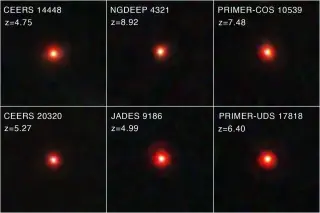
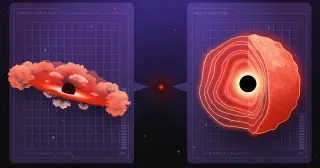
NASA’s Webb has detected widespread “little red dots” whose nature is disputed: they may be distant galaxies, feeding black holes, or a new class called black hole stars powered by hidden cores. New spectra introducing Balmer breaks and revised line shapes have fueled a black hole-star/quasi-star interpretation, while others argue for traditional black holes plus dust or orientation effects. The debate is fueling tests and models about how supermassive black holes might form in the early universe, with researchers seeking distinguishing patterns and mass inferences to settle the dispute.