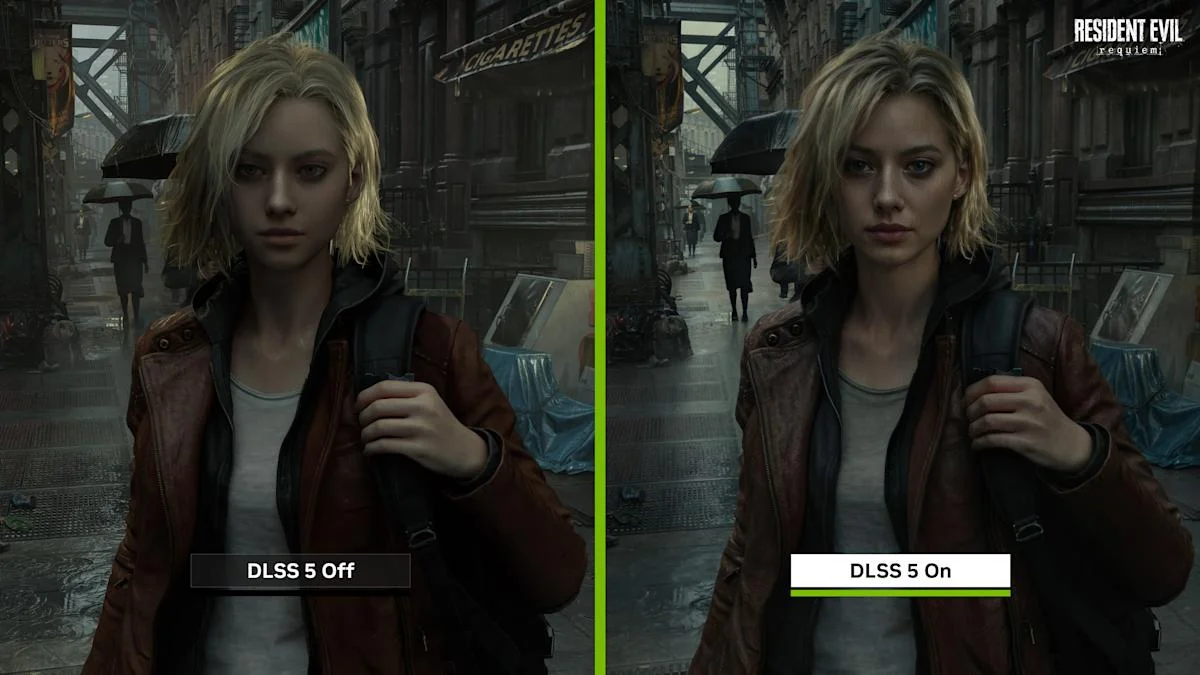
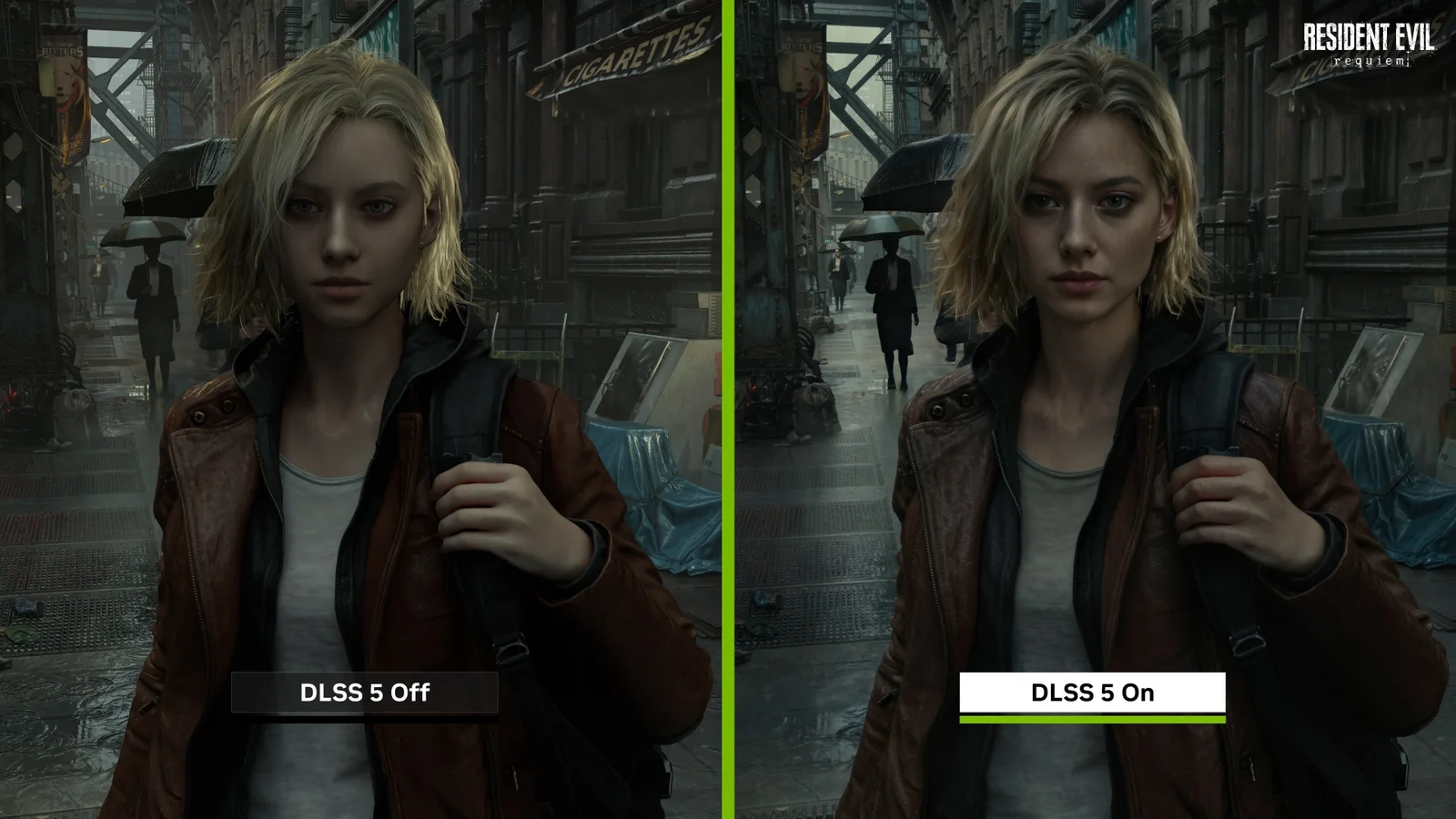
NVIDIA unveiled DLSS 5 at its GTC event, calling it the company’s most significant graphics breakthrough since real-time ray tracing, and said it will bring real-time AI-assisted rendering to video games.
NVIDIA previews DLSS 5, a real-time AI upscaler that infuses scenes with photoreal lighting and materials and can run at up to 4K; demonstrated during a GTC 2026 keynote on games like Resident Evil: Requiem, Hogwarts Legacy, and Starfield, with NVIDIA pitching it as Hollywood-level real-time rendering that may eventually run on a single GPU after its current dual‑GPU showcase.
NVIDIA unveils DLSS 5, a real-time neural rendering system that infuses game scenes with photoreal lighting and materials anchored to the source 3D content, enabling up to 4K gameplay with artist-controllable intensity and masking; backed by major publishers and set to arrive this fall, it’s pitched as the biggest graphics leap since real-time ray tracing.
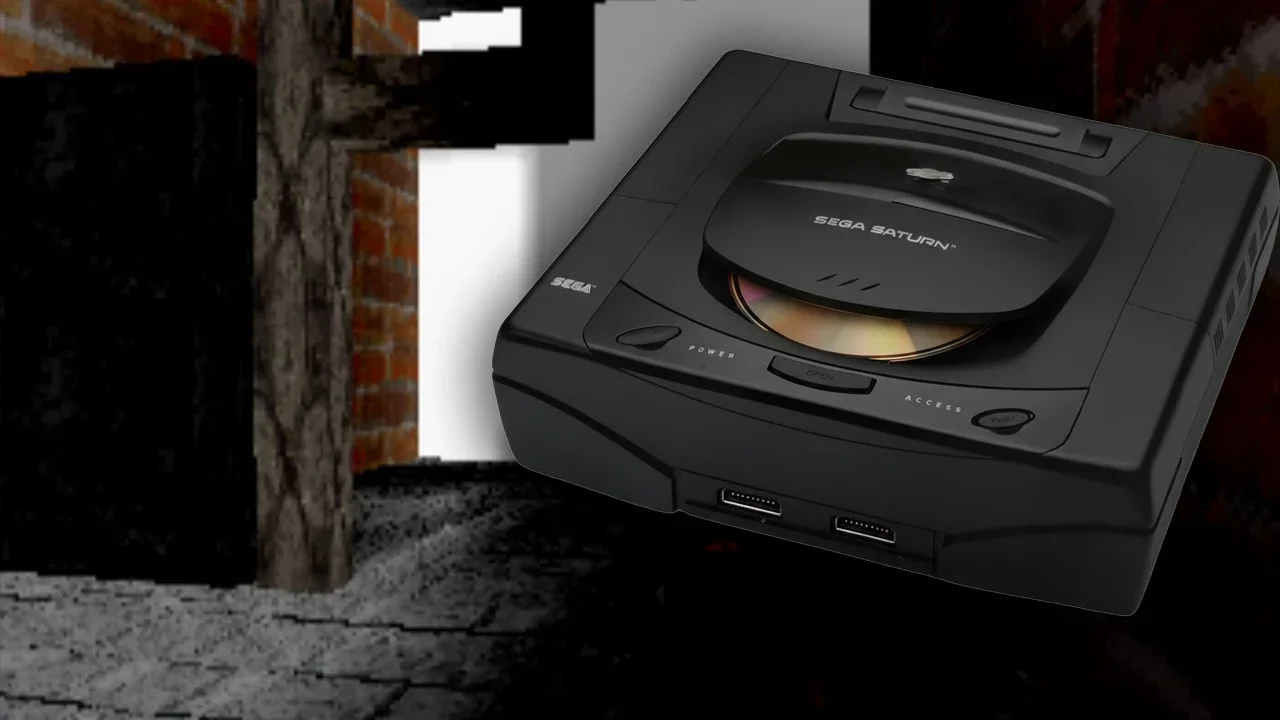
A modern proof-of-concept demo shows primitive real-time ray tracing running on the Sega Saturn, lighting a single room using dynamic lighting with the system’s dual SH-2 CPUs and VDPs; visuals are blocky and it didn’t ship in any game, but the feat highlights what can be pushed with Saturn-era hardware.
Nvidia is enhancing virtual hair realism in the upcoming Indiana Jones game using new RTX Hair features that employ spheres instead of triangles, leveraging hardware acceleration in RTX 50-series GPUs to improve lighting, shadows, and overall appearance of digital characters like Harrison Ford.
Oasis AI allows users to play Minecraft in real-time without needing to purchase the game or have a powerful device, as it generates game frames based on user input. This AI model works similarly to image-generating AIs like Midjourney, creating frames as players interact with the game. However, it has limitations such as poor frame rates and visual anomalies. The game can be accessed via Oasis AI's website using a desktop and Chrome browser, but it may experience bugs and lag.
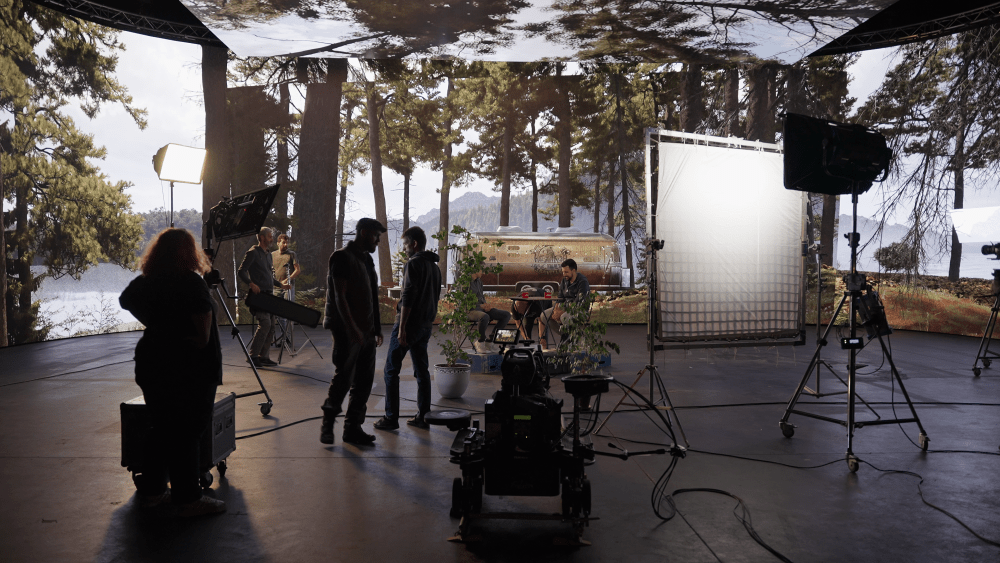
Chaos, a German visualization tech developer, is working on Project Arena, a high-quality real-time renderer aimed at revolutionizing virtual production by offering a more cost-effective, efficient, and higher quality option for creating 3D scenes on LED screens. By combining V-Ray ray tracing with new technology, Chaos aims to provide a more accurate representation of lighting and cameras in real time, allowing filmmakers to focus on creativity without being disrupted by technology.
Intel has revealed details about ExtraSS, its new framework for enhancing real-time rendering performance. ExtraSS combines spatial super sampling and frame extrapolation, using a different technique than NVIDIA DLSS 3 and AMD FSR 3.0. While Extrapolation reduces input latency, it may introduce more artifacts. Intel's screenshots show promising results, but it remains to be seen if ExtraSS can match the image quality of DLSS 3 and FSR 3.0. Unlike DLSS 3, ExtraSS will work on all GPU vendors, making it an interesting alternative for developers.