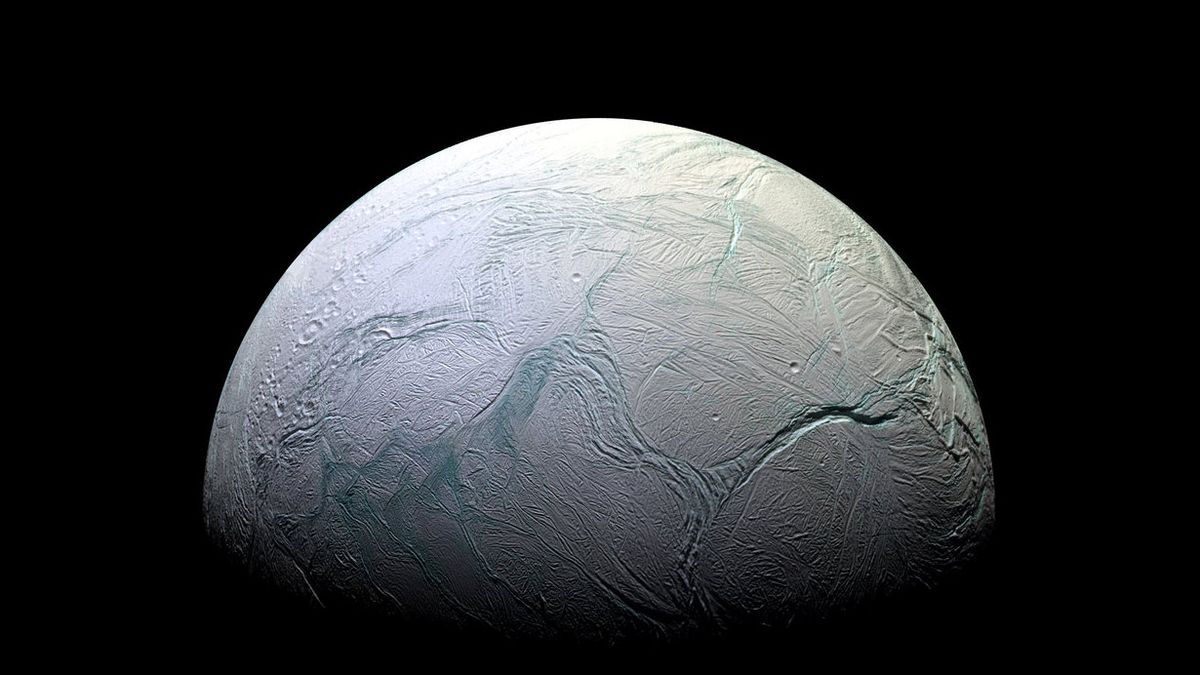
Tiny Enceladus Emits a Wide Ocean Plume, Hinting at a Habitable World Beneath Saturn’s Ice
Despite being only about 500 km across, Enceladus vents a global plume of water, ice and salts from fractures near its south pole; JWST mapped water as far as about 10,000 km away, and Cassini detected salts, phosphates, hydrogen and a suite of organic compounds, pointing to a global salty ocean beneath the ice with hydrothermal activity and chemical energy—making Enceladus a potentially habitable ocean world, though no life has been detected and future missions could sample plume grains directly.