Tag

Skull Bone Marrow

All articles tagged with #skull bone marrow

Hidden Skull Immune Hubs May Help Fight Brain Cancer
science2 hours ago

Hidden Skull Immune Hubs May Help Fight Brain Cancer

Scientists have identified a skull bone marrow niche that acts as a brain-focused immune hub, with channels linking brain tissue to skull lymphoid structures. In mouse glioma models, boosting these skull hubs improved anti-tumor responses and survival, hinting at a potential, less invasive therapy for brain cancer—pending confirmation that humans have similar structures and translating the approach to clinics.

Brain-border immune hubs: skull bone marrow hosts germinal-center–like niches that surveil the CNS and boost anti-tumor immunity
neuroscience6 hours ago

Brain-border immune hubs: skull bone marrow hosts germinal-center–like niches that surveil the CNS and boost anti-tumor immunity

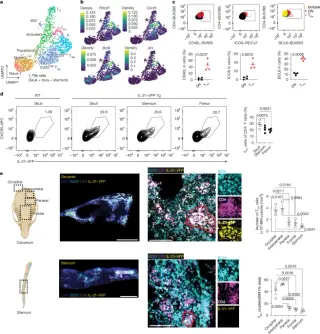
A study reveals the skull bone marrow harbors organized, germinal center–like lymphoid structures with follicular helper T cells that promote B cell activation and humoral responses to CNS-derived antigens. Brain-derived antigens reach these skull niches via glymphatic routes, enabling local antigen presentation, T/B cell interactions, clonal B cell expansion and somatic hypermutation. In mouse brain tumor models, skull BM responses contribute to anti-tumor immunity and can function independently of traditional secondary lymphoid organs; local CD40 agonism combined with IL-21 and IFN-γ enhances skull B cell activity and IgG responses, boosting intratumoral immunity and survival. The findings position skull bone marrow as a CNS border immunosurveillance site with potential relevance to human brain immunity and therapy.

Skull bone marrow drives immunotolerance in pediatric brain tumors
science6 months ago

Skull bone marrow drives immunotolerance in pediatric brain tumors

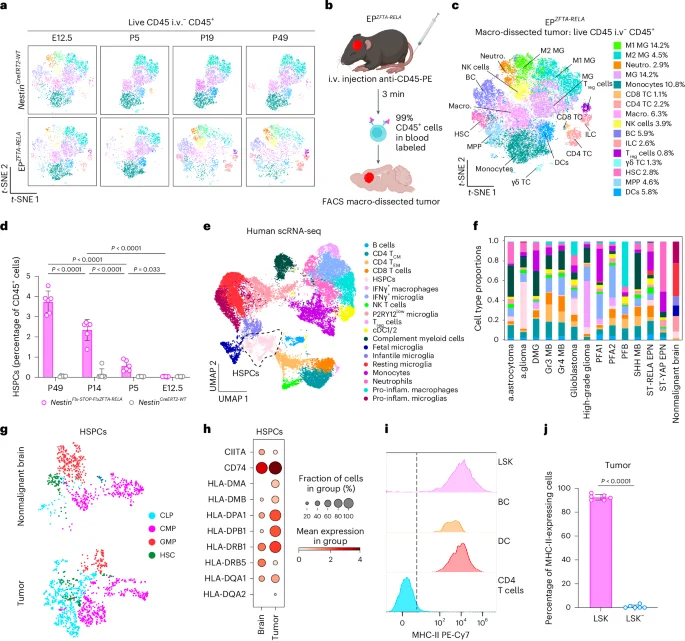
New research reveals a skull bone marrow–tumor immune axis in childhood brain cancers: CSF-borne signals educate skull hematopoietic stem and progenitor cells to present tumor antigens via MHC-II, polarizing CD4+ T cells toward regulatory T cells and promoting immunotolerance. Disrupting this axis—by normalizing CSF cytokines, mobilizing skull hematopoiesis, or blocking GM-CSF signaling with mavrilimumab (and even more so when combined with immune checkpoint blockade)—induces tumor regression in mouse models of ZFTA–RELA ependymoma, choroid plexus carcinoma, and group 3 medulloblastoma. The findings identify a skull-tumor immunological interface and suggest targeting local skull hematopoiesis as a potentially less-toxic therapy for aggressive pediatric brain tumors.