Tag

Neuroinflammation

All articles tagged with #neuroinflammation

Hidden gut sugars linked to ALS and dementia, opening new therapy paths
health-and-medicine2 days ago

Hidden gut sugars linked to ALS and dementia, opening new therapy paths

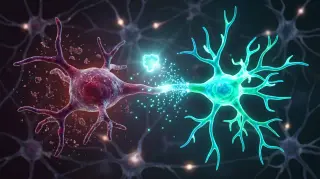
New research shows harmful sugars produced by gut bacteria trigger immune responses that damage brain cells in ALS and frontotemporal dementia; elevated levels were found in a majority of patients studied, and experiments reducing these sugars improved brain health and lifespan, pointing to gut-targeted therapies and biomarkers to slow disease progression—especially in carriers of the C9orf72 mutation.

Brain immune cells may spark Alzheimer’s plaques, reshaping disease triggers
science14 days ago

Brain immune cells may spark Alzheimer’s plaques, reshaping disease triggers

A new study suggests brain immune cells (microglia) can actively initiate amyloid plaques by reshaping amyloid-beta into fibers and promoting tau tangles, challenging the view that microglia only clear plaques and implying that early inflammatory responses may set the stage for Alzheimer’s progression; this could influence timing and targets of future therapies.

Cannabidiol Dampens Brain Inflammation in Alzheimer’s Mouse Model
science21 days ago

Cannabidiol Dampens Brain Inflammation in Alzheimer’s Mouse Model

Preclinical study in a mouse model of Alzheimer's found inhaled cannabidiol (CBD) reduced key inflammatory pathways (IDO and cGAS), lowered proinflammatory cytokines, and improved recognition memory, suggesting CBD may exert a multitarget anti-inflammatory effect that could complement other approaches. However, results are early and in animals, and human studies are needed to assess safety and efficacy.

Microplastics May Drive Brain Changes Linked to Parkinson's, Review Finds
science1 month ago

Microplastics May Drive Brain Changes Linked to Parkinson's, Review Finds

A review of 100+ studies links microplastics and nanoplastics to brain pathways involved in Parkinson's disease, suggesting these pollutants can enter the body via ingestion, inhalation, or skin contact and reach the brain to promote alpha-synuclein clumps and neuroinflammation, as well as disrupt gut-brain communication and ferry metals; however, most evidence comes from animal/cell studies and human data are limited, so more research is needed alongside reducing plastic pollution and improving waste management.

Caffeine Linked to Reduced Brain Inflammation and Mood Benefits in Rodent Studies
science1 month ago

Caffeine Linked to Reduced Brain Inflammation and Mood Benefits in Rodent Studies

A systematic review of 17 rodent experiments finds caffeine consistently lowers brain inflammation and improves anxiety- and depression-like behaviors, likely via adenosine receptor blockade, increased brain-derived neurotrophic factor, and reduced pro-inflammatory cytokines and oxidative stress; caffeine's effects are comparable to some antidepressants in animals, but most data come from adult male rodents with varied dosing, so human studies are needed to determine safety and applicability.

THC and celecoxib combo slows Alzheimer's-like brain changes in mice
health2 months ago

THC and celecoxib combo slows Alzheimer's-like brain changes in mice

In two mouse models of Alzheimer's disease, researchers found that very low-dose THC improved memory and reduced brain inflammation, and when combined with celecoxib (a COX-2 inhibitor anti-inflammatory) it led to even stronger benefits, including reduced beta-amyloid plaques and tau tangles and healthier gene activity. THC alone offered limited benefits and increased inflammation; the combo reversed that trend and showed greater cognitive improvement. With both drugs already approved for other uses, the team hopes to move toward human trials to see if the benefits translate to slowing or reversing disease progression.

Alzheimer’s breakthrough: a single brain receptor triggers synapse erasure
science2 months ago

Alzheimer’s breakthrough: a single brain receptor triggers synapse erasure

Researchers identify LilrB2 as a shared receptor that Reacts to amyloid beta and the inflammatory fragment C4d to trigger neurons to prune their own synapses, linking two major Alzheimer's theories. This neuron-autonomous mechanism suggests therapies should aim to protect synapses rather than solely dismantle plaques to preserve memory.

Molecular Insights into Brain Endothelial-Astrocyte Communication in Mice and Humans
neuroscience5 months ago

Molecular Insights into Brain Endothelial-Astrocyte Communication in Mice and Humans

This study used molecular profiling and innovative proteomics techniques to explore how brain endothelial cells communicate with astrocyte endfeet in mice and humans, revealing dynamic ligand-receptor interactions that are modulated during peripheral inflammation and are conserved across species, with implications for understanding neuroinflammatory and neurodegenerative diseases.

Distinct Oral Microbiome Linked to Multiple Sclerosis
health5 months ago

Distinct Oral Microbiome Linked to Multiple Sclerosis

Scientists discovered that people with multiple sclerosis have an imbalanced oral microbiome characterized by a loss of beneficial bacteria and lower levels of the protective metabolite hypotaurine, suggesting that oral bacteria may influence immune dysregulation in MS. These findings could lead to saliva-based diagnostic tools and new treatments aimed at restoring healthy oral bacteria to support neurological health.