Tag

Sn 2024afav

All articles tagged with #sn 2024afav

Astronomers catch a magnetar being born inside a supernova via a rapid brightness chirp
science1 month ago

Astronomers catch a magnetar being born inside a supernova via a rapid brightness chirp

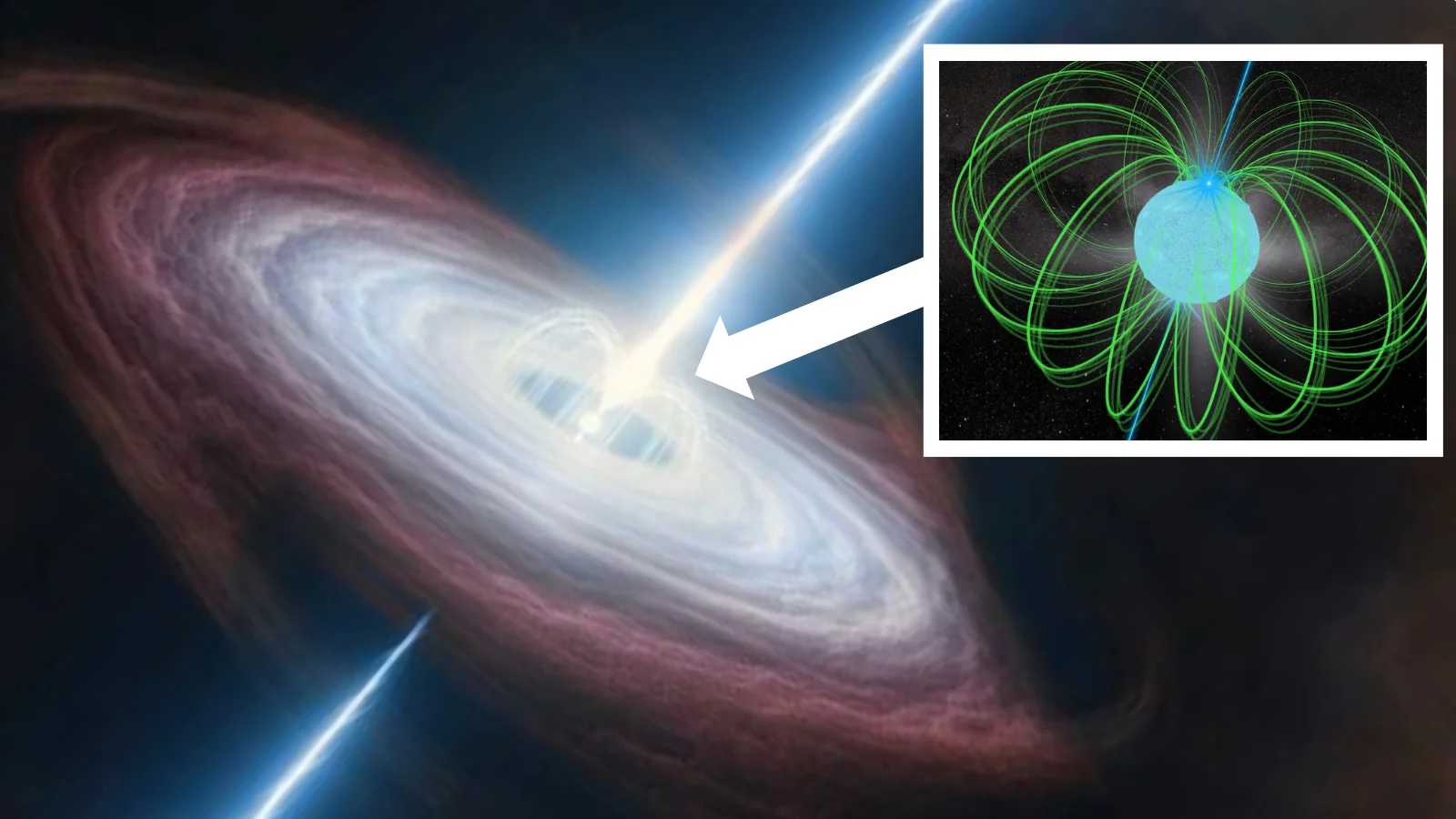
Astronomers observed a distinctive four-peaked, accelerating ‘chirp’ in the light from supernova SN 2024afav, interpreted as the birth of a magnetar—an ultra-mense, highly magnetized neutron star—hidden in the exploding star. The signal fits a model where material falling back formed a tilted accretion disk around the magnetar, whose frame-dragging (Lense–Thirring precession) causes the disk to wobble and periodically modulate the supernova’s brightness. From this, the magnetar is inferred to rotate about 4.2 milliseconds and possess a magnetic field about 300 trillion times stronger than Earth's. While this provides strong evidence for magnetars powering some superluminous supernovae, it may not apply to all such events, and future surveys like the Rubin Observatory will seek more examples to map how often magnetars form in stellar explosions.
First Magnetar Birth Seen in Chirping Supernova
science1 month ago

First Magnetar Birth Seen in Chirping Supernova

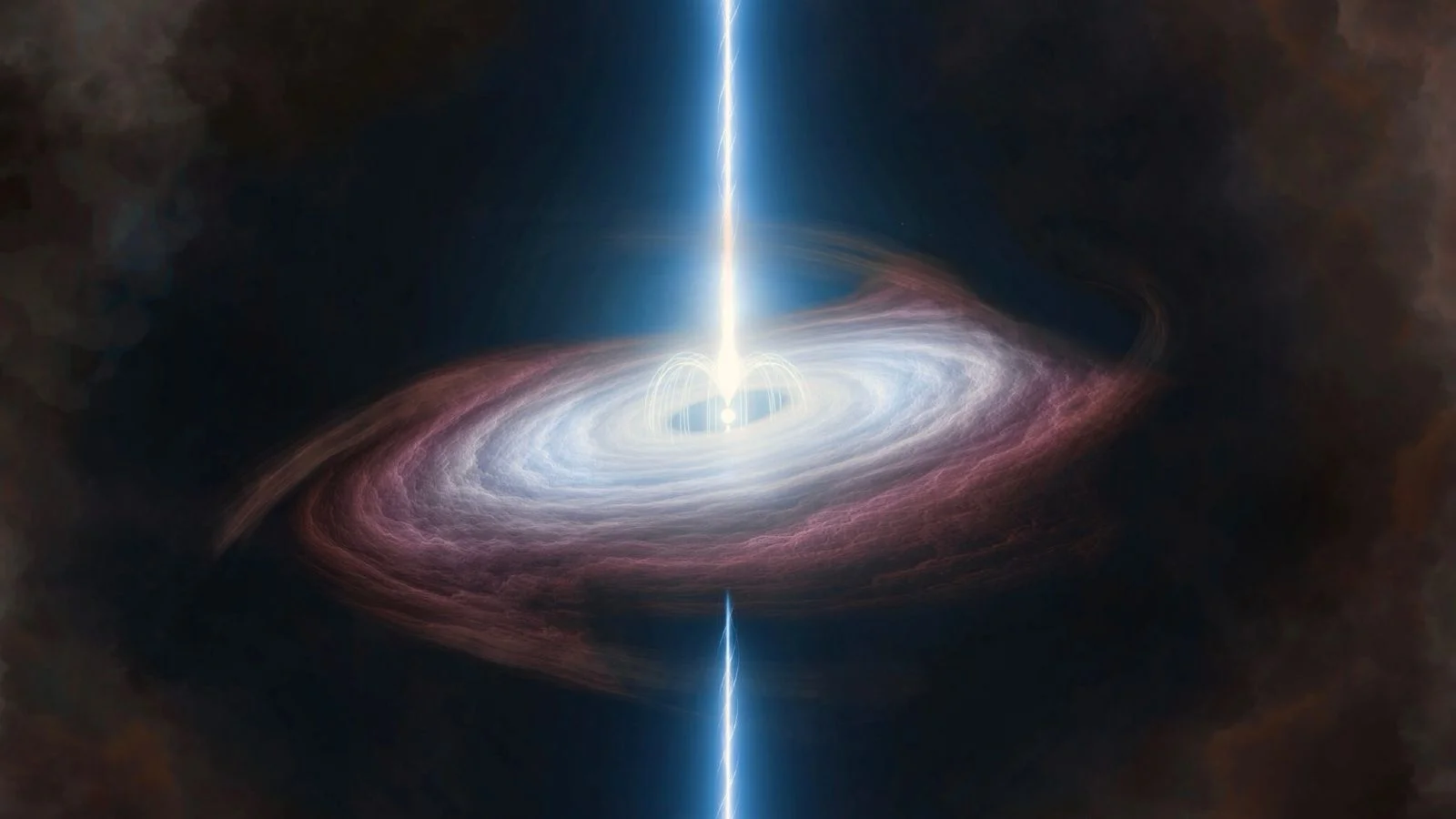
Astronomers monitored SN 2024afav for about 200 days and observed four distinct brightness bumps—the object's light curve chirp—best explained by a newborn magnetar with a tilted accretion disk that undergoes Lense-Thirring precession, a relativistic effect that modulates emitted light. This provides the first direct evidence that magnetars power some superluminous supernovae, supporting Dan Kasen's 2010 theory; the magnetar spins ~4.2 milliseconds with a magnetic field around 3×10^14 gauss. The discovery, published in Nature, confirms GR's role in a stellar explosion and suggests future surveys (e.g., Rubin Observatory) will uncover many more chirping events.

Birth of a Magnetar Captured Inside a Brilliant Supernova
space5 months ago

Birth of a Magnetar Captured Inside a Brilliant Supernova

Astronomers have for the first time witnessed the birth of a magnetar—an ultra-strongly magnetized neutron star—at the heart of a rare, superluminous supernova (SN 2024afav). The event’s peculiar light curve, including four diminishing “chirps” caused by a Lense–Thirring precession of a disk around the newborn magnetar, provides the first observational link between such births and magnetar-powered superluminous explosions, with the object estimated to spin ~4.2 milliseconds and harbor a magnetic field about 300 trillion times Earth's.

Magnetar birth confirmed inside colossal supernova
astronomy5 months ago

Magnetar birth confirmed inside colossal supernova

Astronomers have confirmed the births of a magnetar—a highly magnetized, rapidly spinning neutron star—within a rapidly bright supernova, SN 2024afav. Analysis of the 200‑day light curve revealed four chirps caused by a wobbling accretion disk around the newborn magnetar, with general relativity’s frame‑dragging explaining the timing. The magnetar spins about 238 times per second and possesses a magnetic field hundreds of trillions of times stronger than Earth's, providing definitive evidence for the magnetar–superluminous supernova connection.