Tag

Lense Thirring

All articles tagged with #lense thirring

First Magnetar Birth Seen in Chirping Supernova
science4 days ago

First Magnetar Birth Seen in Chirping Supernova

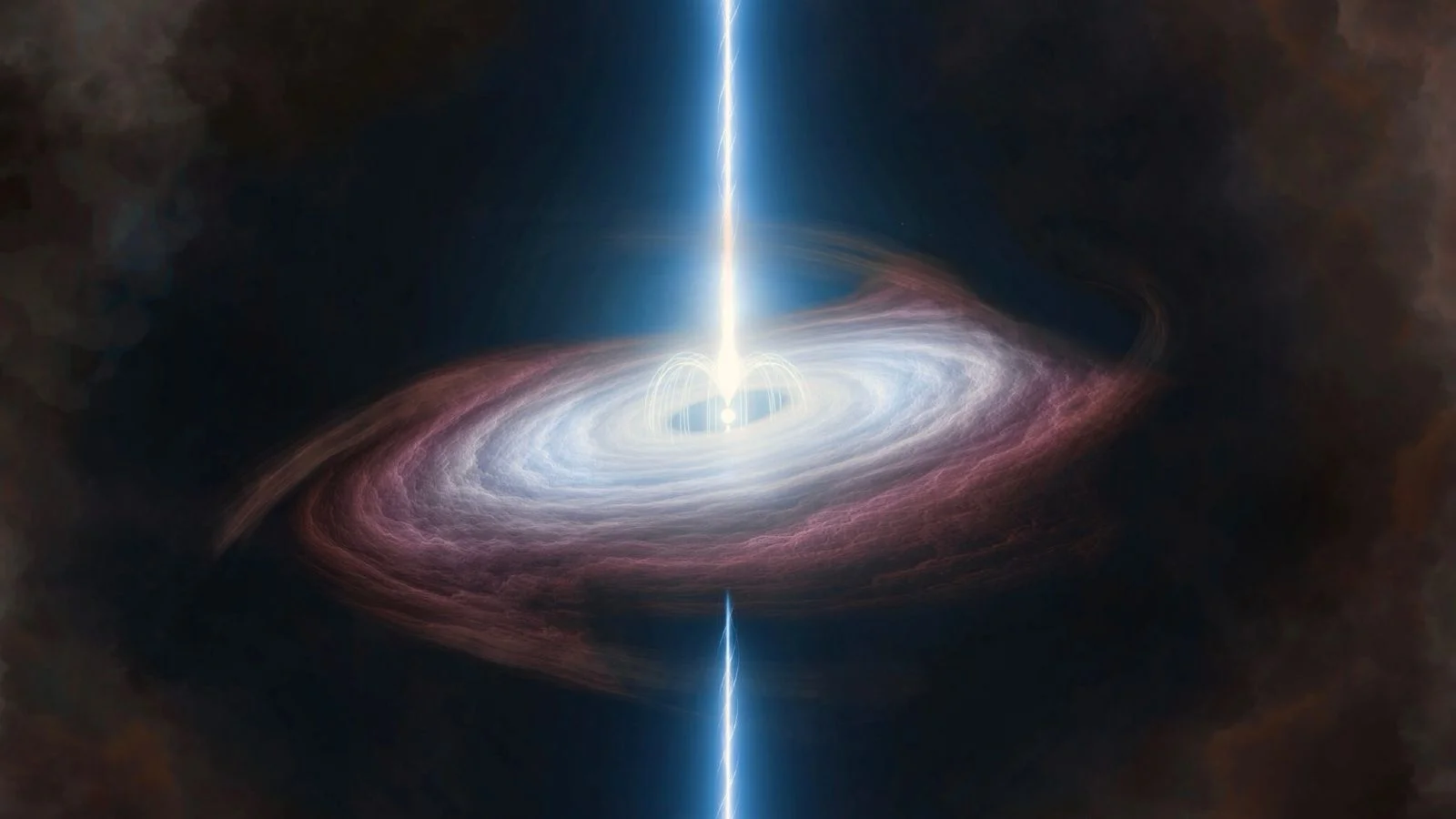
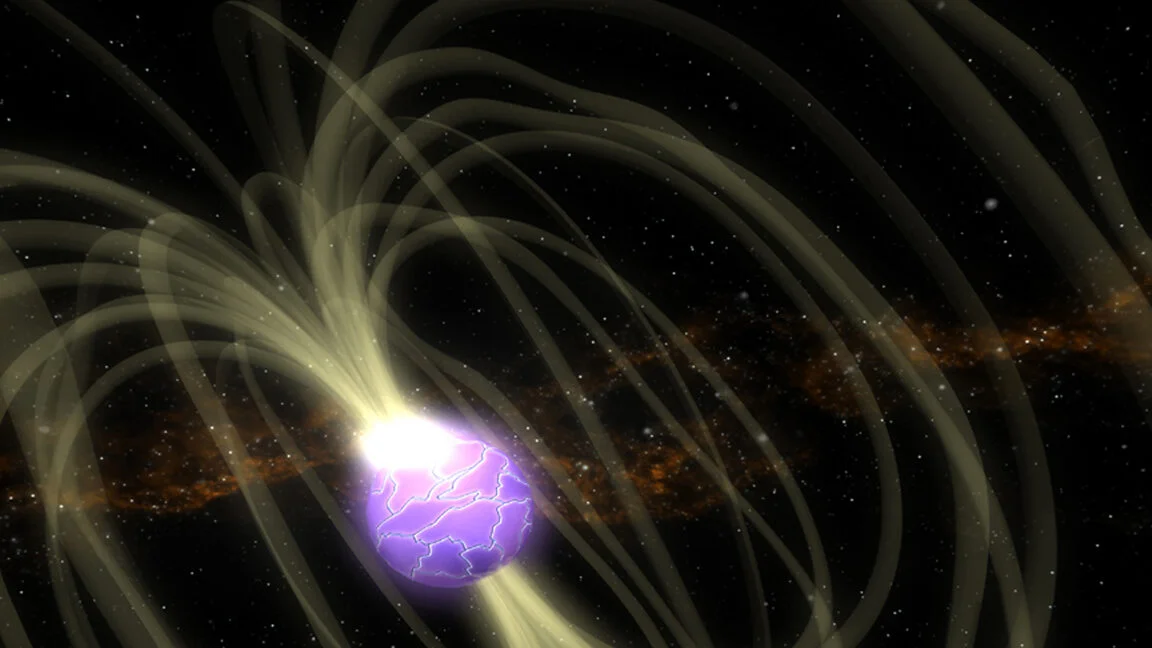
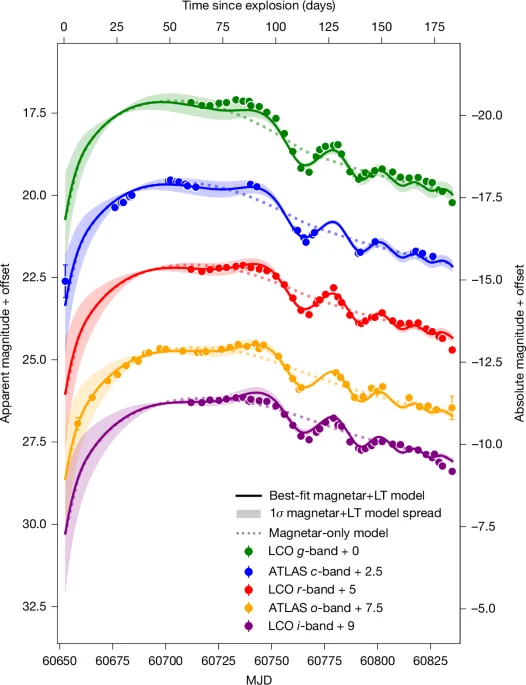
Astronomers monitored SN 2024afav for about 200 days and observed four distinct brightness bumps—the object's light curve chirp—best explained by a newborn magnetar with a tilted accretion disk that undergoes Lense-Thirring precession, a relativistic effect that modulates emitted light. This provides the first direct evidence that magnetars power some superluminous supernovae, supporting Dan Kasen's 2010 theory; the magnetar spins ~4.2 milliseconds with a magnetic field around 3×10^14 gauss. The discovery, published in Nature, confirms GR's role in a stellar explosion and suggests future surveys (e.g., Rubin Observatory) will uncover many more chirping events.

Birth of a Magnetar Captured Inside a Brilliant Supernova
space3 months ago

Birth of a Magnetar Captured Inside a Brilliant Supernova

Astronomers have for the first time witnessed the birth of a magnetar—an ultra-strongly magnetized neutron star—at the heart of a rare, superluminous supernova (SN 2024afav). The event’s peculiar light curve, including four diminishing “chirps” caused by a Lense–Thirring precession of a disk around the newborn magnetar, provides the first observational link between such births and magnetar-powered superluminous explosions, with the object estimated to spin ~4.2 milliseconds and harbor a magnetic field about 300 trillion times Earth's.

Warped spacetime powers flickering light in newborn magnetars
space4 months ago

Warped spacetime powers flickering light in newborn magnetars

Astrophysicists propose a magnetar+Lense-Thirring model to explain the zigzag, chirped light curves of Type I superluminous supernovae, like SN 2024afav. A newborn magnetar’s rapid spin twists spacetime; a misaligned, shrinking accretion disk precesses and intermittently blocks or redirects radiation, producing regular brightness bumps and a shrinking period. The model fits the observed data, yields a 4.2-millisecond spin and strong magnetic field, and could unify explanations for several such supernovae; future Rubin Observatory discoveries will test it.

Frame-dragging magnetar powers a superluminous supernova
science4 months ago

Frame-dragging magnetar powers a superluminous supernova

High-cadence observations of the SLSN-I SN 2024afav reveal chirped light-curve bumps linked to a magnetar central engine with an infalling disk undergoing Lense–Thirring precession. Modeling constrains the magnetar’s spin to about 4.2 ms and its magnetic field to ~1.6×10^14 G, providing the first observational evidence of LT frame-dragging in a magnetar’s environment and supporting magnetar spin-down as the source of extreme luminosity in SLSNe-I.