In the UK, employers may ask about current salary, but candidates are not legally required to answer. While the EU is banning such questions, the UK lacks similar legislation, relying instead on voluntary guidelines and pay transparency in job ads.
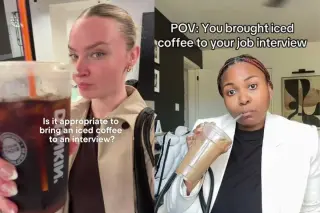
A viral TikTok post by a recruiter warning against bringing iced coffee to job interviews has sparked a broader debate about professionalism, generational differences, and the pressures of a tight job market.
A viral TikTok video by recruiter Caitlin Wehniainen claiming that bringing iced coffee to a job interview appears casual has sparked a nationwide debate. While some experts argue that such trivial details should not override qualifications, others warn that in a competitive market, first impressions matter. The controversy highlights a generational clash between traditional corporate expectations and modern workplace norms, with career coaches advising candidates to avoid risks while emphasizing that interviewers should focus on skills rather than beverage choices.
A viral TikTok by recruiter Caitlin Wehniainen sparked a national debate over whether bringing iced coffee to job interviews signals a lack of professionalism. The discussion highlights generational divides between traditional corporate expectations and modern workplace norms, with experts noting that such small signals can influence hiring in a competitive market.
A viral TikTok video by recruiter Caitlin Wehniainen sparked a heated debate over whether bringing iced coffee to a job interview is unprofessional. While some argue it signals a lack of seriousness, others view it as a harmless habit or a sign of efficient time management. The controversy highlights broader tensions between traditional corporate expectations and modern, flexible work cultures.
A viral TikTok by recruiter Caitlin Wehniainen sparked a debate over whether bringing iced coffee to job interviews signals a lack of professionalism. While some experts argue it appears casual and distracting, others view it as a harmless habit or a sign of efficient time management. Etiquette experts advise candidates to err on the side of caution to avoid negative first impressions.
This guide lists every recruitable character in Fire Emblem: Fortune’s Weave and explains how to recruit them across routes. It covers the recruitment system (Support levels with lords, Renown, paralogue completion, quest and story prerequisites) and notes which characters join in Part I, later in Part II/III, or automatically, with route-specific thresholds. It also highlights that Support Level is a global save-wide value and can be leveraged across paths, and provides per-character requirements and potential items or subquests needed for recruitment.
ICE launched a mass hiring surge to double its deportation-officer ranks, offering large signing bonuses and accelerated training, but former DHS officials warn vetting lagged and fingerprints/identity checks were sometimes skipped before officers began work. The piece centers on Joseph Moore, a Marine reservist with a troubled enforcement history who was hired and later fired, ultimately dying by suicide after learning of termination—highlighting the human cost and potential risks of rapid recruitment in immigration enforcement.
Daniel Farke’s switch to a back-three and a tall, shrewd recruitment drive have reshaped Leeds United, turning the defence into a strength and allowing Calvert-Lewin to thrive; eight points from four games and a top-four start mark their best Premier League form since 2001-02, with Elland Road buzzing as they eye European football—though it’s still early days.
A Cuban-born salsa instructor living in Petrozavodsk, Oemis Romagoza Durruthy, is identified by Deutsche Welle and partners as the alleged recruiter behind a disposable-agent network that sought to carry out arson and sabotage across at least four EU countries in 2024, via Telegram ads recruiting Latin Americans and others with military or logistical experience. Recruits were given tasks such as photographing sites and planning attacks; one Colombian recruit, Luis Alfonso Murillo Diosa, was sentenced in Romania to six years for attempted sabotage after being directed to target a waste facility and an oil well. At least a dozen people were recruited, with several detained and two already serving six-to-eight-year sentences; Lithuanian prosecutors publicly linked the plots to Russian military intelligence, and Lithuanian authorities issued an international wanted notice for Romagoza, who teaches dance in Russia and obtained citizenship in 2022. It remains unclear whether he continued recruiting after 2024, but authorities say suspected Russian sabotage activity in Europe has continued, with ongoing investigations across EU countries.
Manchester United, after a 1-0 home defeat to Manchester City, sit at four points from four matches, prompting fresh scrutiny of Michael Carrick's management, recruitment strategy, and squad depth. Questions surround overreliance on Bruno Fernandes, the limited impact of summer signings, and tactical choices as United prepare to face Brighton in the Carabao Cup and Fulham in the league, with a test to deliver before the international break.
Britain will stage a large 2027 resilience exercise that could mobilise the strategic reserve, including veterans, to test the military’s ability to respond in a conflict. The plan accompanies pressure to raise defence spending, expand youth programmes and bolster emergency preparedness, with focus on retention and wider use of retirees in future readiness.
The SEC has filed a federal lawsuit against LSU and its leadership, accusing the school of waging a deliberate campaign to recruit professional athletes in violation of conference rules and seeking an injunction to enforce SEC standards, a move seen by some as leverage should-state cases falter. The action highlights the broader clash among the SEC, the NCAA, and member schools over athlete eligibility, with several players and schools pursuing extended eligibility amid ongoing litigation and debates about how transfers and professional contracts intersect with college sports rules.
A job seeker frustrated with AI recruiters has ChatGPT impersonate him to interview with Riley, an AI recruiter, leading to a bot-to-bot interview that ends with no human follow-up; the piece suggests bot-on-bot interviews could be the next step in AI-driven hiring, while highlighting ongoing voice AI challenges and mixed industry attitudes.
A spike in Russians fleeing across the Georgia border amid intensified recruitment measures and digital summons signals Kremlin preparations for a potential new mobilization, though Moscow denies plans; experts warn the state is moving toward a faster, more repressive draft ahead of September elections, while pockets of civil resistance form in Penza and other regions.