Tag

Synthid

All articles tagged with #synthid

Google Gemini Lets Users Remove Visible AI Watermarks, Sparking Detection Concerns
technology1 day ago

Google Gemini Lets Users Remove Visible AI Watermarks, Sparking Detection Concerns

Google Gemini will soon let users choose whether AI-generated images, videos, and music carry visible watermarks. It relies on C2PA metadata and an invisible SynthID watermark for verification, but metadata can be stripped and SynthID has shown resilience to some edits yet can be defeated by adversarial techniques and existing bypass tools. The move raises concerns about the erosion of our ability to recognize AI-generated content, with rollout excluding countries where watermarking is legally required.

Google Lets Users Toggle Off Visible AI Watermarks
technology1 day ago

Google Lets Users Toggle Off Visible AI Watermarks

Google announced that users will be able to disable visible watermarks on AI-generated images and videos with a toggle for the Nano Banana, Omni and Lyria models, with Gemini and Flow to follow. The invisible SynthID watermark and C2PA metadata remain, and there will be no toggles for those. The rollout will exclude regions where laws require watermarks (notably the EU). Google says the change balances creative control and safety as AI labeling laws expand, alongside other firms pursuing transparency tools.

Google Gemini now lets you hide visible watermarks on AI content
technology1 day ago

Google Gemini now lets you hide visible watermarks on AI content

Google is rolling out a “Media watermark” toggle in Gemini and Flow that hides the visible sparkle watermark on AI-generated images, videos, and music, while invisible SynthID and C2PA markers remain so content can still be verified as AI-generated by Gemini or Search. The change is expanding to Search, though it won’t launch in countries that require visible watermarks.

Google Earth suspends AI satellite-image tool amid misinformation concerns
technology15 days ago

Google Earth suspends AI satellite-image tool amid misinformation concerns

Google briefly allowed an AI image generator to modify satellite imagery in Google Earth, triggering concerns that easily created fake scenes could spread misinformation. After researchers demonstrated potential misuse, Google rolled back the feature and pledged stronger guardrails, including the SynthID watermarking system, though experts questioned its effectiveness and the broader risks of AI-enabled edits.

AI Watermarks Survive Edits but Won’t Cure Misinformation
technology17 days ago

AI Watermarks Survive Edits but Won’t Cure Misinformation

Google’s SynthID watermark can resist heavy edits and compression, but it’s not a cure for AI misinformation: watermarks can be bypassed by cropping or adversarial tweaks, detectors are fragmented and access is limited, and widespread unlabeled AI content persists. Experts argue provenance data like C2PA, though not yet universal, may be a more reliable path to truth as AI content proliferates.

Spotting AI Images: A Practical Checklist from Snopes
technology26 days ago

Spotting AI Images: A Practical Checklist from Snopes

Snopes’ guide offers a practical, multi-signed checklist for spotting AI-generated images. It covers physics-based cues like inconsistent lighting and shadows, depth of field anomalies, and impossible perspective; signs in extremities, text, and complex shapes; and sourcing cues such as AI disclaimers, post history, and reverse-image searches. The article also notes the use of detection tools (SightEngine, Hive Moderation) and AI watermarks like SynthID with CP2A credentials, while warning these tools aren’t foolproof and should be used alongside cross-checks. The overarching message is to evaluate both the image details and its provenance, as “you can’t always trust what you see online.”

Google I/O 2026 Brings Free AI Tools Amid Paid-Upgrades
technology2 months ago

Google I/O 2026 Brings Free AI Tools Amid Paid-Upgrades

Google I/O 2026 unveiled a wave of AI tools, with many flashy features still gated behind paid tiers, but a few freebies are available now: Gemini 3.5 Flash is the new default model, Omni Flash for YouTube Shorts and Create will be free when it rolls out later this week, SynthID watermarking will help Chrome/Search detect AI-generated content, Gemini’s visual design gets a refreshed look, and Google Pics will launch in Workspace apps with free access only for certain Google Workspace business accounts.

SynthID watermarking goes global with OpenAI, Nvidia and partners
technology2 months ago

SynthID watermarking goes global with OpenAI, Nvidia and partners

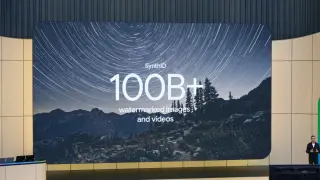
Google's SynthID AI watermarking, embedded in image pixels and audio, is expanding beyond Google to Nvidia, OpenAI, Kakao, and ElevenLabs, after users claim it has already labeled 100 billion images and videos and 60,000 years of audio; the system complements C2PA metadata tagging and will be integrated into Gemini, Chrome, and Search with new detection options, while a public SynthID API does not yet exist and a Gemini Enterprise API for trusted partners is planned.

Tokina Pulls 2025 Photo Contest Winner After AI-Generation Claims
technology3 months ago

Tokina Pulls 2025 Photo Contest Winner After AI-Generation Claims

Tokina disqualified and pulled the 2025 monthly photo contest winner after allegations that the image was AI-generated, spurred by a Reddit post. The company replaced the winning image with a photo by Lee Nuttall and said it would revise its judging process with additional checkpoints. The contested image reportedly bore a SynthID watermark suggesting AI use or heavy edits, though observers dispute the claim. PetaPixel has requested clarification from Tokina and the involved photographer, Abu Elias.

YouTube Shorts gets AI-generated avatars for digital self-representation
technology4 months ago

YouTube Shorts gets AI-generated avatars for digital self-representation

Google is rolling out AI-generated avatars for YouTube Shorts, enabling creators to generate a photorealistic digital likeness from a selfie and voice to appear in videos, with built-in AI disclosures and visible watermarks (SynthID/C2PA). Avatars are created via YouTube's AI Playground or YouTube Create app, can be remixed into Shorts, and can be edited or deleted; accounts must be 18+ and unused avatars auto-delete after three years, with a gradual rollout.

Gemini 3.1 Flash Live: Ultra-Real AI Speech Hits Google’s Tools
technology4 months ago

Gemini 3.1 Flash Live: Ultra-Real AI Speech Hits Google’s Tools

Google unveils Gemini 3.1 Flash Live, a faster, more natural-sounding real-time AI audio model for Search, Gemini Live, and developer tools, with SynthID watermarks to flag AI speech. Benchmarks show strong performance in complex tasks, though not always at human levels, and rollout across Google’s products could blur the line between human and bot voices for users.

Google brings Lyria 3 AI music to Gemini for 30-second prompt-generated tracks
technology5 months ago

Google brings Lyria 3 AI music to Gemini for 30-second prompt-generated tracks

Google is deploying Lyria 3 in the Gemini app, allowing users to generate 30-second AI music from prompts (and image prompts), with auto lyrics optional, built-in album art, and an embedded SynthID for attribution. It enforces copyright safeguards (not copying named artists), and the feature is live in Gemini web today with mobile rollout in a few days; AI Pro/Ultra subscribers get higher usage limits.

Ring Rolls Out Public Tool to Verify Video Integrity
technology6 months ago

Ring Rolls Out Public Tool to Verify Video Integrity

Ring has launched Ring Verify, a public tool that lets users upload Ring videos to see if they’ve been edited, using a C2PA-based metadata signature and automatically included with videos downloaded from December 2025 onward. It signals when a video’s content has been altered (even cropping or length changes), but it can’t confirm real-world authenticity for non-Ring footage from platforms like TikTok or Instagram. Google’s SynthID offers a separate, limited watermark-based check for AI-generated images. While imperfect, Ring Verify represents a step toward provenance and authenticity in an era of convincing AI-generated media.