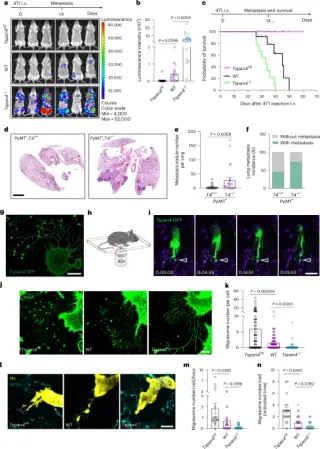
Research published in Nature reveals that circulating tumor cells shed migrasomes during metastasis, which deliver tumor antigens to immune cells and trigger anti-tumor responses. This process, mediated by Tspan4, paradoxically enhances tumor immunogenicity and constrains metastatic growth.
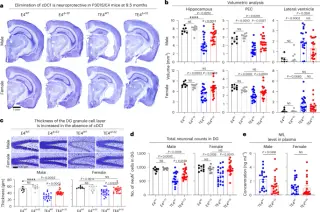
A Nature Neuroscience study proposes that Alzheimer's-related brain damage may be driven by an immune response that begins outside the brain: dendritic cells in deep cervical lymph nodes prime CD8+ T cells, which then enter the brain and promote neuroinflammation. In mouse models, silencing cDC1s or blocking cross-presentation reduced T-cell brain infiltration and neurodegeneration without changing brain tau levels, suggesting the immune process outside the brain could be a key driver and a new therapeutic target via the brain's lymphatic system rather than direct CNS drug delivery.
A tauopathy mouse study shows conventional dendritic cell 1 (cDC1)–dependent cross-presentation of brain-derived antigens in peripheral lymphoid tissues primes CD8+ T cells that infiltrate the brain and worsen tau-related neurodegeneration; removing cDC1s or disrupting cross-presentation protects against neuronal loss and reduces brain T cell accumulation, highlighting a peripheral brain–immune axis as a potential therapeutic target.
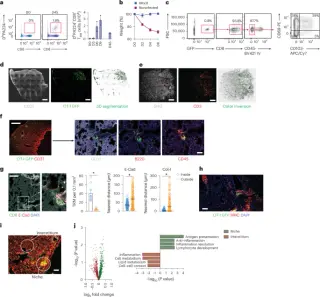
Memory-like CCR2+ monocytes differentiate into long-lasting lung cells that secrete galectin-1 to directly boost the formation and maintenance of lung CD8+ tissue-resident memory T cells, with galectin-1 also enhancing memory responses when used as a mucosal vaccine adjuvant.
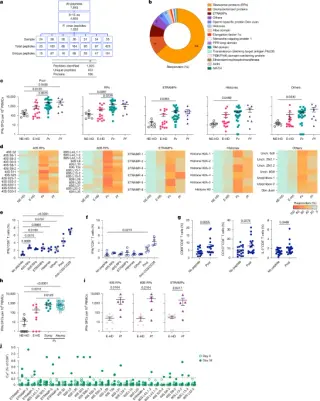
Immunopeptidomics identified 453 Plasmodium vivax–derived peptides presented by HLA class I on Pv-infected reticulocytes, mapping to 166 parasite proteins. About 75 housekeeping antigens are conserved across Plasmodium species; identical peptides are presented by multiple HLA alleles, including HLA-E. Antigenicity validated in Pv- and Pf-infected humans, with T cell responses observed in blood and liver of non-human primates; two antigens also conferred protective CD8+ T cell immunity in mice. These cross-stage, cross-species antigens hold promise for a universal malaria vaccine. Data are available via ProteomeXchange (PXD077321).
New findings show cancer cells that downregulate MHC I can still be targeted by CD4+ T cells via ferroptosis, expanding the role of helper T cells in cancer immunity and potentially strengthening immunotherapies beyond the traditional CD8+ T cell focus.
Researchers identify GPR15 as a marker and homing receptor for a mucosal subset of CD8+ regulatory T cells (CD8+ TIGR) that suppress intestinal inflammation. In humans, GPR15 variants that impair this homing are linked to severe early-onset IBD, and CD8+ TIGR are reduced in sporadic IBD. In mice, GPR15 deficiency hampers colonic homing of these cells, leading to inflammatory macrophage accumulation; CD8+ TIGR can kill activated macrophages via FasL and TWEAK, highlighting a potential new immunotherapeutic avenue for IBD.
A mouse study finds aging CD8+ T cells circulating in the blood promote cognitive ageing by secreting an enzyme that inflames the brain and impairs regeneration; blocking their blood-borne effects improved memory and learning in old mice, suggesting a practical blood-targeted approach to mitigate age-related cognitive decline. Parabiosis and cell-transfer experiments indicate these non-infiltrating T cells drive ageing, and aged cells can dampen memory-related gene expression in young brains.
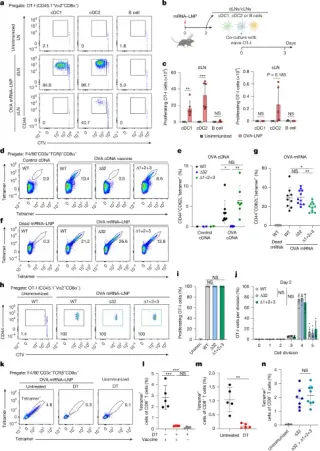
Nature reports that mRNA–LNP vaccines prime CD8+ T cells not through the classic cDC1 cross-presentation, but via redundant input from both cDC1 and cDC2 dendritic cells; a substantial portion of priming comes from cross-dressing—peptide–MHC-I complexes transferred from non-hematopoietic cells in a type I interferon–dependent process—broadening T-cell activation to antigens not encoded by the vaccine and supporting anti-tumor immunity and memory.
Researchers at UVA Health found that the brain parasite Toxoplasma gondii can infect CD8+ T cells, but these immune cells use the enzyme caspase-8 to trigger a self-destruct mechanism that kills the infected cell and the parasite inside. In mice lacking caspase-8 in their T cells, brain parasite levels were higher and outcomes worse, indicating caspase-8 is crucial for limiting brain infection. With about a third of people believed to carry T. gondii, most cases are asymptomatic, though toxoplasmosis remains a risk for the immunocompromised. The study, published in Science Advances, enhances understanding of how the immune system controls the parasite and why T cells’ self-destruction can prevent brain persistence.
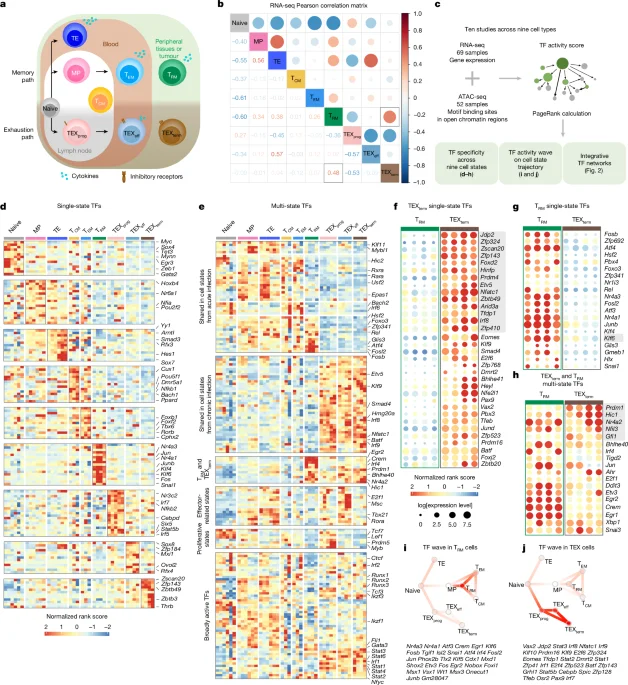
A multi-omics atlas of nine CD8+ T cell states (RNA-seq and ATAC-seq) analyzed with the Taiji network approach reveals state-selective transcription factors that drive protective tissue-resident memory (TRM) versus terminally exhausted (TEXterm) states. The study identifies new TEXterm TFs (e.g., ZSCAN20, JDP2) and shared regulators (HIC1, GFI1), maps TF–TF networks and “waves” coordinating state transitions, and uses in vivo Perturb-seq CRISPR screens to show TEXterm TFs govern exhaustion while preserving TRM formation. Deleting TEXterm-selective TFs enhances tumor control and augments immune checkpoint blockade, with human T cells showing improved effector function upon TF disruption. Overall, the Atlas enables precise engineering of T cell states to design more effective cellular immunotherapies.
Researchers at UVA Health found that Toxoplasma gondii can infect CD8+ T cells in the brain. Caspase-8 triggers the infected cells to die, cutting off the parasite's life cycle. Mice lacking caspase-8 show higher brain parasite loads and worse outcomes, while normal mice clear the infection. The finding highlights a brain-specific immune defense and a potential target for treatment in at-risk individuals.
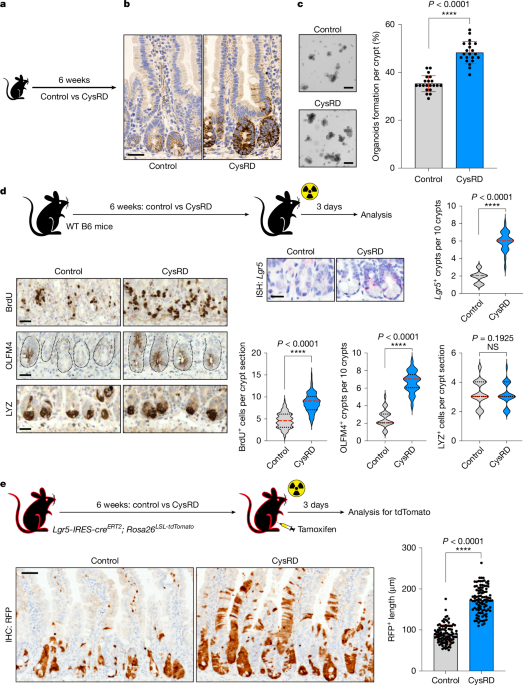
Dietary cysteine enhances intestinal stem cell function by promoting CD8+ T cell-derived IL-22, which supports intestinal regeneration and homeostasis.
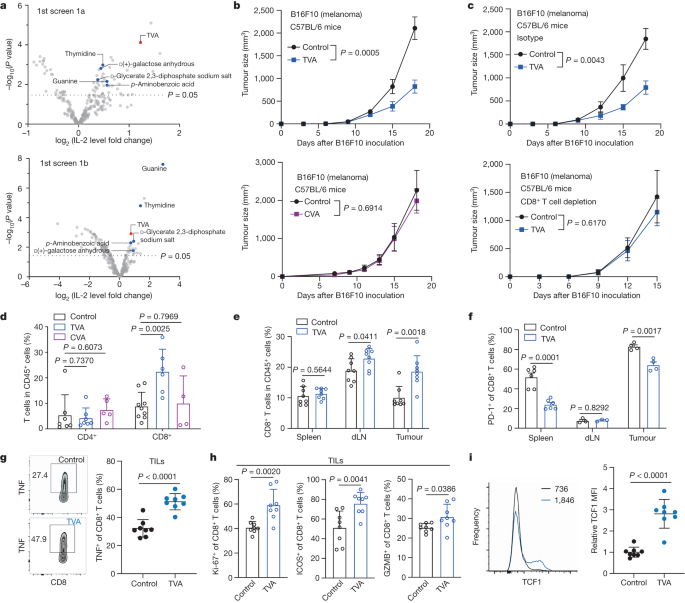
A study has found that trans-vaccenic acid (TVA), a dietary nutrient found in certain foods, enhances the function of CD8+ T cells and promotes anti-tumour immunity. TVA activates the GPR43 receptor and increases cAMP levels, leading to the activation of the CREB pathway. This results in enhanced production of cytokines, increased proliferation, and reduced exhaustion of CD8+ T cells. The findings suggest that TVA could be used as a dietary supplement to boost immune responses against cancer.
A study by researchers from the University of Chicago has found that trans-vaccenic acid (TVA), a fatty acid found in meat and dairy products from grazing animals, improves the ability of CD8+ T cells to infiltrate tumors and kill cancer cells. Patients with higher levels of TVA in their blood responded better to immunotherapy, suggesting its potential as a nutritional supplement to complement cancer treatments. The study highlights the importance of focusing on specific nutrients and metabolites derived from food to understand their impact on health and immunity.