Matthew Loftus argues that while trauma impacts physical health, popular narratives oversimplify the biological mechanisms, reducing complex medical realities to viral social media tropes.
Slate reports that high-functioning women frequently experience dissociative eating, a state where they consume food without awareness or connection to the act. This behavior, often mistaken for simple overeating, is linked to trauma, perfectionism, and societal pressures that prioritize productivity over bodily needs. Experts suggest that rebuilding trust with hunger cues can help restore this connection.
Marking the 25th anniversary of the September 11 attacks, multiple outlets highlight how the event permanently altered the lives of news professionals. AP journalists recall the visceral impact of witnessing the towers fall, while TV anchors describe how the day launched or reshaped their careers. Print and local reporters detail the logistical chaos of breaking news without modern technology, emphasizing the enduring psychological toll and professional pivots that followed the tragedy.
An expatriate in Kathmandu reports that communities in Nepal remain deeply traumatized by recent glacial floods, with ongoing psychological distress and disrupted daily life despite relief efforts.
On the 25th anniversary of the September 11 attacks, a woman who filmed the event from her apartment fire escape finally watched the footage after 25 years of avoidance. Simultaneously, a new documentary released unseen archival footage and testimonies from eyewitnesses, journalists, and rescue workers, highlighting the chaos and the role of search dogs in the recovery efforts.
A psychologist explains that traumatic memories are often fragmented and non-linear due to how the brain processes stress, challenging common expectations of coherent narratives. While 70% of people experience trauma, only a subset develop PTSD, yet many struggle with distress. The amygdala and hippocampus interact during trauma, causing memories to be stored as disconnected sensory fragments rather than linear stories. This can lead to 'freeze' or 'fawn' responses, where survivors may act normally or appease perpetrators to de-escalate threats, behaviors often misinterpreted by legal and healthcare professionals as signs of dishonesty or lack of credibility. A trauma-informed approach, which prioritizes empathy and understanding over judgment, is recommended to improve support in legal, medical, and social contexts. This perspective helps reduce victim blaming and supports healing by recognizing that inconsistent recall is a natural neurological response to trauma, not evidence of lying.
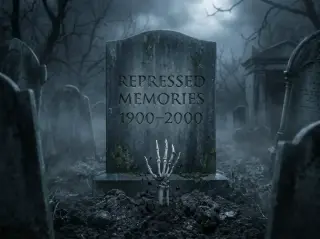
Carol Tavris and Richard McNally argue that recent popular books are reviving the debunked concept of repressed memories. They criticize Bessel van der Kolk's new $10 million deal for a sequel and children's books, as well as Amy Griffin's memoir, for promoting the idea that uncorroborated trauma memories are valid. The authors cite scientific studies showing that trauma memories are not inherently fragmented and that 'recovered' memories often stem from suggestion rather than genuine recall. They warn that this trend, which they compare to a viral epidemic, is gaining traction among younger generations who lack awareness of the 1990s 'Memory Wars.'
Former FBI profiler Jana Monroe left her role after realizing her work-induced hypervigilance had infiltrated her home life, culminating in her hiding all household knives to prevent potential intruders from using them. After 20 years in the bureau, including time as the first woman in the Behavioral Science Unit, Monroe decided to step away from profiling to restore her mental well-being and view humanity more positively. She subsequently transitioned to traditional assignments and eventually became the bureau's first assistant director of the cyber division.
Emerging research suggests that chronic inflammation may underlie persistent dissociative disorders, such as depersonalization-derealization disorder (DPDR). While dissociation is a common short-term response to trauma, it becomes a disorder in about 1% of the population. A study led by Evelyn Dilkes at the University of England found that high levels of the inflammatory marker interleukin-6 in childhood correlate with adult depersonalization, while fluctuating C-reactive protein levels link to derealization. These findings hint that anti-inflammatory treatments could eventually help manage these conditions, though the research remains preliminary and correlational.
A study and reports show a sharp rise in injuries from pedal-powered and electric bikes and scooters treated in NYC ERs, with e-bike–related trauma increasing from under 10% of trauma admissions in 2018 to over 50% by 2023. About one-third of the 914 patients studied sustained traumatic brain injuries; helmet use was under 33%, and 20% tested positive for alcohol. With e-bikes capable of up to 28 mph, crashes pose greater risk to riders and pedestrians alike, who suffer brain injuries at nearly double the rate of riders. Researchers call for safer bike lanes, helmet programs, and enforcement, and some states (like New Jersey) have enacted registration and licensing requirements to curb risk as micromobility grows.
Truthout’s review portrays Christopher Nolan’s The Odyssey as a sharp critique of Western militarism, racism, and patriarchy, pushing back against MAGA-era fantasies of a pristine “golden past.” By foregrounding memory, trauma, and a more diverse cast (Elliot Page, Lupita Nyong’o), the film follows a war-wounded Odysseus toward empathy and accountability, offering a hopeful counter-narrative even as it stays faithful to the epic’s violence. The piece argues the movie’s strength lies in its willingness to expose harm and demand reconciliation, ultimately suggesting exile and healing can help 'come home' to a more just future.
Justin and Emily Baldoni publicly addressed the emotional toll of their high‑profile legal battle with Blake Lively in a five‑minute Instagram video, saying they are healing and grateful after a May settlement that involved no money changing hands; Lively is seeking about $8 million in legal fees, and the Baldonis emphasize moving forward.
In a candid interview, Mara Brock Akil discusses her debut novel The Revelation of Dionne Daphne, detailing how its protagonist—an Essence magazine writer in 1991—navigates an HIV scare, a two-week wait for test results, and a childhood history of sexual abuse drawn from Akil’s own life. Akil explains that she writes to tell hard truths about Black women, healing through fiction, and the tension between ambition and trauma, hoping the novel empowers readers to confront shame and pursue a fuller life.
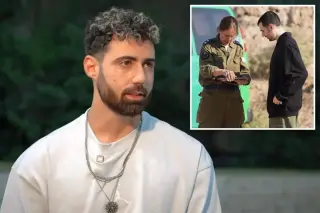
Guy Gilboa-Dalal, 24, freed after two years in Hamas captivity, describes brutal sexual assaults by his captors—including being stripped, taunted, groped, and threatened with a knife and gun—and says he was forced to profess love before his release; he is urging other survivors to come forward to empower others as one of the final hostages freed under a cease-fire.
An op-ed weighing The Body Keeps the Score against a Frontiers study arguing trauma involves active mental processes; it advocates a biblically holistic view that interlinks body, mind, and heart, and offers three practical implications for helpers, survivors, and the church: avoid overspecializing to one domain, recognize survivor agency beyond bodily reactions, and pursue integrated care that honors both science and faith in guiding healing.