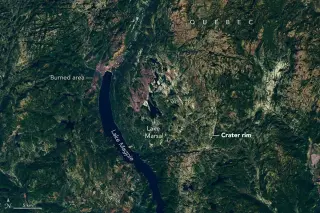
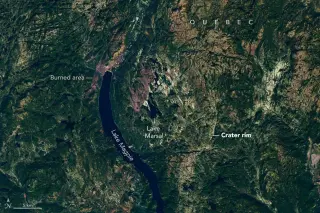
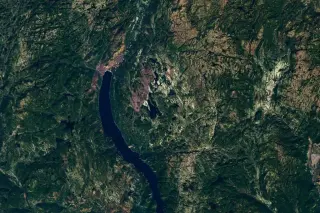
A 25-kilometer impact crater in Quebec, dated to 390 million years ago, was identified by an amateur astronomer and confirmed by scientists, marking the largest terrestrial impact structure found since 2018.
Amateur astronomer Joël Lapointe identified a circular feature near Lake Marsal in Quebec’s Côte-Nord region while planning a camping trip in 2024. His inquiry led to a 2025 expedition by planetary geologist Gordon Osinski and colleagues, who confirmed the site as a 25-kilometer impact crater formed approximately 390 million years ago. The discovery, provisionally named Uhackatik, is the largest confirmed impact structure found since 2018 and awaits formal recognition by the Meteoritical Society.
A Quebec amateur flagged a 25-km circular feature near Lake Marsal in 2024 via satellite imagery; a 2025 field expedition confirmed it as a large impact crater with shatter cones and melt rock, dating to about 390 million years ago (Devonian). Provisionally named Uhackatik, it awaits formal recognition and could be the largest terrestrial crater confirmed since 2018’s Hiawatha; the find provides direct evidence for impact processes crucial to planetary geology.
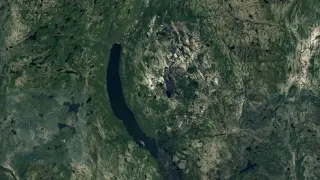
An amateur astronomer spotted unusual terrain on Google Maps near Lake Marsal in Quebec. Western University geologist Gordon Osinski provisionally confirmed the site as Uhackatik, a ~25 km wide crater about 390 million years old, with preserved shock metamorphic effects and shatter cones. The find isn’t yet peer‑reviewed and will be presented at the Meteoritical Society meeting; if confirmed, it would be among Earth’s largest recently discovered craters and offers clues about meteor impacts on lunar and Martian bodies, with comparisons to Kamestastin in Labrador and potential relevance to Artemis‑era lunar science.
Amateur astronomer Joël Lapointe spotted a circular depression on Google Maps in northern Quebec, sparking investigation that led scientists to confirm it as a 390-million-year-old meteorite impact crater named Uhackatik, following evidence of shatter cones and impact melt rocks. The crater, about 25 km wide, predates dinosaurs and offers a window into early terrestrial life. A 2025 expedition and collaboration with the Ekuanitshit Innu council culminated in naming the site and solidifying Canada’s newest crater discovery since 2010, illustrating how citizen observations can contribute to deep-time geology.