Tag

Crater

All articles tagged with #crater

NASA Captures Fresh Lunar Crater From SpaceX Falcon 9 Debris Impact
science5 days ago

NASA Captures Fresh Lunar Crater From SpaceX Falcon 9 Debris Impact

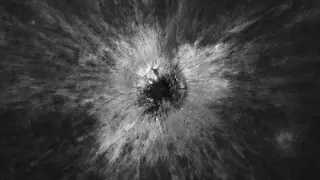
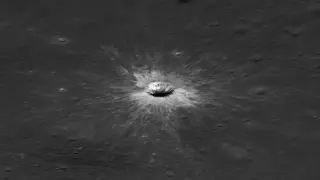
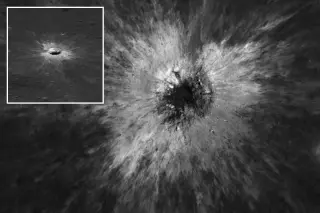
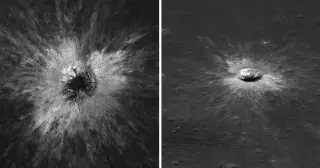
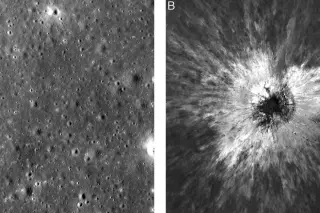
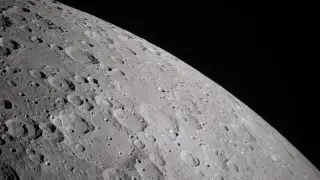
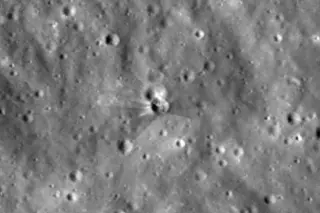
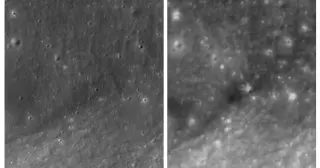
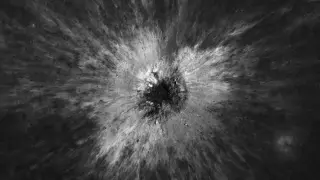
NASA's Lunar Reconnaissance Orbiter captured the first detailed views of a fresh crater on the Moon formed when a SpaceX Falcon 9 upper stage slammed into the surface on Aug. 5. The crater is about 18 meters (60 feet) wide and under 3 meters (10 feet) deep, with bright and dark ejecta rays indicating recent excavation. The Danuri spacecraft helped pinpoint the site, and the images shed light on lunar impact processes and the hazards posed by space debris for future Moon missions.

NASA Images Show 60-Foot Lunar Crater From SpaceX Falcon 9 Crash
space7 days ago

NASA Images Show 60-Foot Lunar Crater From SpaceX Falcon 9 Crash

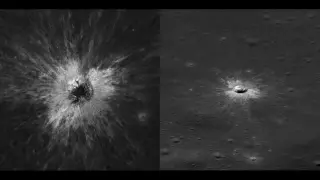
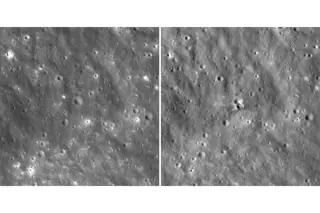
NASA’s Lunar Reconnaissance Orbiter captured before-and-after imagery of a roughly 60-foot-wide crater on the Moon, created when SpaceX’s Falcon 9 upper stage crashed on Aug. 5. The site, on the sunlit limb, shows bright and dark ejecta rays and a depth likely under 10 feet, with the crater center around 1,700 feet in elevation. Images taken Aug. 11–12 followed tracking of the booster’s trajectory, and observations also came from a Chilean telescope and South Korea’s Pathfinder Lunar Orbiter. SpaceX noted disposal challenges but emphasized space safety, marking one of the rare cases of a human-made object unintentionally impacting the Moon and fueling ongoing space-sustainability discussions.

First Moon Crater Image Shows SpaceX Debris Impact
space17 days ago

First Moon Crater Image Shows SpaceX Debris Impact

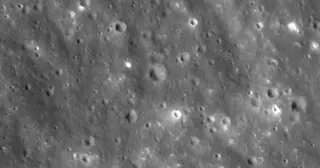
Images from Korea’s Danuri lunar orbiter capture a small crater on the Moon created by SpaceX’s Falcon 9 second stage. The site is only dozens of feet across and about 3.6 meters deep; the impact followed over a year in unstable orbit, with observations of sodium and lithium confirming the collision. Higher‑resolution views may come, but the crater will remain small relative to the Moon’s size, and observers note weather/timing hurdles for imaging.

SpaceX Falcon 9 crash on the Moon turns it into a rare planetary lab
science20 days ago

SpaceX Falcon 9 crash on the Moon turns it into a rare planetary lab

A spent Falcon 9 upper stage likely struck the Moon near Einstein crater, creating a brief flash and a dust plume that could be observed with large telescopes and upcoming images from NASA’s Lunar Reconnaissance Orbiter. Scientists expect to learn about crater formation, ejecta dispersal, and lunar interior shaking, turning this accidental impact into a valuable natural experiment that could inform safer landers and future Moon bases.

SpaceX Falcon 9 Debris Strikes the Moon, Creating a New Crater
space20 days ago

SpaceX Falcon 9 Debris Strikes the Moon, Creating a New Crater

A four-tonne chunk of SpaceX Falcon 9 second-stage debris crash-landed on the Moon near Einstein Crater, creating a new crater at roughly 8,700 km/h. Orbital observers and NASA’s LRO, along with South Korea’s Danuri, will document the site to study high-velocity cosmic impacts and ejecta; this marks only the second known Moon impact from discarded rocket hardware, highlighting growing concerns about space debris and orbital crowding.

Uncontrolled SpaceX Rocket Stage on Collision Course With the Moon
space21 days ago

Uncontrolled SpaceX Rocket Stage on Collision Course With the Moon

A four-tonne second stage of a SpaceX Falcon 9 rocket, left in space after a January 2025 lunar mission, is on a collision course with the Moon and is expected to hit Einstein crater at about 06:35 GMT, creating an ~18-meter crater and ejecta. NASA will observe or image the impact to study artificial lunar impacts and refine techniques for tracking space debris; the event poses no danger to Earth and underscores ongoing concerns about how leftover space hardware is disposed of. SpaceX and NASA are discussing ways to prevent future lunar impacts.

SpaceX rocket stage to carve a new crater on the Moon
space22 days ago

SpaceX rocket stage to carve a new crater on the Moon

A SpaceX Falcon 9 upper stage from the January 15, 2025 mission is slated to crash into the Moon on Aug 5 at about 2.43 km/s near Einstein crater, excavating a 20–30 meter crater and lofting a dust cloud 15–20 km high (potentially higher in optimistic scenarios). The impact is a kinetic event, not an explosion, releasing roughly 3 tons of TNT equivalent; telescopes and spacecraft like NASA’s Lunar Reconnaissance Orbiter and Japan’s Danuri will document the debris before and after, aiding studies of debris in cislunar space.

Casual map browse uncovers 390-million-year-old Quebec crater
science28 days ago

Casual map browse uncovers 390-million-year-old Quebec crater

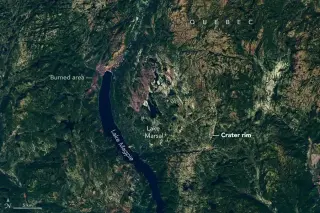
Amateur astronomer Joël Lapointe spotted a 15-km-wide pit near Lake Marsal on Google Maps, which geologists confirmed in 2025 is a 390-million-year-old meteorite impact crater now named Uhaachatik Crater after the Ekuanitshit Innu council; evidence includes zircon, shatter cones, and melt rock, with findings set to be presented at the Meteoritical Society congress, highlighting citizen science and Indigenous collaboration.

Amateur map search uncovers 390-million-year-old meteor crater in Quebec
science1 month ago

Amateur map search uncovers 390-million-year-old meteor crater in Quebec

An amateur in Quebec spotted a circular feature on Google Maps that led scientists to confirm Uhackatik, a roughly 15.5-mile-wide meteorite impact crater dating to about 390 million years ago in Quebec’s Côte-Nord. Fieldwork uncovered shatter cones and impact-melt rock, making it one of the largest crater discoveries in recent years; researchers plan to present results at the Meteoritical Society meeting.

Newly spotted 390-million-year-old meteor crater in Quebec revealed by Google Earth
science1 month ago

Newly spotted 390-million-year-old meteor crater in Quebec revealed by Google Earth

An amateur astronomer spotted unusual terrain on Google Maps near Lake Marsal in Quebec. Western University geologist Gordon Osinski provisionally confirmed the site as Uhackatik, a ~25 km wide crater about 390 million years old, with preserved shock metamorphic effects and shatter cones. The find isn’t yet peer‑reviewed and will be presented at the Meteoritical Society meeting; if confirmed, it would be among Earth’s largest recently discovered craters and offers clues about meteor impacts on lunar and Martian bodies, with comparisons to Kamestastin in Labrador and potential relevance to Artemis‑era lunar science.

Tunguska 1908: a sky-borne blast that flattened forests without a crater
science2 months ago

Tunguska 1908: a sky-borne blast that flattened forests without a crater

A 1908 explosion over remote Siberia flattened about 2,000 square kilometres of forest—an estimated 10–15 megatons of energy—yet produced no ground crater. Scientists now favor an airburst: a small asteroid (roughly 50–60 metres) disintegrated high in the atmosphere, ejecting energy into the air rather than the ground. While Lake Cheko’s crater hypothesis has been largely rejected, Tunguska remains the largest known airburst and a key reminder that near-Earth objects can devastate large areas without leaving a crater; it also underpins ongoing asteroid monitoring and risk awareness.