KitBash has acquired ArtStation and Sketchfab from Epic Games, bringing the two 3D art platforms under the same umbrella as KitBash3D and Greyscalegorilla. The deal aims to create a connected ecosystem spanning learning, asset creation, publishing, and artist discovery, while preserving existing portfolios, libraries, and workflows. Epic will continue to focus on Unreal Engine 6, Fortnite, and the Epic Games Store.
Unreal Engine veteran Sjoerd De Jong has left Epic Games after 12 years, saying the era of his approach has come to a close as the industry reaches a pivotal point. De Jong, who began working with Unreal in 1999 and later led Epic’s evangelism and developer experience before taking a product role, announced his departure last week. His exit comes as Epic previews Unreal Engine 6 with AI integrations (Claude and Gemini) intended to speed tasks like level setup, rigs, lighting, and other content creation, highlighting a broader shift that developers will need to adapt to.
Epic Games unveils Unreal Engine 6, merging UE5 and UEFN into one workflow, shifting from C++ to Verse, and deprecating Blueprint/Actor systems as the framework matures. The update adds AI-driven pipeline features and embraces open standards like glTF/USD to enable cross-game portability of assets and code, with a vision for interoperable content across ecosystems and a late-2027 Early Access window.
Unreal Engine 6 was announced with a plan for end-2027 early access and a full release around mid- to late-2029. The new engine merges Unreal Editor for Fortnite (UEFN) and UE5, shifting away from Actors/Blueprints toward a Scene Graph and an Entity Component System, with Verse becoming the primary scripting language. Migration from UE5 will be more challenging due to substantial changes in core systems, but tools, better AI integration, and a gradual transition are planned. More details are expected at Unreal Fest Chicago.
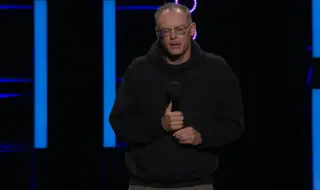
At Unreal Fest, Tim Sweeney warned of a crisis-and-opportunity moment in the game industry, calling out threats from closed ecosystems like Roblox and proposing Team Open—a cross-company alliance—to rebuild a more connected ecosystem. He emphasized that gaming is becoming more social, that the in-game economy favors large, existing ecosystems, and that attention is fiercely competed by platforms like YouTube and TikTok. Epic aims to collaborate with major studios (Disney, Lego) and to leverage Unreal Engine 6 to unite developers, players, communities, and economies across titles, so that games are interconnected rather than isolated products. Fortnite’s 80M MAU underscores ongoing growth, but Sweeney says a collective effort is needed to future-proof the industry.
Epic kicked off State of Unreal 2026 by unveiling Unreal Engine 6 with a three‑part strategy (Verse‑based gameplay programming, open‑standard portability, and a boosted production pipeline via the Model Context Protocol), aiming for cross‑platform live ecosystems with an early access target by end‑2027. UE5.8 is production‑ready with MegaLights, Audio Insights, Dataflow for Chaos Cloth, Live Link Hub, Iris, Movie Render Graph, and Mesh Terrain, plus shader optimizations and 60fps Lumen on Switch 2 and PC; a new Experimental MCP plugin enables Claude/Gemini‑style models to actively collaborate in workflows. Lore, an open‑source version control system, is now available. Epic says UEFN payouts exceed $1B as Fortnite expands with Discover improvements, mobile updates, IP content like Simpsons, and dozens of collaborations planned for 2026–27, while the Epic Games Store grows to 6000+ games with ongoing feature upgrades.”,
Epic Games unveils Unreal Engine 6 with built‑in AI tools, LLMs, and an open MCP foundation to speed content creation and enable cross‑game portability, while developers caution about ownership and costs and warn of a possible Roblox‑like monoculture—Epic defends AI as a productivity boost, even as industry opinion splits and some praise alternative engines amid ongoing company shakeups.
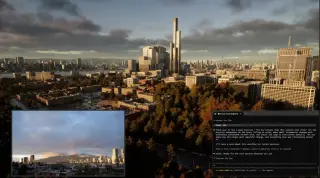
Epic unveiled Unreal Engine 6, promising deep AI-model integration (e.g., Claude, Gemini) to automate tedious content tasks while preserving creator control, and unifying UE5 and Fortnite editor workstreams into a single product. UE6 centers on Verse, portable content/code, and AI-assisted workflows to speed up level setup, rigging, lighting, and other authoring tasks. Developers can bring their own models, with on-stage demos showing AI prompts generating scenes and adjusting lighting. Early access is planned for late 2027 with a full release about 12–18 months later.
Epic Games unveiled Unreal Engine 6 with a Rocket League reveal that drew a standing ovation in Paris, signaling a next‑gen, multithreaded engine and a unification of Unreal Engine and Unreal Editor for Fortnite; while some hail the leap, others question the timing and whether Unreal Engine 5’s potential has been fully realized, with a possible UE6 release around April 2028.
Epic teased Rocket League's move to Unreal Engine 6 with a real-time, in-game trailer shown at the Paris Major, signaling a forthcoming engine upgrade for the free-to-play racer as part of Epic's UE6 rollout.
Epic Games previews Unreal Engine 6 as a gradual, cross-project upgrade designed to unify high-end development with Fortnite’s fast, live-service workflows, including a public Rocket League demo on UE6. Preview builds are expected in about 2.5 years, with a full release targeted for 2028, while UE5 continues to receive updates and tooling aims to work seamlessly across standalone titles and ecosystem experiences.
Epic Games showed a first look at Unreal Engine 6 with real-time gameplay from a redesigned Rocket League, highlighting cosmetic upgrades like improved reflections. No release date for UE6 was announced, and Rocket League still runs on Unreal Engine 3, with the engine transition in the early stages.
Epic Games teased Unreal Engine 6 with Rocket League migrating to the new engine, signaling a next-gen toolset for the Xbox Project Helix era; a full UE6 reveal and additional UE6-powered titles are expected in the near future.
Epic Games revealed at the Rocket League Championship Series 2026 in Paris that Rocket League will be the first game to use Unreal Engine 6. Details are scarce, but Tim Sweeney has said UE6 is a few years away with preview builds possible in 2-3 years, and the engine aims to unify Epic’s development stack, fix a long-standing single-threaded bottleneck by enabling multithreaded simulation, and integrate Verse as a core gameplay layer to bridge UE5 and UEFN workflows. The teaser hints previews could arrive sooner, but no release window was announced; historically UE5 took about 23 months from reveal to production, giving a rough sense of the timeline.
Psyonix unveils a 'new era' for Rocket League alongside the Unreal Engine 6 reveal, signaling a future shift from UE3 to Epic's latest engine; the Switch version has recent performance updates and Fortnite is teased in the trailer.