Europe Adds Coercion Protections to US Trade Pact
EU lawmakers voted to insert protections against economic and military coercion into a planned US–EU trade deal, aiming to deter coercive pressure and safeguard commitments as negotiations proceed.
All articles tagged with #us eu trade

EU lawmakers voted to insert protections against economic and military coercion into a planned US–EU trade deal, aiming to deter coercive pressure and safeguard commitments as negotiations proceed.

The US and EU have agreed on a Framework for reciprocal, fair, and balanced trade, including tariff eliminations, increased market access, cooperation on energy and security, and measures to address non-tariff barriers, aiming to strengthen their economic relationship and reindustrialize their economies.

The US stock market reached new record highs with the S&P 500 and Nasdaq closing at their peaks amid a US-EU trade agreement and upcoming economic events, including Federal Reserve policy and major earnings reports, while investors remain cautious about long-term impacts.

US stocks experienced a mixed day with the S&P 500 near a five-day streak, following the announcement of a US-EU trade deal that initially boosted markets but later caused a pause in gains. The deal includes a 15% tariff on EU goods, reducing uncertainty and positively impacting markets, though some uncertainty remains. Investors are now focusing on upcoming economic data, corporate earnings, and Federal Reserve decisions, with a busy week ahead for markets.

The European Central Bank has kept interest rates steady amid economic uncertainty and ongoing trade disputes with the US, with policymakers cautious about further rate cuts until more clarity on trade agreements and economic forecasts emerge.

U.S. President Donald Trump’s threat to impose 30% tariffs on the EU has disrupted ongoing trade negotiations, risking significant impacts on the crucial trade relationship between the U.S. and the EU, which is one of the world's top exporters.

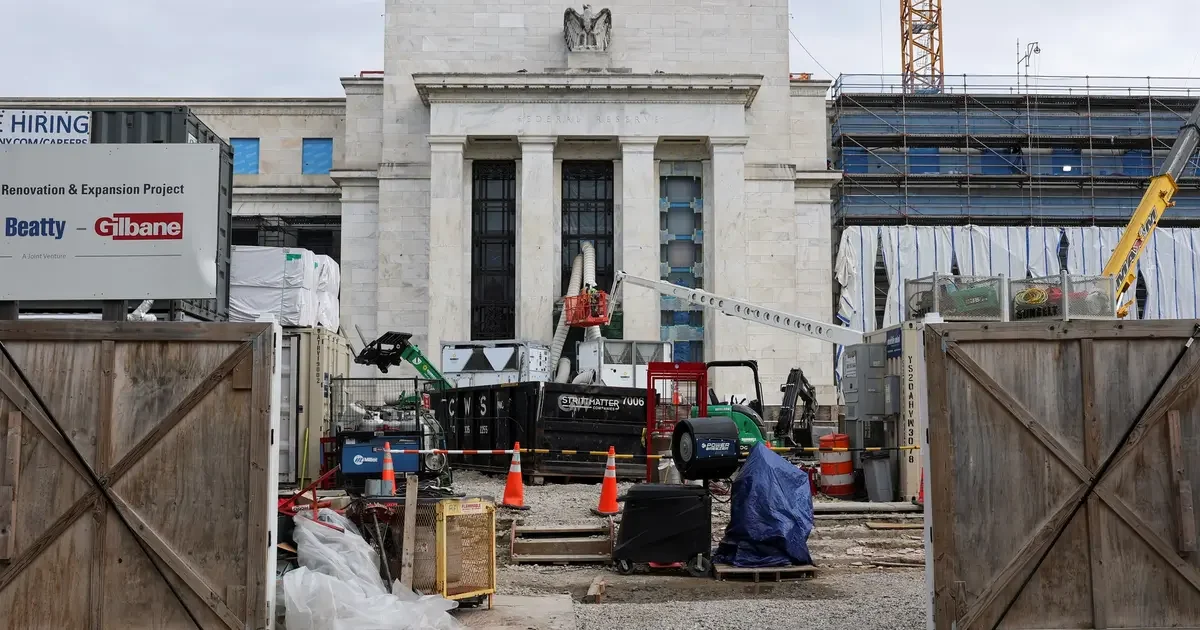
The Trump administration plans to review the Federal Reserve's renovation project amid political tensions, while also addressing issues related to housing costs, US-EU trade conflicts, and SpaceX contracts, amidst broader geopolitical and economic developments worldwide.

Despite looming tariffs set to take effect within two weeks, US stock markets remain resilient, buoyed by strong earnings reports from major companies like JPMorgan Chase and Goldman Sachs, which have helped mitigate trade-related fears. Investors are awaiting upcoming Big Tech earnings, which could influence market sentiment further amid ongoing trade tensions between the US and EU, with some sectors like Irish whiskey and Italian cheese feeling the impact of potential tariffs. Overall, markets are cautiously optimistic despite geopolitical uncertainties.

European Union officials have prepared plans to retaliate against potential US tariffs imposed by President Trump, including targeting over $84 billion worth of American goods, but they are still hoping to negotiate a deal and avoid escalation. The EU has shown readiness to respond forcefully if necessary, though it prefers diplomacy, with the possibility of using more severe measures like the anti-coercion instrument if talks fail.

US stock futures declined after President Trump announced a 30% tariff on EU goods, raising concerns about trade tensions and market resilience amid ongoing tariff threats and geopolitical uncertainties, with investors cautious ahead of key economic data and earnings reports.

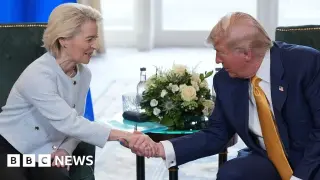
President Trump has agreed to delay a 50% tariff on EU imports until July 9 following a positive call with EU President Ursula von der Leyen, signaling potential progress in US-EU trade talks amid market fluctuations.

European leaders are concerned about the potential implications of Donald Trump's return to the White House, particularly regarding US-EU trade relations, NATO's future, and support for Ukraine amidst its conflict with Russia. These issues are central to discussions at a meeting in Hungary, where European leaders are assessing the possible shifts in policy and international dynamics that could arise from Trump's re-election.

US and European trade negotiators have reached an emergency truce to block a 50% tariff on American whiskey and bourbon that was set to be imposed by the European Union. The tariff increase, which would have had a devastating impact on the industry, has been postponed until after the inauguration of the next American president in January 2025. Distillers warn that the uncertainty makes it difficult for them to plan production, but hope for a permanent solution to maintain trade between the US and the European Union.