Paraguay became the last South American country to ratify the Mercosur–EU trade deal; once it takes effect, the agreement would form the world's largest free-trade zone, representing nearly 20% of global GDP.
Downing Street says nothing is off the table if the US does not honour the current UK‑US tariff deal, but stresses no one wants a trade war, as Washington moves to a 15% global tariff that would largely bypass the sector-specific deals with the UK; talks remain constructive and all options are on the table to protect British business, while the EU pauses its deal and analysts warn of potential UK damage if the broader tariff goes ahead. The policy uses Section 122 of the 1974 Trade Act, with exemptions for some items, and officials urge clarity on how UK exports will be treated.
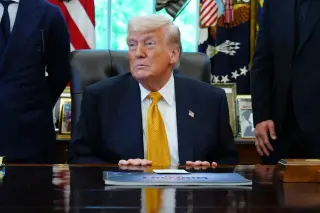
Following the U.S. Supreme Court's ruling striking down parts of Trump's tariffs, the EU pressed Washington for full clarity and urged it to honor the joint trade commitments, warning that tariff unpredictability undermines mutual benefits and signaling possible steps, including pausing ratification and using anti-coercion instruments.
India postponed its Washington visit to advance an interim trade deal in light of U.S. tariff shifts following a Supreme Court ruling that struck down Trump-era levies; with a 25% reciprocal tariff under review and new U.S. tariffs potentially reaching 15%, both sides will reconvene after reassessing implications, aiming for a March signing and April implementation of the agreement.
Japan pledges nearly $36 billion to fund three U.S. oil, gas and critical-mineral projects in Texas, Ohio and Georgia as the first tranche of a broader $550 billion investment under a landmark trade deal, aided by tariff cuts to 15%. The package includes Ohio’s $33 billion Portsmouth Powered Land natural gas facility (potentially 9.2 GW), Texas GulfLink’s $2.1 billion deepwater oil export facility, and about $600 million for a Georgia synthetic diamond grit plant run by Element Six (De Beers).
Trump announced a US-India trade deal that cuts the reciprocal tariff from 25% to 18% on Indian goods and zeroes US tariffs on many Indian products, while Modi pledged to buy more American goods and stop buying Russian oil (potentially shifting energy sourcing toward the US and Venezuela), signaling a closer bilateral economic partnership.
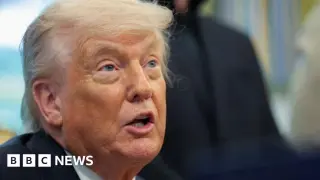
President Trump announced a return to 25% tariffs on South Korean exports, arguing Seoul is slow to implement a U.S. investment pledge. Seoul says the agreement was an memorandum of understanding, not a treaty, and delays hinge on domestic bills, creating uncertainty for businesses and investment plans tied to the deal.
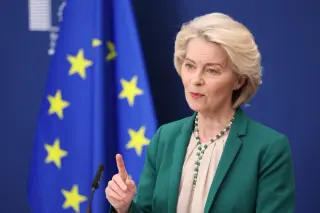
India and the European Union announced a historic free trade agreement after high-level talks in New Delhi, a deal praised as a watershed for expanded trade and investment led by Prime Minister Narendra Modi and EU leaders Antonio Costa and Ursula von der Leyen.
President Trump says tariffs on South Korean imports would rise from 15% to 25% because Seoul hasn’t enacted the trade agreement, signaling a potential reversal of tariff concessions and triggering market volatility as talks continue.
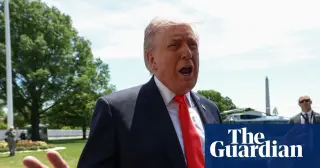
President Trump announced a 25% tariff increase on South Korean imports (from 15%), accusing Seoul of not living up to a bilateral trade deal. South Korea says it has not received official notice and wants urgent talks, as the deal’s approval is still winding its way through Seoul’s National Assembly. The move prompted declines in some South Korean stocks and highlights ongoing friction over the trade agreement and broader US tariff policy.
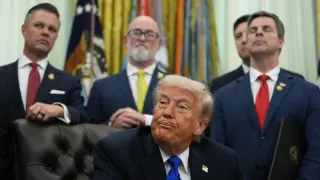
President Donald Trump said tariffs on South Korean imports—including autos, lumber and pharmaceuticals—will rise to 25% after accusing Seoul’s legislature of not enacting the trade deal; no effective date was announced, and the move comes amid currency concerns in Korea and ongoing questions about implementing the framework.
President Trump announced that tariffs on South Korean autos, pharmaceuticals and lumber would rise from 15% to 25% after Seoul’s legislature delayed approving the July 2025 U.S.–Korea trade deal, with officials noting there has been no official notification and the move heightens tensions over unilateral tariff policy.
The European Commission says it is ready to implement the EU-Mercosur trade deal despite the European Parliament voting to refer the pact to the European Court and delay its adoption.
After a 25-year quest, the EU signed a free-trade deal with Mercosur creating a 700-million-person market and phasing out about 90% of tariffs across sectors, with EU firms set to save over €4 billion annually in duties. The pact also opens Mercosur procurement to EU companies, protects 344 European geographical indications and aims to secure critical minerals, reducing dependence on China. But ratification in the European Parliament is contested, with France opposing and Italy securing concessions; safeguards are in place to reimpose tariffs if imports rise beyond 5% in sensitive sectors, including beef (99,000 tonnes at 7.5% tariff) and poultry (180,000 tonnes per year). Projections show EU exports to Mercosur rising about 39% by 2040, while Mercosur imports grow about 17%. The deal now moves to the European Parliament for approval, with a possible court challenge ahead.
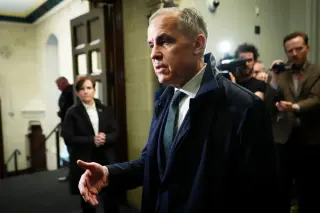
Canada and China launched a preliminary trade agreement to slash tariffs on Chinese electric vehicles to 6.1% for up to 49,000 units (rising to about 70,000 in five years) and cut canola tariffs to roughly 15% by March 1, with anti-discrimination duties on canola meal, lobsters, crabs and peas removed through year-end. The deal, announced during Prime Minister Mark Carney’s visit with Xi Jinping, aims to reopen high-level dialogue and expand cooperation in energy, agriculture and green tech, while Canada counts on LNG exports to Asia and potential visa-free travel for Canadians. Reactions were mixed, reflecting U.S.-China dynamics and domestic concerns in Canada about auto industry impacts.