The Interior Department, echoing White House criticisms, warns that federal support and cooperation with the Smithsonian could be cut off unless the museum’s leadership makes specified changes, marking another move by the Trump administration to influence how American history is presented.
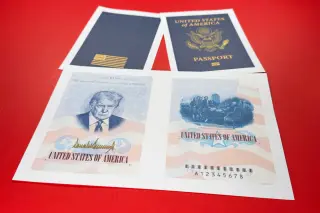
The State Department says it will expand the commemorative Patriot Passport program to 250,000 copies bearing President Trump’s image due to overwhelming demand, moving beyond the previously planned limited release; the passport includes the text of the Declaration of Independence and its signing, with applications reportedly requiring in-person attendance at special events.
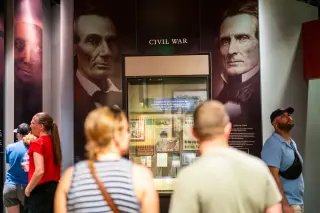
President Trump signed an executive order directing warning signs be placed outside the Smithsonian National Museum of American History, accusing certain exhibits of being inaccurate and guiding visitors to what the White House calls accurate information about US history; Democrats criticized the move as political overreach and part of a broader effort to reshape federal cultural institutions amid ongoing debates over curatorial bias and woke ideology.
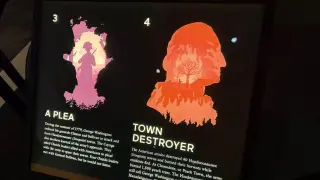
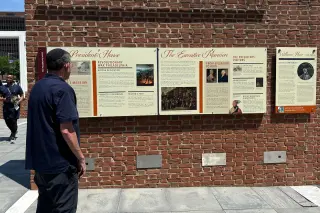
The National Park Service replaced panels about slavery and George Washington’s ownership of enslaved people at Independence National Historical Park in Philadelphia with a version critics say sanitizes history, installing the changes overnight and prompting controversy and legal action; the site’s President’s House excavation continues to highlight the stories of nine enslaved individuals who lived with Washington.
Smithsonian Secretary Lonnie G. Bunch III defended the National Museum of American History to staff after a White House report accused the Smithsonian of pushing “extreme political activism,” saying the museum’s work is driven by scholarship, accuracy and telling the fullness of America’s history.
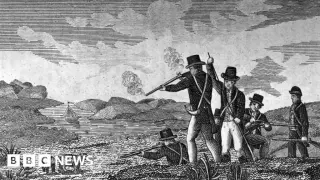
BBC analysis traces 250 years of US growth—from the 13 colonies to a continental power—driven by westward expansion, territorial purchases, and waves of immigration that reshaped identity and politics, with early regional identities foreshadowing today’s red-blue divide. As geographic expansion waned, immigration powered growth and shifted power toward the North and West, while the South pressed for expansion to sustain political clout. Now Donald Trump casts expansion as a nostalgic call to redraw borders—talking of Greenland, the Panama Canal, and possibly Canada and Venezuela—alongside mass deportations and lower immigration, framing a contemporary revival of expansionism as a test of what it means to be American.
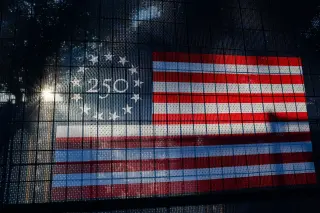
On America's 250th birthday, celebrations in Washington, DC were marred by extreme heat, security barriers, and political tension, with planned events disrupted and visitors facing long lines and delays as organizers pressed on.
The piece lists 17 vaccines deemed transformative to U.S. public health over 250 years, from Jenner’s smallpox vaccine to COVID-19, highlighting how each reduced illness and deaths, contributed to eradication or near-elimination of diseases like smallpox and polio, and underscoring the ongoing role of vaccination with expert commentary and CDC guidance guidance.
A new AP-NORC poll finds that Americans’ pride in U.S. history and democracy has declined, and fewer people say they are proud to be American, signaling a shift in national sentiment.
President Trump is shaping America's semiquincentennial celebrations, with events centered on him—from a UFC fight on his birthday to a $250 commemorative bill—sparking criticism that Independence Day is being redefined as a Trump-centric spectacle.
President Trump proclaims December 15, 2025, as Bill of Rights Day, celebrating 250 years of American independence and reaffirming the nation's commitment to the constitutional principles of freedom, justice, and self-governance established by the Bill of Rights.
Ken Burns' six-part documentary 'The American Revolution' offers a thorough, patriotic, and somewhat repetitive exploration of the war for independence, connecting key battles, figures, and themes from 1754 to the ratification of the Constitution, while highlighting internal conflicts and hypocrisies of the era.
The U.S. government shutdown has become the longest in history, surpassing the 2018-2019 shutdown, with ongoing stalemate over funding negotiations, affecting over a million federal workers and numerous public services, while political disagreements continue to hinder resolution.
A statue of Confederate general Albert Pike, torn down during 2020 protests and later restored in Washington under President Trump's orders, has reignited controversy, with critics calling it offensive and advocating for its removal from public spaces.
The USCIS is reverting to the 2020 version of the US Citizenship civics test, adding 28 questions and increasing the number of questions applicants must answer from 10 to 20, with a passing score of 12. The new test emphasizes broader and more detailed questions about US government, history, and civic rights, replacing some geography and responsibility questions from the previous version.