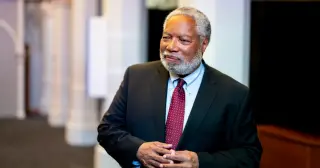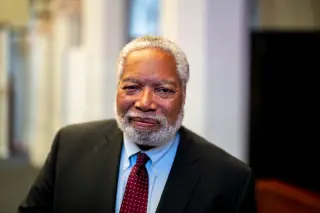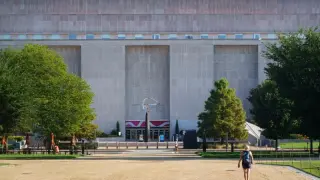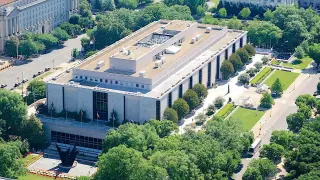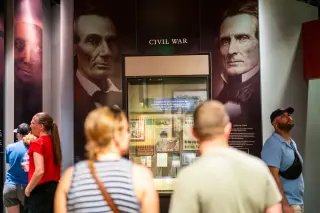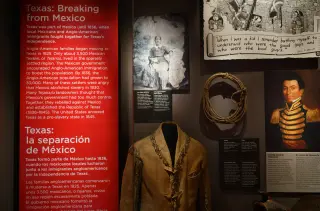
Smithsonian Secretary Lonnie G. Bunch III defended the National Museum of American History to staff after a White House report accused the Smithsonian of pushing “extreme political activism,” saying the museum’s work is driven by scholarship, accuracy and telling the fullness of America’s history.
The White House released a 162-page report, Saving America’s Story, under a 2025 executive order aimed at removing ‘improper ideology’ from Smithsonian museums, accusing the National Museum of American History of extreme political activism and erasing America’s heritage, signaling intensified political pressure on the institution.
Smithsonian Starstruck is a 40-minute VR walkthrough that lets visitors explore stars, exoplanets, and observatories (Hubble, Chandra, JWST) through an HTC Vive Focus 3 headset. The journey spans from near the Sun to the Milky Way’s center, including a close look at Janssen (55 Cancri e), Betelgeuse’s final stages, and Sagittarius A*, with a glimpse of Chile’s Giant Magellan Telescope. Opening in Washington, DC, in May with adult tickets around $29–$35 and discounted group rates, it will expand to Denver, Orlando, and San Antonio later this year. While it may not deliver cutting-edge hardware wow for Apple Vision Pro users, it offers an engaging, accessible space-nerd experience that benefits from a group setup to reduce awkward collisions in the shared space.
Trump spoke with an AI replica of Theodore Roosevelt at the new Theodore Roosevelt Presidential Library in North Dakota, created by LemonSlice. The lifelike exchange, staged ahead of the library’s July 4 opening, circulated online as memes and sparked chatter about whether Trump knew he was talking to AI, underscoring the growing use of AI avatars in museums and public experiences.
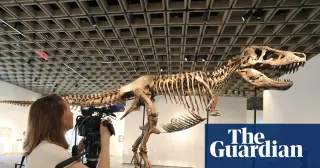
A Danish-led study revisits Otodus megalodon’s size using 11-million-year-old vertebrae rediscovered in Denmark, reinforcing estimates that these giants exceeded 24 meters, with a newborn around 3.6 meters and a lifespan near a century, while also illustrating how fossils can be lost or misplaced in museums and later recovered, offering new research opportunities.
A federal judge blocked the Trump administration's changes to how museums and national parks operate, halting the policy shifts while legal challenges proceed.
A Russian missile strike pummels Kyiv, destroying the National Chornobyl Museum’s roof and wiping out about 40% of its artefacts on display, while the nearby National Art Museum of Ukraine is damaged; staff salvage what they can and move next exhibitions online as Ukraine's cultural heritage endures ongoing attacks.
A ScienceAlert feature shows how stored museum collections continue to fuel science, with discoveries like 19,000–14,000-year-old whale-bone tools from Magdalenian Europe; the Villena Treasure’s meteoritic iron pieces; interior Alaska bones revealing two whales rather than a mammoth; Darwin specimens’ fluids being identified with laser analysis; opalized fossils from Australia revealing a multi-species dinosaur assemblage named Fostoria dhimbangunmal; and the Burgess Shale Stanleycaris hirpex brain preserving new details about arthropod evolution—proving that revisiting old collections with modern techniques can yield new knowledge.
The National Medal of Honor Museum in Arlington, Texas, opened in 2025 and was named one of the seven world’s most beautiful museums on Prix Versailles' 2026 list—the only museum in the Western Hemisphere on the roster. Prix Versailles praised its design as inseparable from its mission, featuring a steel-clad Exhibition Hall hung over a landscaped Field of Honor, five megacolumns representing the U.S. Armed Forces, and abundant natural light via an oculus. The museum, designed by Rafael Viñoly Architects, offers general admission with various experiences; the full 2026 list includes institutions in Abu Dhabi, Shenzhen, Guangzhou, Tokyo, Šeduva (Lithuania), and Tashkent.
Nine people were indicted in a decade-long €10 million ticketing scam at the Louvre, involving ticket reuse by guides and splitting groups to dodge controls; cash seizures were made and two Louvre employees were among the suspects, with a broader investigation potentially linked to Versailles; the probe began after the Louvre filed a complaint in 2024 and is ongoing.
A Los Angeles Times critic argues that LA is rich in art beyond its film image, listing five favorites: the bronze Eros undercover by the ocean at the Getty Villa; the Fowler Museum’s celebrated textiles from Indonesia and beyond; the Huntington’s serene bonsai gardens; Kent Twitchell’s Ed Ruscha mural and LA’s vibrant mural culture; and Hollywood Forever cemetery, a living pantheon that hosts screenings and star tributes, showing how memory, landscape and art converge in the city, with a Google map guiding readers to more sites.
Smithsonian museums and the National Zoo in Washington, D.C., have closed due to the ongoing government shutdown, which has entered its third week, affecting federal funding and operations, though animal care continues. The shutdown has led to significant financial and visitor losses, with political disagreements delaying a funding resolution.
The US government shutdown starting October 1, 2025, is causing potential disruptions in travel, including longer airport wait times, closed visitor centers at national parks, and uncertain impacts on museums like the Smithsonian, while essential services such as air traffic control and hospitals remain operational.
President Trump plans to expand his review of American museums for 'woke' ideology beyond the Smithsonian, raising concerns among historians about unprecedented government oversight and potential politicization of cultural institutions. Experts warn that such actions could undermine the independence of museums, distort historical narratives, and lead to censorship, especially as Trump has already targeted funding and personnel at various cultural agencies. Historians emphasize that museums regularly evolve their collections and interpretations, and political interference risks damaging their integrity and educational value.
President Trump announced plans to review U.S. museums, starting with the Smithsonian, aiming to remove what he calls 'woke' content, particularly targeting representations of Black history. The move raises concerns about government interference in independent museums and free speech, with legal experts emphasizing the First Amendment protections. The review's scope, timeline, and legal basis remain unclear, but it signals a potential shift in how cultural and historical institutions are managed and funded under his administration.