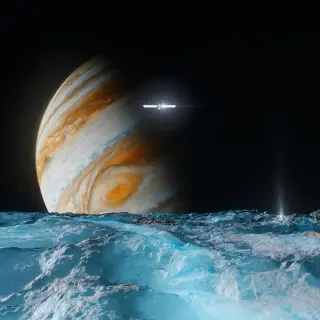
A new analysis questions earlier interpretations of Europa’s water plumes, suggesting signals previously attributed to plume activity may be misread or require alternative explanations, underscoring the need for fresh observations to confirm whether Europa hosts liquid water and potential habitability.
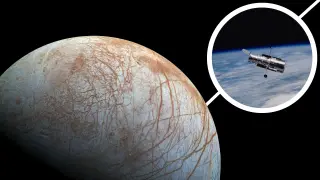
A 14-year reanalysis of Hubble data casts doubt on Europa’s previously claimed water vapor plumes, lowering confidence from about 99.9% to under 90% and suggesting the earlier detections may have been due to data placement noise; the team says plumes can’t be ruled out, but the question may be settled by NASA’s Europa Clipper mission expected to arrive in 2030.
NASA plans to study water plumes ejected from Saturn's moon, Enceladus, to search for signs of life. Previous attempts failed due to the fragility of the ice grains, but new collection techniques allow researchers to extract data without destroying the samples. Scientists believe Enceladus may host early genetic imprints for living creatures, similar to how life began on Earth. The discovery of amino acids on Enceladus' water droplets could suggest Earth has genetic cousins among the stars. A team of researchers from the University of California San Diego has developed equipment to study ice particles at high velocities. This development could alleviate concerns about the cost of sending a probe to Enceladus. Other nations, including India, Russia, and China, have also announced plans for moon exploration, indicating a renewed interest in deep-space discovery.
Enceladus, Saturn's sixth-largest moon, is spraying massive volumes of water into space through geyser-like plumes that shoot more than 6,000 miles above the planet's surface. The James Webb Space Telescope has aided NASA, European, and Canadian space agency researchers in studying the moon's fascinating geological activity, which features conditions that parallel those that led to life on Earth. Enceladus's subsurface ocean and geological activity are providing new insight into how it supplies water for the entire Saturnian system, making it a significant player in the drama of the cosmos.