commodities146.365 min read
Oil retreats after rally as Trump hints Iran campaign could be brief
1 month ago•Source: Investing.com

The latest commodities stories, each synthesized from multiple sources with added background and context.
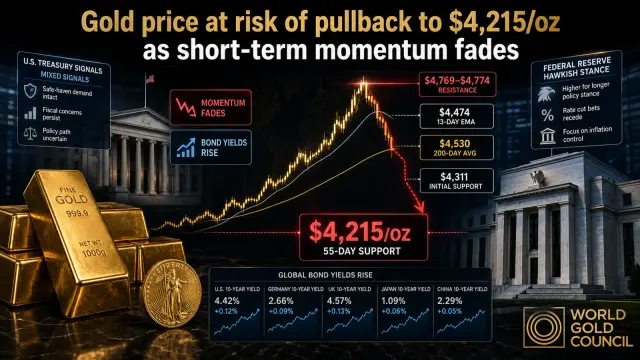
World Gold Council analysts say gold may slip toward $4,215/oz as short-term momentum fades and rising global yields pressure prices, with initial support near $4,311 and the 55-day average around $4,215; resistance is seen at about $4,474 and the 200-day average around $4,530, and a move above could lift the near-term trend, though the market may continue in a sideways range amid hawkish Fed signals and higher yields.
Investing.com•1 month ago
Oil prices hovered around levels seen before the Iran conflict as OPEC+ agreed to lift output targets from August and Saudi price cuts signaled more supply, with Brent near $72 and WTI around $68 amid recovering Gulf exports and ongoing Hormuz shipping talks.
Oil prices fell to their lowest levels since early March as a potential U.S.-Iran peace deal raised expectations of higher global crude supply, with Brent around $78 and WTI near $75; a large U.S. stock draw supported near-term demand, but uncertainty over deal implementation kept further losses in check.
Oil prices jumped about $5 a barrel after Iran halted indirect talks with the U.S. and signaled it could block the Strait of Hormuz, underscoring supply-disruption risks amid Middle East tensions; Brent traded around $95.92 and WTI around $92.82 a barrel as traders weighed disruption risks against diplomacy developments.
Oil prices jumped after Iran said it would stop communicating with the U.S. via intermediaries and move to fully block the Strait of Hormuz, signaling a potential disruption to global crude supplies.
JPMorgan cut its 2026 gold price forecast to $5,243/oz from $5,708 due to softer near-term demand, but keeps a bullish longer-term view with a year-end target around $6,000/oz; the pullback is seen as a pause, with demand expected to reaccelerate in H2 as inflation tail risks ease after potential Iran-related D/E developments and a possible Strait of Hormuz reopening. The bank also trimmed its 2026 central-bank purchases to 640 tonnes and ETF inflows to about 400 tonnes, while warning that a strong U.S. jobs market and higher inflation could prompt Fed rate hikes and ETF outflows. Gold remains range-bound near $4,340–$4,730, with catalysts including geopolitical developments and policy signals shaping the path to a recovery.
Gold prices rose as the dollar eased and Iran-related supply worries kept inflation risk in focus, with traders awaiting upcoming U.S. inflation data and Federal Reserve cues; spot gold traded around $4,640 per ounce and June futures near $4,651, while Brent crude stayed elevated.
Oil prices fell by around $1 as markets reassessed supply risks tied to potential progress in U.S.–Iran peace talks, with Brent at about $94.44 a barrel and WTI near $87.95 for the front month (June around $86.18). The market had rallied earlier on Iran’s Strait of Hormuz disruption and a U.S. cargo seizure, but the outlook now hinges on whether talks extend the ceasefire and avert further supply shocks; Kuwait declared force majeure on shipments, and Citi warned disruptions could persist into late 2026, underscoring that the supply risk remains.
Oil prices fell after signs that US-Iran talks could resume, easing fears of supply disruptions from the Strait of Hormuz. Brent traded around $98.72 a barrel and WTI around $96.65 as markets weighed potential flows again, despite ongoing disruption concerns noted by the IEA.
Oil prices jumped as Brent traded around $115 a barrel and WTI near $101, after Yemen’s Houthis attacked Israel and Iran-related tensions intensified, underscoring supply-disruption risks and a persistent risk premium amid regional hostilities and ongoing U.S. deployments in the Middle East.
Oil prices rose on Friday but markets were set for their first weekly decline since the Iran‑led conflict began, with Brent around $109.88 a barrel and WTI near $96. The market remains focused on potential duration of the war and disruption to global supplies (the IEA says roughly 11 million barrels per day have been removed from supply). Trump paused attacks on Iranian energy facilities and weighing ground action to seize Kharg Island, keeping fears of prolonged disruption — and a possible spike in prices if fighting intensifies — while some analysts see potential for a decline if de‑escalation occurs, keeping prices above pre-crisis levels.