
SLE Neutrophils Generate Novel Neoantigens via Aberrant Splicing, Driving Autoimmunity
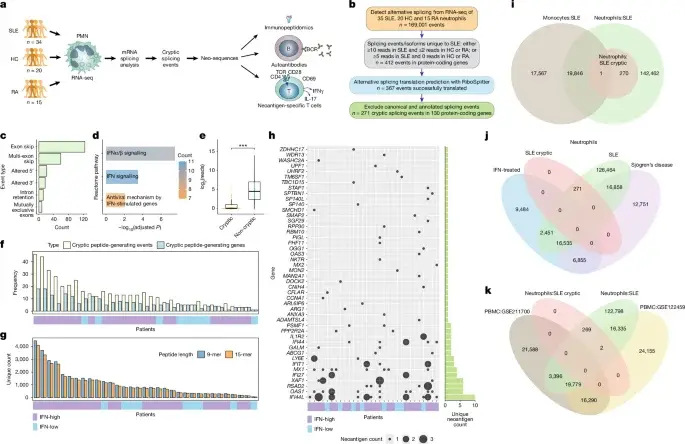
Researchers have identified a new mechanism for systemic lupus erythematosus (SLE) autoimmunity, where dysregulated mRNA splicing in neutrophils creates novel protein sequences. These 'cryptic' neoantigens are recognized by T and B cells, triggering clonal expansion and autoantibody production. The study confirms that 21 such peptides are presented on MHC molecules in SLE patients, linking innate immune cell dysfunction to adaptive immune activation.
Key points
- SLE neutrophils exhibit 271 'cryptic' splicing events absent in healthy donors or rheumatoid arthritis patients, generating novel amino acid sequences.
- Mass spectrometry detected 21 peptides derived from these novel sequences bound to class I MHC molecules in SLE patient samples.
- T cells from SLE patients expanded and secreted interferon-gamma when exposed to peptides from these novel sequences, indicating specific immune recognition.
- SLE patient serum contained IgG autoantibodies that recognized epitopes within the novel amino acid sequences, confirming B cell activation.
- The aberrant splicing is linked to type I interferon-inducible genes, such as IFI44L and MX1, but is unique to SLE neutrophils compared to other immune cells.
Background
Recent studies have highlighted the complexity of neutrophil biology, including a 2026 atlas mapping neutrophil diversity to predict disease outcomes. Additionally, cryo-EM research has detailed the molecular mechanisms of spliceosome termination, providing a backdrop for understanding how errors in RNA processing can lead to pathological protein products. This new research connects these areas by showing how splicing errors in SLE neutrophils directly fuel autoimmune responses.
Why it matters
This finding shifts the understanding of SLE etiology by identifying specific neoantigens generated by innate immune cells. It suggests that dysregulated splicing in neutrophils is not just a byproduct of inflammation but a primary driver of T and B cell activation, offering new therapeutic targets for modulating splicing or immune responses in lupus patients.
What to watch
Future research will likely focus on developing therapies that target the specific splicing errors or the resulting neoantigens to prevent autoimmunity. Clinical trials may explore interventions that correct cryptic splicing in neutrophils or block the presentation of these novel peptides to T cells.
Want the full story? Read the original reporting
Read on Nature