
Record Snowfall Blankets Atacama Desert, Halting Major Telescopes
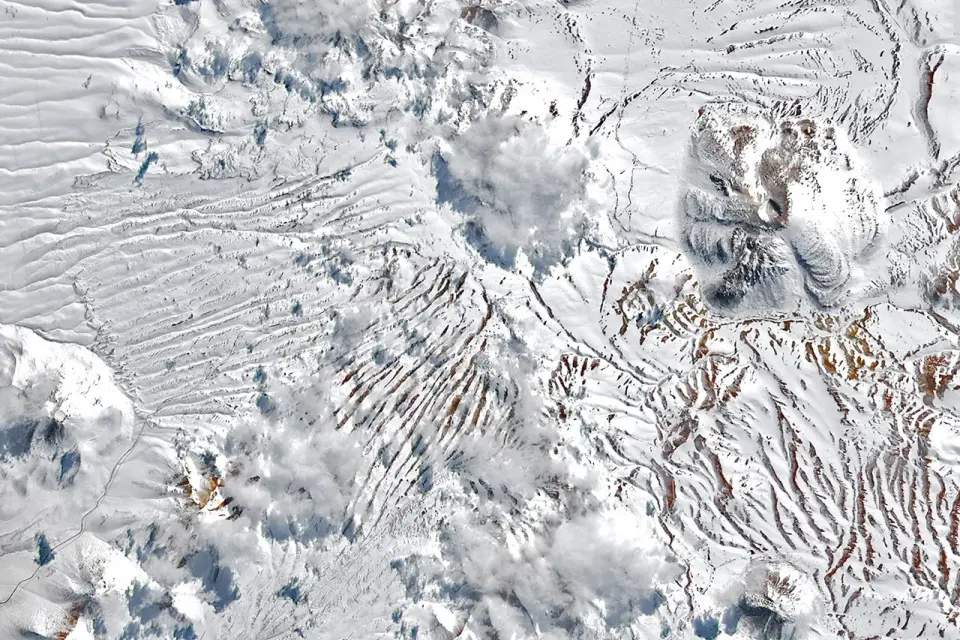
Back-to-back winter storms in August 2026 delivered rare, widespread snow to northern Chile’s Atacama Desert, extending from the Andes to the Pacific coast. The event, driven by an unusually large atmospheric trough and a strengthening El Niño, caused significant flooding and forced major astronomical observatories, including ALMA, to suspend operations. While the region has seen snow before, the 2026 precipitation was exceptionally broad and intense, with some coastal areas receiving rainfall equivalent to ten times their annual average.
Key points
- August 2026 storms brought snow to the Atacama Desert, a region typically hyper-arid, with coverage extending from the Andes to near the Pacific coast south of Antofagasta.
- The Atacama Large Millimeter/submillimeter Array (ALMA) suspended operations and moved antennas into survival mode due to snow and high winds.
- Atmospheric scientist René Garreaud attributed the event to a cutoff low spinning off from an unusually large trough, combined with ample coastal moisture and a strengthening El Niño.
- Taltal, on Chile’s northern coast, received nearly 40 millimeters of rain in three days, approximately ten times its annual mean.
- The National Disaster Prevention and Response Service (SENAPRED) reported thousands affected and hundreds of homes with major damage due to mudflows and flash flooding.
- Landsat 8 and 9 satellites captured images on August 6 and 14 showing the transformation of the Chajnantor plateau from bare to snow-covered.
Background
The Atacama Desert is known as one of Earth’s driest non-polar regions, often used as a Mars analog for scientific research. Previous snowfall events occurred in 2011 and 2025, but the 2026 event was notably more widespread. The region hosts critical astronomical infrastructure, including the European Southern Observatory’s Extremely Large Telescope, which is under construction and slated for completion by 2027. The area’s hyper-arid conditions and clear skies make it ideal for astronomy, but extreme weather events pose significant risks to these facilities.
Why it matters
This event highlights the increasing frequency and intensity of extreme weather events in arid regions due to climate shifts, such as El Niño. It underscores the vulnerability of critical scientific infrastructure, like major telescopes, to atmospheric disruptions. Additionally, the severe flooding and damage to homes in northern Chile demonstrate the human impact of such climatic anomalies, emphasizing the need for improved disaster preparedness and response in regions not typically prone to such precipitation.
What to watch
Scientists will continue to monitor the impact of the strengthening El Niño on weather patterns in South America. The astronomical observatories in the Atacama will likely resume operations once conditions stabilize, but the event may prompt further assessments of their resilience to extreme weather. Long-term studies may analyze the ecological and hydrological effects of the unprecedented precipitation on the hyper-arid landscape.
- Rare, Widespread Snow in the Atacama Desert NASA Science (.gov)
- Snow Covers The Atacama As Intense Winter Storms Lead to Flash-Flooding And Disruption In The Usually Arid Region IFLScience
- One of the driest places on Earth was transformed by a rare winter storm Earth.com
- Rare Snow Blankets the Desert This Summer Men's Journal
Want the full story? Read the original reporting
Read on NASA Science (.gov)