
Hawking’s 1976 Paper Exposed Fundamental Clash Between Quantum Mechanics and General Relativity
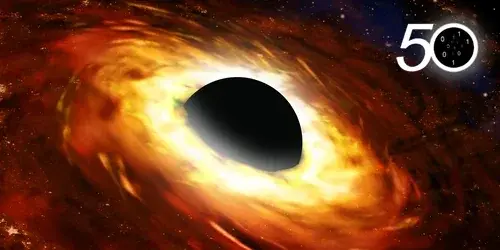
Fifty years after Stephen Hawking’s 1976 publication, the black hole information paradox remains a central unresolved conflict in physics. The paradox highlights the incompatibility between quantum mechanics, which forbids the loss of information, and general relativity, which suggests information vanishes when black holes evaporate. While Hawking’s 1974 discovery of black hole radiation was widely accepted, the 1976 paper introduced a deeper theoretical crisis by questioning whether information can be wholly erased from the universe. This tension continues to drive research into quantum gravity, with no consensus on which physical principle must yield to resolve the contradiction.
Key points
- Hawking’s 1976 paper identified a concrete scenario where general relativity and quantum mechanics conflict, specifically regarding the fate of information falling into black holes.
- The paradox arises because black hole evaporation, predicted by Hawking in 1974, implies that information carried by infalling matter disappears, violating the quantum principle of unitarity.
- The conflict is not just between two theories but among three principles: unitarity, locality, and statistical mechanics, with physicists disagreeing on which must be abandoned.
- Hawking’s work built on Roger Penrose’s 1965 proof that massive stars collapse into singularities, establishing black holes as real astrophysical objects rather than mathematical quirks.
- The paradox remains unresolved, with most physicists believing a final theory of quantum gravity is needed to determine whether information is preserved, lost, or encoded in radiation.
Background
This analysis marks the 50th anniversary of Hawking’s 1976 paper, part of a broader series examining the history of black hole physics. Recent developments in black hole research, such as the confirmation of the M87 black hole’s ring structure and observations of hierarchical mergers, continue to test the boundaries of general relativity. However, the information paradox remains a theoretical issue, as Hawking radiation has not yet been empirically verified due to its faintness compared to accretion disk emissions. The ongoing debate reflects the broader challenge of reconciling quantum mechanics with gravity, a gap that persists despite decades of theoretical progress.
Why it matters
The black hole information paradox is a critical test case for the unification of physics. Resolving it requires reconciling the smooth spacetime of general relativity with the discrete, probabilistic nature of quantum mechanics. The outcome will determine the fundamental nature of information in the universe and may lead to a complete theory of quantum gravity. Until then, the paradox serves as a reminder that our current understanding of reality is incomplete, with significant implications for cosmology and the behavior of extreme astrophysical objects.
What to watch
Researchers continue to explore theoretical frameworks that might resolve the paradox, including string theory and loop quantum gravity. Experimental efforts to detect Hawking radiation remain challenging due to its low intensity, but advances in observational astronomy may provide indirect evidence. The debate is expected to continue until a unified theory of quantum gravity is developed, which could finally clarify whether information is preserved, lost, or transformed in black hole evaporation.
Want the full story? Read the original reporting
Read on American Physical Society