
EU Scientific Advisers Warn Democracy Relies on Protected, Independent Science
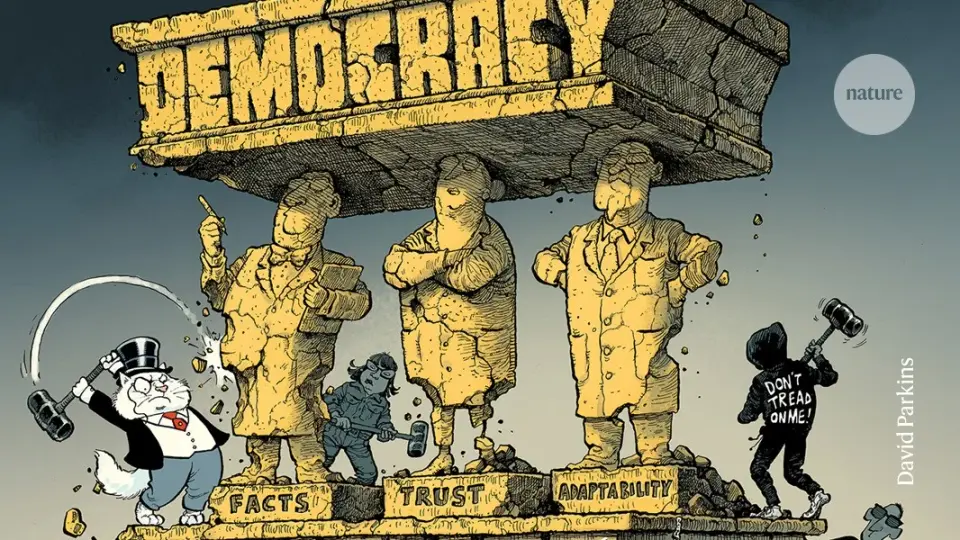
A group of European Commission chief scientific advisers argues that democracy and science are deeply intertwined, with verified evidence essential for informed public decision-making. They warn that rising political interference, budget cuts, and digital misinformation threaten this link, urging robust safeguards for academic independence and transparent science communication.
Key points
- Seven European Commission chief scientific advisers, including Martin Kahanec and Naomi Ellemers, published a comment in Nature outlining three pillars for how science supports democracy: establishing factual baselines, building institutional trust, and enabling adaptive policy.
- The authors note that governments worldwide are increasingly limiting academic freedom and interfering with research funding and personnel decisions, creating vulnerabilities for democratic resilience.
- They highlight that digital platforms and AI amplify risks of misinformation, manipulation, and polarization, which can be exploited by political actors to undermine public trust in institutions.
- The advisers emphasize that scientific legitimacy depends on transparency, diversity, and independence, warning that politicized expertise or selective funding erodes public confidence.
- They recommend stable public funding, independent expert groups, and robust science communication channels to counter disinformation and ensure citizens can engage meaningfully with complex issues.
Background
This commentary follows earlier concerns about academic freedom in Europe, as noted in the 2024 European Parliamentary Research Service study cited in the source. It also aligns with ongoing debates about the role of science in policy-making, such as the 2026 Nature Index discussion on AI in grant reviews, which highlights tensions between technological efficiency and scientific independence.
Why it matters
As democratic societies face complex challenges like climate change, migration, and technological disruption, the integrity of scientific advice is crucial for maintaining public trust and effective governance. Without protected, independent science, democracies risk being destabilized by misinformation and polarized expertise.
What to watch
The European Commission’s science-advice framework, which includes multidisciplinary expert groups and independent policy recommendations, may serve as a model for other nations. However, the effectiveness of these measures depends on sustained public funding and political will to resist interference.
Want the full story? Read the original reporting
Read on Nature