
Oral Nanomedicine Boosts Cancer Immunity via Gut Metabolite
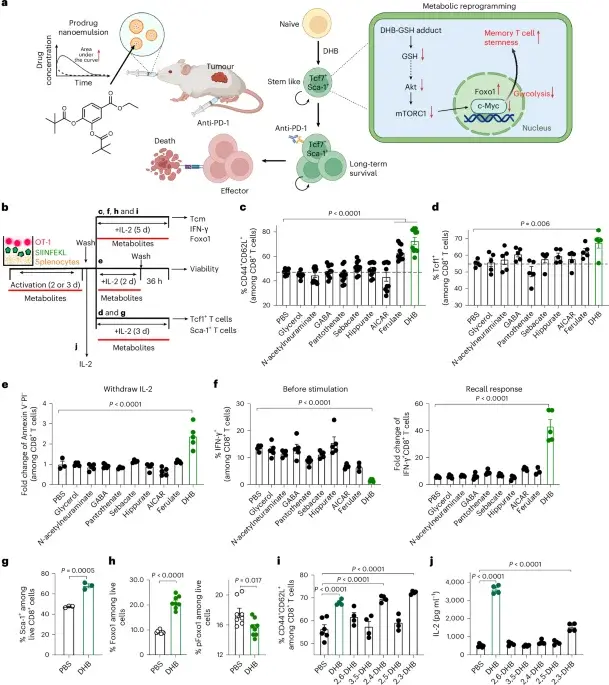
Researchers from Sungkyunkwan University and the University of Michigan have developed an oral nano-emulsion prodrug that enhances the efficacy of cancer immunotherapy. The formulation delivers 3,4-dihydroxybenzoic acid (DHB), a gut microbial metabolite, which promotes stem-like properties in CD8+ T cells. In animal models, this approach significantly improved tumor control and induced long-term immune memory when combined with anti-PD-1 therapy, addressing the low response rates of current checkpoint inhibitors.
Key points
- DHB suppresses glycolysis and modulates the Akt-mTORC1-Myc pathway to enhance T cell stemness.
- A prodrug nano-emulsion extends DHB’s half-life and improves bioavailability by nearly 10-fold compared to the free compound.
- The treatment demonstrated efficacy in multiple murine models, including colorectal, melanoma, and breast cancer.
- The approach bypasses individual microbiome variability by delivering a standardized microbial metabolite directly.
Background
This development follows earlier research linking gut microbiota to cancer immunotherapy outcomes. Previous studies, such as those on inulin gel and diet-microbiome axes, highlighted the role of microbial metabolites in modulating immune responses. This new work advances the field by isolating a specific metabolite and engineering it for direct therapeutic use, moving beyond indirect microbiome manipulation.
How outlets are covering it
Nature Nanotechnology provides the primary mechanistic data, detailing how DHB alters T cell metabolism and chromatin accessibility. Asia Research News emphasizes the novelty of the 'world’s first' oral microbiome-based nanomedicine and its potential for commercialization. The Korea Herald focuses on the international collaboration between Korean and US institutions. Tech Times offers a broader clinical context, explaining how this approach may rescue patients who do not respond to standard checkpoint inhibitors by replenishing the progenitor exhausted T cell pool. All sources agree on the preclinical success but note the lack of human trial data.
Why it matters
Current cancer immunotherapies, such as anti-PD-1 drugs, fail in approximately 80% of patients due to T cell exhaustion. This new oral formulation offers a potential solution by enhancing the stemness and longevity of T cells, thereby improving the body's ability to fight tumors. If translated to human trials, it could expand the number of patients benefiting from existing immunotherapies and provide a non-invasive, scalable treatment option.
What to watch
The research team plans to advance the compound through preclinical testing to determine optimal dosing, safety profiles, and efficacy in human subjects. The next critical step is the initiation of Phase I clinical trials to evaluate the safety and pharmacokinetics of the DHB prodrug nano-emulsion in humans.
- Oral nano-delivery of a gut microbial metabolite enhances T cell stemness for cancer immunotherapy Nature
- SKKU Researchers Develop World’s First Oral Microbiome-Based Nanomedicine to Supercharge Anti-Cancer Immunity Asia Research News |
- Korean, US researchers develop oral nanomedicine for cancer treatment The Korea Herald
- Gut Bacteria Metabolite, Delivered as Oral Nanomedicine, Wipes Out Tumors in Animals Tech Times
- Sungkyunkwan University develops oral nano-immunotherapy using gut microbiome 동아사이언스
Want the full story? Read the original reporting
Read on Nature