Tag

Drug Delivery

All articles tagged with #drug delivery

Sydney researchers use mRNA nose drops to restore memory in aging and Alzheimer's mice
science-and-health26 minutes ago

Sydney researchers use mRNA nose drops to restore memory in aging and Alzheimer's mice

University of Sydney researchers developed experimental nose drops using mRNA technology to restore memory in aging mice and prevent cognitive decline in Alzheimer's models. By delivering genetic instructions for brain-derived neurotrophic factor (BDNF) via the nasal cavity, the treatment bypasses the blood-brain barrier. The study, published in Advanced Science, shows improved cognition and increased neuron growth without reducing amyloid plaques, suggesting a complementary approach to existing therapies. While promising, the treatment remains in the animal testing phase, with human trials potentially beginning within two years.
University at Buffalo Develops Injectable Hydrogel for Sustained Osteoarthritis Treatment
health-and-science2 months ago

University at Buffalo Develops Injectable Hydrogel for Sustained Osteoarthritis Treatment

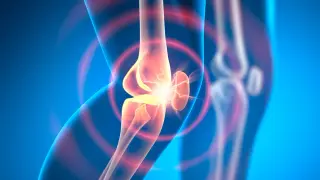
Researchers at the University at Buffalo have created an injectable hydrogel that transforms into a semisolid depot at body temperature, allowing drugs to remain in joints for weeks. This system addresses the rapid clearance of traditional osteoarthritis treatments by using nanocarriers to deliver hydrophobic compounds gradually, potentially reducing the need for frequent injections and minimizing systemic side effects.

DNA Origami Nanosyringe Enables Programmable Membrane Penetration and Reversible Cargo Delivery
science-and-technology3 months ago

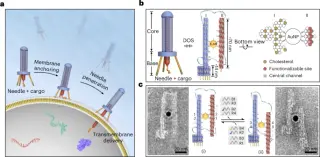
DNA Origami Nanosyringe Enables Programmable Membrane Penetration and Reversible Cargo Delivery

Researchers have developed a programmable DNA origami nanosyringe that mimics bacterial contractile injection systems to deliver molecular cargo across lipid membranes. The device uses DNA fuel to drive a needle-like structure through cell membranes in precise 14-nanometer steps, allowing for controlled penetration and subsequent retraction. This system enables the transport of small molecules via passive diffusion and larger biomolecules via active mechanical translocation, facilitating on-demand biochemical reactions within synthetic cells.

Oral Nanomedicine Boosts Cancer Immunity via Gut Metabolite
science-and-health3 months ago

Oral Nanomedicine Boosts Cancer Immunity via Gut Metabolite

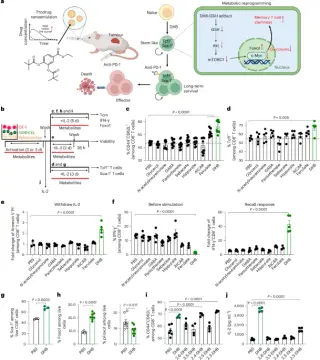
Researchers from Sungkyunkwan University and the University of Michigan have developed an oral nano-emulsion prodrug that enhances the efficacy of cancer immunotherapy. The formulation delivers 3,4-dihydroxybenzoic acid (DHB), a gut microbial metabolite, which promotes stem-like properties in CD8+ T cells. In animal models, this approach significantly improved tumor control and induced long-term immune memory when combined with anti-PD-1 therapy, addressing the low response rates of current checkpoint inhibitors.

Spider Silk Research: From Medical Scaffolds to Web-Slinging Technology
science-tech3 months ago

Spider Silk Research: From Medical Scaffolds to Web-Slinging Technology

Spider silk’s exceptional strength and toughness are inspiring new medical and engineering applications. Scientists are using engineered silk proteins for drug delivery and tissue repair, while researchers at Tufts University have created a web-slinging technology using silk fibroin, dopamine, and acetone to shoot solidifying, adhesive fibers that can lift objects 80 times their weight.

science3 months ago

New Inhibitors Exploit Pyroptosis Pores to Block Inflammation

A team led by Genentech researchers has developed covalent caspase inhibitors that selectively suppress pyroptosis, a form of inflammatory cell death, by exploiting pores created by Gasdermin D. Published in Nature on August 3, 2026, the study shows these inhibitors enter cells only when GSDMD pores are active, blocking the release of interleukins IL-1β and IL-18 without affecting normal apoptosis. In mouse models of endotoxic shock, inhibiting caspase-1 and -11 reduced inflammatory cytokine production, offering a potential therapeutic strategy for inflammatory disorders where previous cell-permeable inhibitors failed in clinical trials.

UNC Team Develops Light-Activated Drug Delivery to Target Tumors and Spare Healthy Tissue
health3 months ago

UNC Team Develops Light-Activated Drug Delivery to Target Tumors and Spare Healthy Tissue

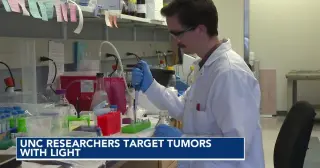
Researchers at UNC-Chapel Hill are developing a light-activated drug delivery system to release cancer medication only at tumor sites. This approach aims to reduce systemic side effects by encapsulating existing drugs in carriers that activate upon light exposure. The current focus is on head and neck cancers, with a two-year grant supporting further testing in cancer models.

Sugar-Coated Nanoparticles Deliver mRNA to Brain Tumors in Mice
science4 months ago

Sugar-Coated Nanoparticles Deliver mRNA to Brain Tumors in Mice

Researchers at Oregon State University used mannose-cholesterol coated lipid nanoparticles to cross the blood–brain barrier and deliver tumor-suppressing PTEN mRNA to glioblastoma in mice, greatly reducing tumor burden and extending survival without detectable organ toxicity. While promising, the results are preclinical and in animals, but the approach could become a general platform for brain-targeted mRNA therapies and other neurological applications.

Injectable slow-release therapy reverses osteoarthritis in animal tests
science7 months ago

Injectable slow-release therapy reverses osteoarthritis in animal tests

UC Boulder researchers have developed a slow-release injectable therapy that prompts joint cells to repair cartilage and bone, reversing osteoarthritis in animal models within weeks. They’ve completed the first phase of experiments and are moving to safety/toxicity studies to enable human trials—potentially within 18 months—funded by ARPA-H’s NITRO program, as they pursue options beyond pain management and joint replacement.

Pig semen exosomes shown to shuttle chemo to back-of-eye cancer in mice
health7 months ago

Pig semen exosomes shown to shuttle chemo to back-of-eye cancer in mice

Researchers used semen-derived exosomes from pig semen to deliver a chemotherapy-like payload to the retina in a mouse model of retinoblastoma, via eye drops. The approach successfully reached the back of the eye and reduced tumor size after 30 days, suggesting a potential noninvasive treatment route for this pediatric eye cancer, though safety and effectiveness in humans remain to be tested in trials.

Programmable DNA nanorobots target cancer and viruses in the bloodstream
science8 months ago

Programmable DNA nanorobots target cancer and viruses in the bloodstream

Scientists are turning DNA into programmable nanomachines that can move, sense, and deliver therapies, using DNA origami and strand displacement to create DNA robots that could autonomously seek out cancer cells or viruses in the bloodstream; while early demonstrations show targeted drug delivery and precise nanoparticle placement, major challenges remain in controlling motion, ensuring stability in the body, and scaling production for real-world medical use.

Gut-Penetrating Peptide Brings Insulin Closer to an Oral Pill
science8 months ago

Gut-Penetrating Peptide Brings Insulin Closer to an Oral Pill

Researchers at Kumamoto University developed a cyclic DNP peptide that enables insulin to cross the intestinal barrier, achieving about 33–41% oral bioavailability in diabetic mouse models. They demonstrated two approaches—a mixing method where the peptide interacts with zinc-stabilized insulin hexamers, and a covalent DNP–insulin conjugate created via click chemistry—both producing effective glucose lowering. Once-daily dosing maintained normal glycemia for three days, marking a significant step toward practical oral insulin and potentially reducing injectable insulin needs; translational studies in larger animals and human intestinal systems are planned.

Two Labs, One Bassline: Pink Floyd Tracks Breakthroughs in Brain Research
science9 months ago

Two Labs, One Bassline: Pink Floyd Tracks Breakthroughs in Brain Research

Two independent labs—UC Berkeley and Technion—used Pink Floyd’s 'Another Brick in the Wall, Part 1' as a test stimulus to probe brain activity and delivery science: Berkeley reconstructed the song from intracranial recordings, while Technion showed that low-frequency sound can influence cellular uptake and gene expression in neurons and mice via lipid nanoparticles, with fMRI showing brain activation in humans. The shared choice of a bass-heavy track underscores bass as a meaningful signal, but the work is exploratory, not therapeutic, with translational questions and limited quantitative data remaining.