
NASA Awards Contract for CAPSTONE 02 to Test Lunar Docking in Complex Gravity
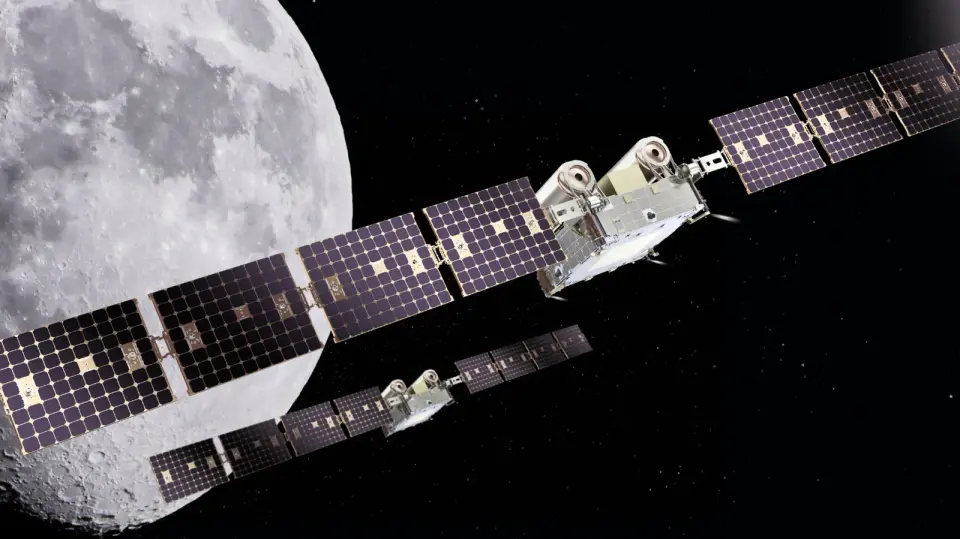
NASA has awarded Advanced Space a contract for the CAPSTONE 02 mission, scheduled to launch in 2027. This follow-up to the first CAPSTONE mission will test complex maneuvering and docking between two small satellites in cislunar space. The goal is to master the 'three-body problem' of navigating between Earth and Moon gravity, a critical skill for future Artemis crewed landings and potential commercial or military operations in lunar orbit.
Key points
- The first CAPSTONE mission, completed in 2026, used two microwave-sized satellites to test basic operations in cislunar space.
- NASA has contracted Advanced Space to build and operate CAPSTONE 02, which will launch in 2027.
- CAPSTONE 02 will feature two satellites, each under 900 pounds, designed by Terran Orbital Systems.
- The mission will test formation flying and docking maneuvers while accounting for the gravitational pull of both Earth and Moon.
- Navigation will rely on visual tracking of stars and lunar terrain rather than simple formulas, as no simple equation exists for three-body gravitational interactions.
- These tests are essential for Artemis IV, planned for 2028, where Orion crew members must dock with a lander and transfer to it, as Orion cannot land on the Moon itself.
Background
This development follows the successful completion of the initial CAPSTONE mission, which tested near-rectilinear halo orbits between 2022 and 2026. It aligns with NASA's accelerated timeline for Artemis III, a 2027 mission designed to test rendezvous capabilities in low Earth orbit, and Artemis IV, the 2028 crewed lunar landing. Recent analog studies at Johnson Space Center have also focused on crew dynamics for long-duration lunar and Mars missions, highlighting the operational complexity of future space exploration.
Why it matters
Mastering navigation in cislunar space is a prerequisite for safe crewed lunar landings and the establishment of a sustainable lunar presence. Without reliable autonomous positioning and docking in the complex gravitational environment between Earth and Moon, future Artemis missions and commercial lunar infrastructure face significant safety and logistical risks.
What to watch
The CAPSTONE 02 mission is scheduled to launch in 2027. Following its data collection, NASA will apply the findings to refine procedures for Artemis IV in 2028. Increased commercial and military interest in cislunar space may lead to further hardware deployments in the region.
Want the full story? Read the original reporting
Read on Jalopnik