
SpaceX Falcon 9 upper stage confirmed to impact Moon, creating new crater
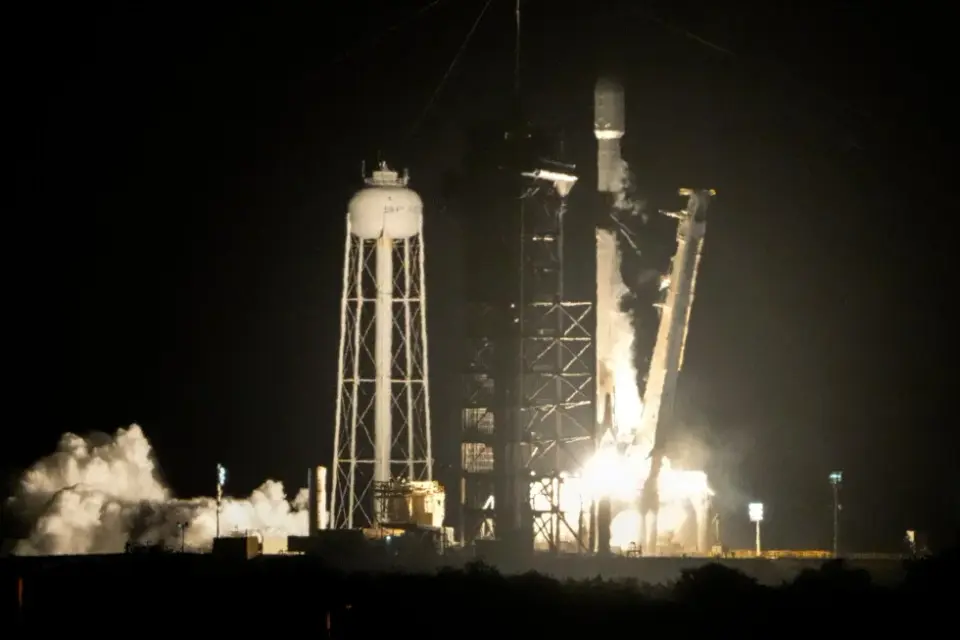
A spent SpaceX Falcon 9 upper stage, launched in January 2025, has confirmed collided with the Moon near Einstein Crater. The impact, which occurred on August 5, 2026, created a crater approximately 60 feet wide. While the event was not visible to the naked eye, scientists used ground and space-based telescopes to study the ejecta plume and chemical signatures, marking a significant moment for lunar debris management.
Key points
- The Falcon 9 upper stage, weighing approximately 4,000 kg, drifted for a year after launching two lunar landers in January 2025.
- Solar activity and gravitational forces altered the stage's trajectory, leading to a confirmed 100% chance of impact with the Moon.
- The impact occurred near Einstein and Bell craters, creating a crater estimated to be 60 feet wide and 12 feet deep.
- NASA and SpaceX confirmed the event poses no danger to Earth, but it highlights challenges in managing space debris in lunar orbit.
- Scientists observed sodium and lithium gases emanating from the impact site, providing data on lunar surface composition and impact dynamics.
Background
This incident follows earlier concerns about space debris and the feasibility of long-term lunar exploration. Previous reports noted that the Moon now hosts around 3,000 human-made objects, raising questions about the sustainability of lunar missions. The event underscores the need for better tracking and disposal methods for spent rocket stages, as highlighted in discussions about Artemis program plans and the risks posed by uncontrolled debris.
How outlets are covering it
AP News and NASA emphasize the scientific value of the impact, noting that it provides rare data on lunar surface interactions and debris behavior. CNN highlights the logistical challenges of managing space debris, particularly as more missions head to the Moon. The Los Angeles Times focuses on the confirmation of the impact through chemical signatures observed by the European Southern Observatory, while also noting the broader implications for future lunar exploration. All sources agree that the event was unintentional but underscores the need for improved debris mitigation strategies.
Why it matters
The confirmed impact of a SpaceX rocket stage on the Moon highlights the growing challenge of space debris in lunar orbit. As more missions are planned, including NASA's Artemis program, managing the accumulation of debris becomes critical to ensuring the safety of future lunar infrastructure and astronauts. The event also provides valuable data for understanding lunar surface interactions, which can inform future exploration and mission planning.
What to watch
NASA and SpaceX will continue to analyze the data collected from the impact, including imagery from the Lunar Reconnaissance Orbiter and ground-based telescopes. The findings will help refine models for tracking and mitigating space debris, potentially influencing future disposal practices for rocket stages. Additionally, the event may prompt further discussions on international regulations for space debris management, particularly as lunar exploration expands.
- Scientists are certain a wayward SpaceX rocket slammed into the moon as predicted AP News
- New crater likely to form after SpaceX rocket slams into the moon CNN
- Discarded SpaceX rocket crashes into Moon Los Angeles Times
- NASA Will Attempt to Observe Rocket Part’s Lunar Impact NASA (.gov)
- What can scientists learn from a stray SpaceX rocket hitting the Moon? BBC
Want the full story? Read the original reporting
Read on AP News