
NASA Selects GIMLI Mission to Hunt for Lunar Lava Tubes Beneath Marius Hills Pit
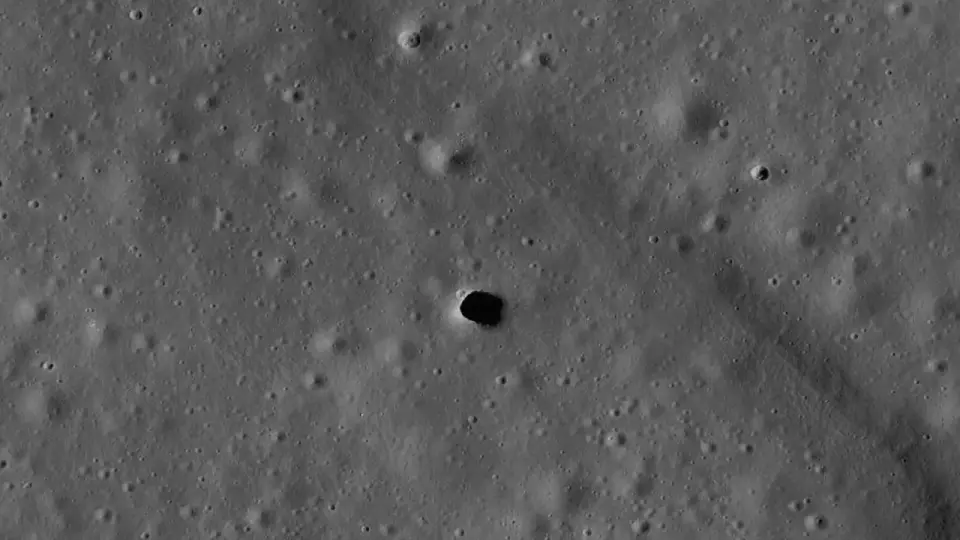
NASA has selected the GIMLI mission to investigate whether the Marius Hills Pit on the Moon leads into a large underground lava tube. Led by the Planetary Science Institute and Honeybee Robotics, the mission will use ground-penetrating radar, seismic sensors, and gravity measurements to probe the subsurface. If a cave exists, it could provide natural radiation shielding for future astronauts. The mission is part of NASA's PRISM program and will launch via the Commercial Lunar Payload Services initiative.
Key points
- NASA selected the Geophysical Instruments for Marius Lunar pit Investigation (GIMLI) to determine if the Marius Hills Pit connects to a subterranean lava tube.
- The mission is led by the Planetary Science Institute (PSI) with Honeybee Robotics as the commercial partner, providing instrumentation and project management.
- GIMLI will deploy ground-penetrating radar, seismic sensors, a gravimeter, and cameras to analyze the lunar surface and subsurface properties.
- The mission aims to detect voids that could offer natural protection from radiation and temperature extremes for future Moon Base habitats.
- Even if no cave is found, the mission will provide data on the formation of the Marius Hills Pit and the region's volcanic history.
Background
In September 2026, a reanalysis of radar data suggested a cave conduit might exist beneath a pit in Mare Tranquillitatis, marking the first direct evidence of a lunar cave opening. Mechanical models have also indicated that lunar gravity could support lava tubes kilometers wide, potentially offering large underground shelters. GIMLI builds on these findings by moving from orbital observation to direct surface investigation.
How outlets are covering it
ScienceDaily emphasizes the scientific ambition of GIMLI, highlighting the return of active-source seismic methods to planetary science since the Apollo era. NASA frames the mission as a critical step for the Moon Base Program, focusing on how detecting natural shelters can minimize risks to astronauts and support long-term human presence. While both sources agree on the mission's goal, NASA places greater emphasis on the practical benefits for habitat planning and safety, whereas ScienceDaily focuses on the geological and volcanic insights the mission will provide regardless of whether a cave is found.
Why it matters
Confirming the existence of large lava tubes on the Moon could revolutionize future lunar exploration by providing ready-made shelters that protect against radiation and extreme temperatures. This would reduce the engineering challenges of building habitats and could significantly lower the cost and risk of establishing a sustained human presence on the Moon. Additionally, the mission will advance our understanding of lunar volcanic history, which is crucial for interpreting the geological evolution of the Moon and other planetary bodies.
What to watch
The GIMLI mission will be integrated into a lander and rover supplied through the Commercial Lunar Payload Services (CLPS) initiative. Once on the lunar surface, the team will conduct active-source seismic surveys, ground-penetrating radar scans, and gravity measurements to map the subsurface. The results will help determine if the Marius Hills Pit leads to a lava tube and will provide data on the region's volcanic history. The mission is expected to contribute to the broader goals of NASA's Artemis and Moon Base programs.
- This mysterious hole on the Moon may open into a giant cave ScienceDaily
- NASA Adds New Science Investigations for Moon Base NASA (.gov)
- Team selected for NASA program to explore potential lunar cave Phys.org
- NASA to probe if large pit on Moon opens into an underground cave | Trump claims Moon is owned by US | Inshorts Inshorts
- University of Arizona begins building moon-bound EMILIA-3D to study lunar terrain Technology Org
Want the full story? Read the original reporting
Read on ScienceDaily