
SIU Researchers 3D-Print Edible Cookies from PET Plastic Waste
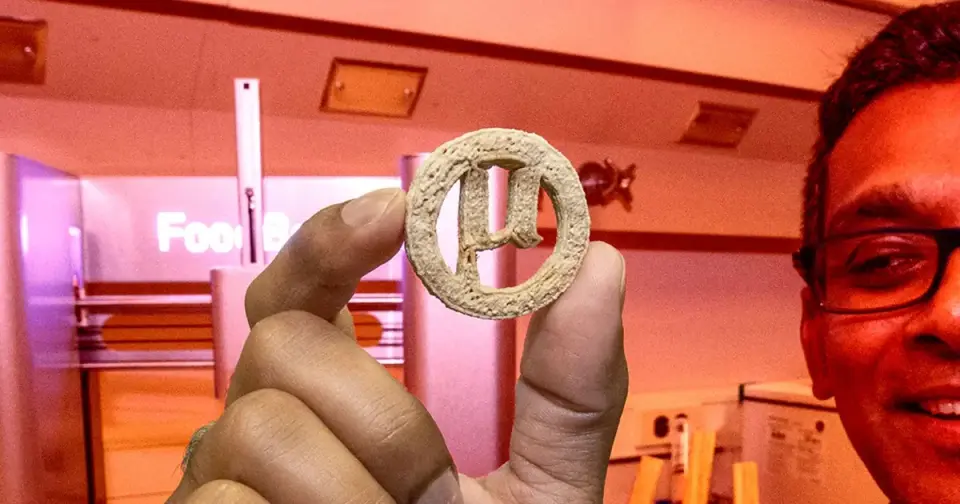
Researchers at Southern Illinois University Carbondale have developed a method to convert polyethylene terephthalate (PET) plastic waste into edible cookies using genetically engineered yeast. The process, funded by NASA’s Deep Space Food Challenge, involves breaking down plastic via oxidative hydrothermal dissolution and using microbes to synthesize proteins, fats, and flavors. The resulting mixture is 3D-printed into 'µBites' and microwaved. While the team reports promising aroma and texture, human taste testing is pending regulatory approval. Current production costs are approximately $60 per kilogram, with potential applications in space missions and disaster relief, though experts question its scalability for global plastic waste.
Key points
- Southern Illinois University Carbondale researchers used CRISPR-edited yeast to convert PET plastic and agricultural waste into edible proteins, fats, and vanilla flavorings.
- The process involves oxidative hydrothermal dissolution to break down plastic into smaller molecules, which the yeast then metabolizes into a slurry.
- The slurry is mixed with starch and sweeteners, 3D-printed into cookie shapes, and microwaved to create 'µBites'.
- The project was funded as part of NASA’s Deep Space Food Challenge to develop sustainable food sources for long-duration space missions.
- Production currently costs around $60 per kilogram, with researchers aiming to reduce costs through improved yeast efficiency and scaling.
- Human taste testing is pending institutional approval, though the team reports the cookies have a pleasant aroma and texture.
Background
This development builds on earlier reports from August 2026, which detailed the initial demonstration of µBites and the ongoing challenges of microgravity and conversion efficiency. Previous coverage highlighted the potential for near-zero-waste carbon conversion in remote environments, noting that current systems convert about half of the feedstock carbon. The project has been framed as a potential solution for food security in extreme conditions, though public acceptance and regulatory hurdles remain significant barriers.
How outlets are covering it
Futurism emphasizes the novelty and potential of the technology, highlighting the dual benefit of addressing plastic waste and food insecurity, while noting the high cost and expert skepticism regarding commercial viability. The Guardian focuses on the NASA-funded context and the potential application for astronauts on long missions, stressing the need for public acceptance of plastic-derived food. Mashable provides a detailed breakdown of the 32-step process, including the specific roles of different yeast strains in producing flavors and colors, and underscores the environmental and nutritional implications. All sources agree on the pending human taste tests and the current high production costs, but differ in their emphasis on the technology's immediate practicality versus its long-term potential.
Why it matters
This innovation represents a significant step in microbial upcycling, potentially offering a sustainable solution for food production in extreme environments where traditional agriculture is impossible. It also highlights the growing intersection of waste management and food science, though its scalability for global plastic waste remains questionable due to cost and efficiency constraints. The project underscores the need for innovative approaches to address both environmental and food security challenges, particularly in the context of space exploration and disaster relief.
What to watch
The next steps include obtaining institutional approval for human taste testing, improving yeast efficiency to reduce production costs, and addressing technical challenges such as microgravity for space applications. Researchers also plan to scale up production and explore public acceptance strategies for plastic-derived food. Long-term, the technology could be adapted for disaster relief and other extreme environments, but its viability as a solution for global plastic waste remains uncertain.
- Scientists Turn Plastic Waste Into Edible Cookies Because That’s the Future We Deserve Futurism
- Hard to swallow? The future of snacking may be 3D-printed cookies made from upcycled plastic The Guardian
- Scientists made edible cookies out of plastic Mashable
- Engineered yeasts help turn PET plastic and crop waste into protein-rich cookies Phys.org
- Here’s How Scientists Turned Plastic Bottles Into Nutritious Cookies Forbes
Want the full story? Read the original reporting
Read on Futurism