
SpaceX Rocket Stage Creates 18-Meter Crater on Moon After Long Orbital Drift
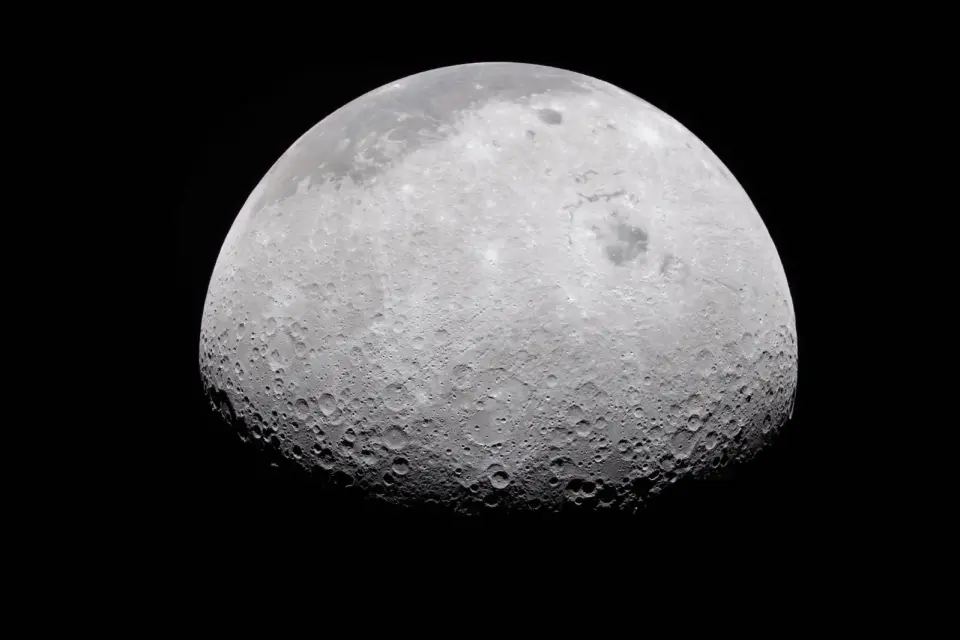
A discarded SpaceX Falcon 9 upper stage crashed into the Moon on August 5, 2026, creating a new 18-meter-wide crater. The impact, resulting from a January 2025 launch, was detected by telescopes and orbital cameras, highlighting growing concerns about space debris.
Key points
- An 8,800-pound SpaceX Falcon 9 upper stage impacted the Moon on August 5, 2026, at a speed of 5,400 mph.
- The debris originated from a January 2025 mission that launched two lunar landers; the stage remained in orbit for 18 months before drifting toward the Moon.
- The impact occurred between the Einstein and Bell craters, creating a 60-foot-wide crater with visible ejecta streaks.
- Chile’s Very Large Telescope detected lithium and sodium in the debris cloud, while South Korea’s Danuri spacecraft provided initial photographic evidence.
- NASA’s Lunar Reconnaissance Orbiter captured high-resolution before-and-after images, confirming the crater’s dimensions and depth.
Background
This incident follows previous lunar impacts by rocket stages in 2022 and 2023, as noted in earlier coverage. Recent delays to China’s Chang’e 7 mission, which aims to explore the lunar south pole for water ice, underscore the competitive and complex environment of current lunar exploration. The growing volume of private space missions has intensified scrutiny on space debris governance under the Outer Space Treaty.
Why it matters
The event provides a rare opportunity to study the physical effects of human-made objects on the lunar surface. As space agencies and private companies plan increased lunar activity, understanding the risks posed by orbital debris is critical for protecting future astronauts, spacecraft, and surface equipment.
What to watch
Researchers will analyze the crater’s dimensions and composition to assess the impact of space debris on lunar geology. Space agencies may review debris tracking and mitigation strategies for future missions to prevent similar uncontrolled impacts.
Want the full story? Read the original reporting
Read on DOGO News