
Swift Observatory to Reenter Earth's Atmosphere by Friday After Failed Rescue
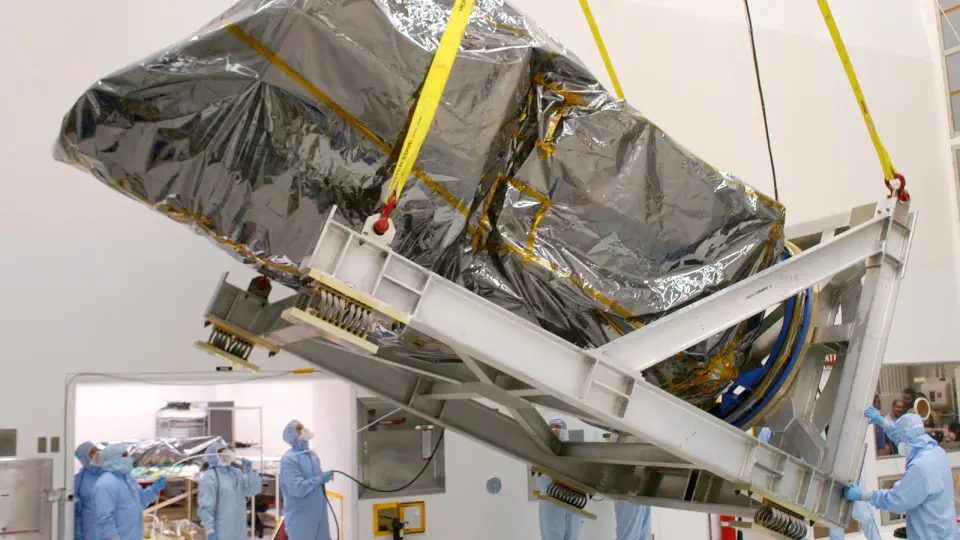
The Neil Gehrels Swift Observatory is expected to reenter Earth's atmosphere on or around Friday, October 31, 2026. The 1.5-ton telescope, which has operated for 22 years, is decaying due to intense solar activity that accelerated its orbital decline. A commercial rescue attempt by Katalyst Space failed in September, leaving the telescope to burn up. Most of the craft will disintegrate, but dense tungsten components and mirror parts may survive and fall into the ocean or land in regions including Africa, Australia, and the Americas.
Key points
- The U.S. Space Force predicts the Swift Observatory will crash to Earth on or around Friday, October 31, 2026.
- Most of the 1.5-ton telescope will burn up, but dense tungsten pieces and mirror parts may survive reentry.
- Potential impact zones include the ocean, Africa, Australia, India, Southeast Asia, and Central and South America.
- Swift launched in November 2004 and detected over 2,000 gamma ray bursts and 1,400 supernovae during its 22-year mission.
- A rescue attempt by Katalyst Space using the 'Link' robot failed in September after getting within 7 to 9 miles of the telescope.
Background
The Swift Observatory, launched in 2004, served as a rapid-response telescope for detecting gamma ray bursts and supernovae. Previous coverage noted that intense solar activity accelerated its orbital decay. In July 2026, NASA hired Katalyst Space to launch the 'Link' spacecraft to boost Swift's orbit. The mission failed in September, leading to the official end of Swift's operations in late October. Scientists resumed observations briefly before shutting down systems as the telescope dropped too low for stable data collection.
Why it matters
The reentry of Swift marks the end of a significant era in astrophysics, as the telescope provided critical alerts for other observatories like Hubble and Webb. The failed rescue highlights the challenges of commercial satellite servicing, though the data gathered may inform future missions. The potential survival of dense components raises concerns about space debris and impact risks in populated regions.
What to watch
The U.S. Space Force is tracking the telescope's final path to predict reentry. Scientists are analyzing the data collected during Swift's final days to improve future space missions. The gap left by Swift's loss will require new strategies for detecting high-energy cosmic events.
Want the full story? Read the original reporting
Read on ABC News - Breaking News, Latest News and Videos