
Voyager 1 Crosses One-Light-Day Threshold, Becoming Farthest Human Object
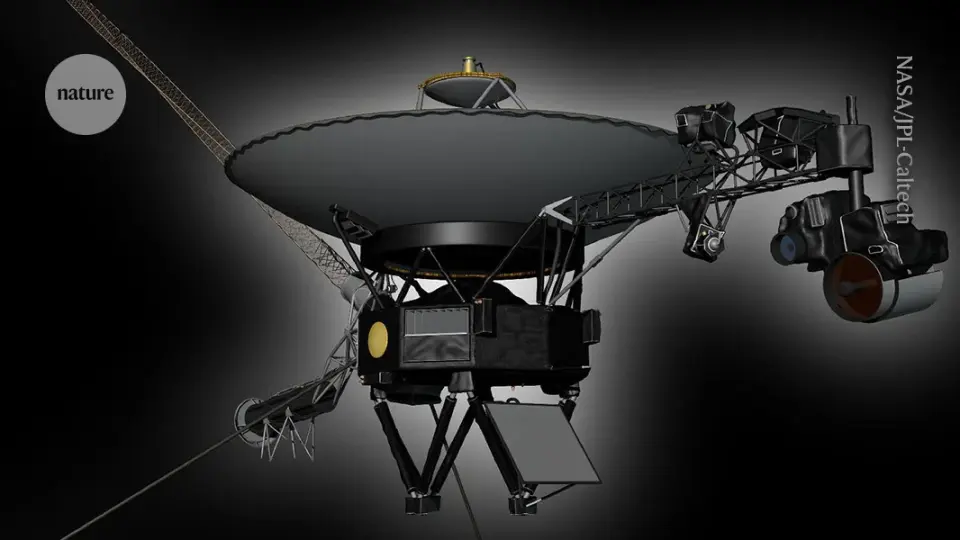
NASA’s Voyager 1 probe is set to reach a distance of one light-day from Earth on November 18, 2026, marking the farthest any human-made object has traveled. Located approximately 25.9 billion kilometers (16 billion miles) away, the spacecraft requires 24 hours for a signal to travel between Earth and the probe. Although its power supply is dwindling and most instruments have been shut down to conserve energy, Voyager 1 continues to transmit data on interstellar magnetic fields and plasma. The milestone highlights the probe’s 49-year journey since its 1977 launch, during which it explored the outer planets and entered interstellar space in 2012. NASA has invited the public to participate in a symbolic 'Shine Bright' event, flashing the call sign 'VGR' in Morse code to celebrate the achievement. While Voyager 1 is expected to lose contact in 2029, its twin, Voyager 2, will not reach the same distance until approximately 2035 due to differences in trajectory and speed.
Key points
- Voyager 1 will reach one light-day from Earth on November 18, 2026, at 5:16 a.m. EST, a distance of 25.9 billion kilometers.
- The probe is the farthest human-made object, having traveled for nearly 49 years since its 1977 launch.
- Power supplies are failing, and most instruments are off, but Voyager 1 still measures interstellar magnetic fields and cosmic rays.
- Voyager 1 is expected to lose communications in 2029, while Voyager 2 will reach the one-light-day mark around 2035.
- NASA is hosting a global 'Shine Bright' event where the public can flash the call sign 'VGR' in Morse code to honor the milestone.
Background
Voyager 1 and its twin, Voyager 2, launched in 1977 to explore the outer Solar System. Both probes have since exited the heliosphere and are now in interstellar space, experiencing temperatures near -80 degrees Celsius. Between 1979 and 1989, they reshaped scientific understanding by discovering volcanoes on Jupiter’s moon Io and a water-ice crust on Europa. Voyager 1 entered interstellar space in 2012, followed by Voyager 2 in 2018. The probes continue to provide the only direct observations of interstellar space, measuring disturbances caused by solar material that reaches the interstellar medium.
How outlets are covering it
Nature emphasizes the symbolic and scientific significance of the one-light-day milestone, noting that Voyager 1 is still gathering data despite failing power supplies. LAist highlights the public engagement aspect, detailing NASA’s invitation for a global Morse code tribute and noting that Voyager 1 is the longest-operating computer ever. Vox focuses on the sheer scale of the distance, describing it as a 'mind-bending' achievement, while Space.com explains the technical reasons why Voyager 1 reached the milestone nearly a decade before Voyager 2, citing differences in trajectory and speed gained during planetary flybys. All sources agree on the date and distance but differ in emphasis: Nature and Space.com focus on the scientific and technical aspects, while LAist and Vox highlight the public and cultural significance.
Why it matters
The one-light-day milestone underscores the enduring legacy of the Voyager missions, which have provided unique insights into the interstellar medium and the outer Solar System. It also highlights the challenges of deep-space exploration, as the probes’ power supplies are dwindling, and mission controllers must carefully manage remaining instruments to maximize scientific return. The milestone serves as a reminder of human ingenuity and the long-term impact of space exploration, even as the probes approach the end of their operational lives.
What to watch
Voyager 1 is expected to lose communications with Earth in 2029, while Voyager 2 will do so in 2031. NASA’s Jet Propulsion Laboratory has been carefully turning off instruments and recently performed a 'Big Bang' procedure to redistribute power supplies, aiming to maximize science return for as long as possible. A live briefing at the Jet Propulsion Laboratory is scheduled for November 19, 2026, previewing a documentary for the mission’s 50th anniversary in 2027. Researchers continue to analyze data from the probes, including recent observations of magnetic field changes caused by solar pressure fronts, to better understand the interstellar medium.
- Voyager 1 is about to achieve a cosmic first: one ‘light day’ from Earth Nature
- Voyager 1 reaches milestone in distance from Earth LAist
- Voyager 1 is about to reach a mind-bending milestone Vox
- The first human-made object to travel one light-day from Earth: Make sense of NASA's Voyager 1 DW.com
- NASA's Voyager 1 launched second, so how did it beat Voyager 2 to a light-day by nearly a decade? Space
Want the full story? Read the original reporting
Read on Nature