
Human Emissions Halted a Glacial Advance That Began 2,000 Years Ago
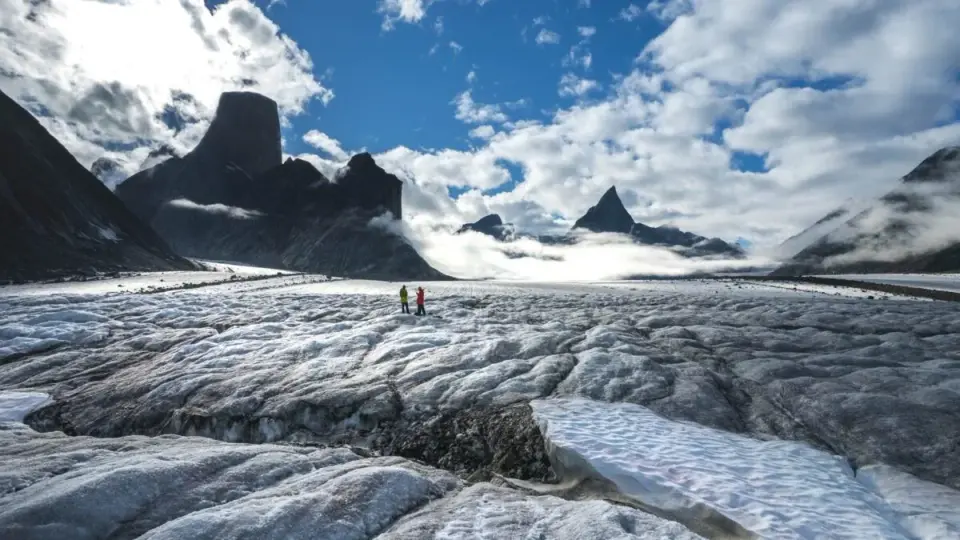
A study in Science reveals that the Barnes Ice Cap, the last remnant of the Laurentide Ice Sheet, began expanding 2,000 years ago, signaling the start of a new glacial period. However, anthropogenic warming reversed this trend by the 1960s, effectively canceling the next ice age.
Key points
- Researchers used beryllium-10 dating and radiocarbon analysis of buried mosses to reconstruct the ice cap's history.
- The ice cap reached its minimum extent around 3,600 years ago and began re-expanding approximately 2,000 years ago.
- The expansion reversed around 1960 as greenhouse gas emissions caused the ice cap to lose more mass in summer than it gained in winter.
- The Barnes Ice Cap has had no accumulation zone since 2010 and is projected to disappear within 300 years.
- This event demonstrates that human activity has disrupted Earth's long-standing Milankovitch glacial cycles.
Background
Earth's climate has historically followed periodic glacial cycles driven by orbital changes known as Milankovitch cycles. The last glacial period ended roughly 11,700 years ago, leaving the Barnes Ice Cap on Baffin Island as the sole remnant of the massive Laurentide Ice Sheet that once covered North America. Recent studies have highlighted how human presence and climate shifts have impacted geological records, such as the discovery of 2,000-year-old human footprints in New Mexico during the Last Glacial Maximum, underscoring the complex interplay between human activity and climate history.
How outlets are covering it
Gizmodo and Ars Technica emphasize the unprecedented nature of this disruption, noting that human emissions have halted a glacial cycle that had been consistent for millions of years. WIRED highlights the significance of the 1960s reversal, linking it directly to the ramp-up of fossil fuel emissions. Ars Technica provides a nuanced view, arguing that while humans did not 'save' us from an ice age, we have fundamentally altered the planet's natural rhythm. NewsCord notes that some outlets omitted the historical context of the ice cap's expansion beginning during the Roman era, while others focused on the technical dating methods used. All sources agree that the Barnes Ice Cap's retreat is a stark indicator of anthropogenic climate change's impact on global ice dynamics.
Why it matters
This finding provides concrete evidence that human-induced climate change has altered Earth's fundamental geological cycles. By canceling the onset of a new glacial period, we have disrupted a natural process that has governed the planet's climate for eons. This highlights the profound and long-term impact of greenhouse gas emissions on global systems, suggesting that future climate trajectories are now entirely shaped by human activity rather than natural orbital cycles.
What to watch
Climate models predict the Barnes Ice Cap will vanish within the next 300 years under current emissions scenarios. As the ice cap disappears, it may alter the dynamics of future glaciations, potentially delaying the next ice age by hundreds of thousands of years. Continued monitoring of the ice cap's retreat and further analysis of exposed vegetation will help scientists refine their understanding of how human activity has reshaped Earth's climatic history.
- Humans Accidentally Canceled the Next Ice Age, Scientists Say Gizmodo
- A New Ice Age Was Beginning. Then Humans Started Burning Fossil Fuels WIRED
- Global warming may have halted an emerging ice age, study suggests Phys.org
- Ice sheet expansion may have started 2,000 years ago, but we canceled that Ars Technica
- Science Study Finds Barnes Ice Cap Retreat Began Around 1960, Driven by Anthropogenic Summer Warming NewsCord
Want the full story? Read the original reporting
Read on Gizmodo