
Buried Antarctic Peaks May Have Triggered Earth's Oxygen Boom
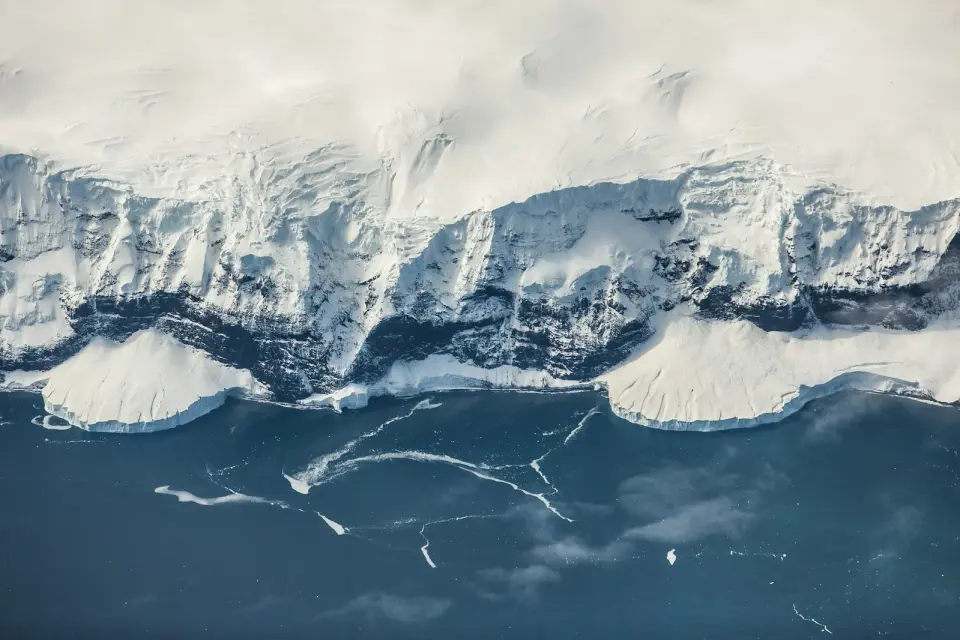
Researchers from the Australian National University have identified evidence of massive, Himalayan-scale mountain ranges buried beneath Antarctica's ice sheet. By analyzing 1,712 zircon crystals, they argue that the erosion of these ancient peaks released nutrients into the oceans, boosting oxygen levels and creating the conditions necessary for the Cambrian explosion of complex life approximately 538 million years ago.
Key points
- Bei Chen and Ian H. Campbell analyzed 1,712 zircon crystals from Antarctic ocean sediments, finding a significant spike in grains dated between 650 and 450 million years ago.
- The chemical signatures of these zircons indicate they formed under extreme pressure, suggesting the existence of deep-rooted, Himalayan-style mountains during the assembly of the supercontinent Gondwana.
- The study proposes that the erosion of these mountains created the largest turbidite fan system in geological history, dumping sediment and nutrients like phosphorus and iron into the oceans.
- This nutrient influx stimulated primary production by algae and cyanobacteria, while the rapid burial of organic carbon prevented oxygen from being consumed, leading to a rise in atmospheric oxygen.
- The authors caution that while this mechanism facilitated the diversification of animal life, it did not solely cause the Cambrian explosion, and uncertainties remain regarding the exact timing of oxygen increases.
Background
This finding builds on earlier geological research, including a 2022 study that confirmed Gondwana as a supercontinent and recent discoveries of buried volcanic structures in England. It also complements previous theories, such as the role of fossilized coprolites in nutrient cycling during the Cambrian period, by providing a geological mechanism for the environmental changes that supported complex life.
How outlets are covering it
ScienceAlert emphasizes the role of zircon chemistry in confirming the scale of the ancient mountains and highlights the uncertainty regarding oxygen calculations. Inshorts and Moneycontrol focus on the broader narrative that nutrient release from weathering altered ocean chemistry to favor complex life. The primary source, 404 Media, presents the finding as part of a broader roundup of scientific studies, noting the connection between mountain building and the rise of oxygen without delving into the specific chemical mechanisms detailed by ScienceAlert.
Why it matters
Understanding the link between tectonic activity and biological evolution helps explain how Earth's environment became habitable for complex organisms. It also highlights the importance of Antarctica's hidden geology in reconstructing the history of life on Earth, despite the continent being largely inaccessible due to its ice cover.
What to watch
Further analysis of zircon data and sediment cores may refine the timeline of oxygen increases and clarify the specific contributions of different geological processes to the Cambrian explosion. Researchers may also investigate other regions of the former Gondwana supercontinent to see if similar mountain-building signals exist.
- ‘Supermountains’ Buried Under Antarctica Fueled Explosion of Life, Scientists Discover 404 Media
- Mountains That Helped Complex Life Flourish May Lie Hidden Beneath Antarctic Ice ScienceAlert
- Antarctica’s ancient mountains may have aided rise of complex life: Study | Most of these ranges may be eroded now | Inshorts Inshorts
- Antarctica's 650-Million-Year Mystery: Lost mountains may have powered earth's rise of complex life Moneycontrol.com
- Buried Under 2 Kilometers of Antarctic Ice, Scientists Discover a Lost Landscape Frozen for 34 Million Years The Daily Galaxy
Want the full story? Read the original reporting
Read on 404 Media