
Hidden Stellar-Math Black Hole Found in Dense Star Cluster, Hinting at Thousands More
TL;DR Summary
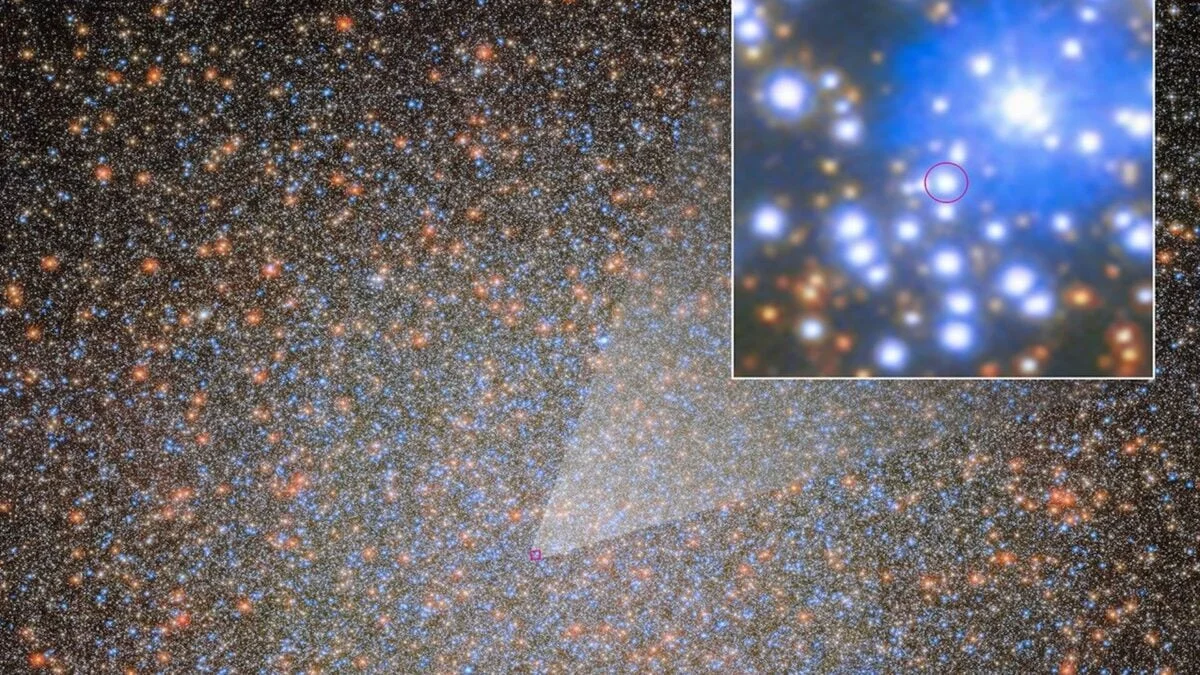
Astronomers using Hubble archival data and Webb infrared observations discovered the first stellar-mass black hole (about 4.5 solar masses) orbiting a star in the Omega Centauri globular cluster, a system named oMEGACat BH-2 with a 94-year orbital period—the longest known for a black hole binary. The find suggests Omega Centauri may harbor up to ~10,000 such black holes, helping explain black hole populations in dense clusters and their relevance to gravitational-wave sources. The team plans to continue hunting for more BHs in this cluster and others over the coming years.
Topics:science#astronomy#black-holes#globular-cluster#gravitational-waves#omega-centauri#space-and-spaceflight
- A Missing Black Hole Was Found Hiding in a Giant Star Cluster. Astronomers Think There Could Be Thousands More Gizmodo
- NASA’s Hubble reveals a black hole hiding inside a massive star cluster in the Milky Way Scientific American
- 'Surprising and exciting': U. astronomers harness NASA telescopes for black hole discovery KSL News
- NASA’s Hubble Discovers First of Star Cluster’s Missing Black Holes NASA Science (.gov)
- The 1st of 10,000 'missing' black holes in the Omega Centauri star cluster has been found Space
Reading Insights
Total Reads
0
Unique Readers
38
Time Saved
16 min
vs 17 min read
Condensed
97%
3,372 → 90 words
Want the full story? Read the original article
Read on Gizmodo