Tag

Globular Cluster

All articles tagged with #globular cluster

Distant Globular-Cluster Stream Illuminates Dark-Matter Halos Beyond the Milky Way
space24 days ago

Distant Globular-Cluster Stream Illuminates Dark-Matter Halos Beyond the Milky Way

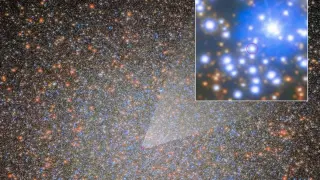
Astronomers using the Hubble Space Telescope have identified a very narrow, ~2 kiloparsec stellar ribbon named Oyashio in the ultra-diffuse galaxy UGC 9050-Dw1, about 115 million light-years away, which likely traces a disrupted globular cluster. If confirmed, this would be the first extragalactic globular-cluster stellar stream and offers a new way to constrain the host galaxy’s dark-matter halo, though current results rely on modeling with wide uncertainties and lack full spectroscopic confirmation. The finding, supported by independent CFHT data and analyzed with a generative dynamical model (X-Stream), points toward a future where more such streams could help map gravity in distant galaxies, with upcoming missions like the Roman Space Telescope and Euclid expanding the sample.
Hubble uncovers multi-age stars in the Milky Way’s chandelier cluster
space1 month ago

Hubble uncovers multi-age stars in the Milky Way’s chandelier cluster

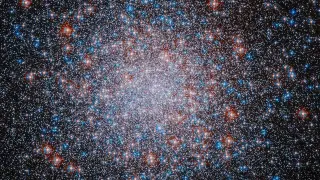
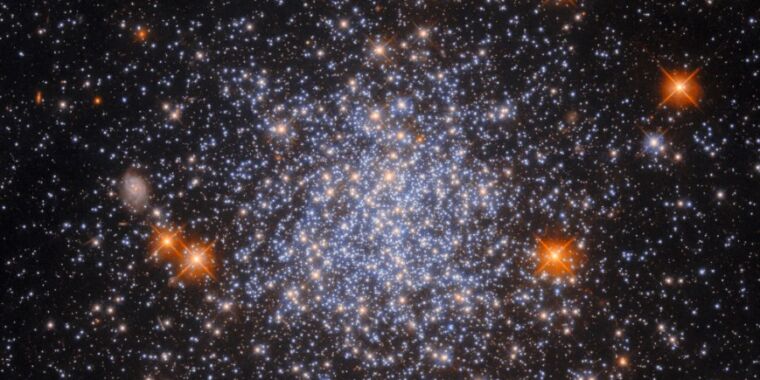
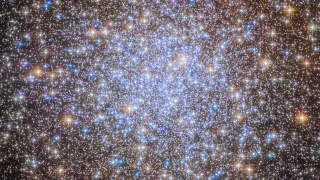
A new Hubble image of NGC 6723 (the Chandelier Cluster) shows tens of thousands to millions of stars with blue, younger stars concentrated toward the center and orange, older stars toward the edges, indicating multiple stellar populations and a more complex formation history than once thought. Two star-formation epochs are implied, the second about 634 million years after the first, suggesting globular clusters may form from early gas clouds or be remnants of ancient dwarf galaxies. Globular clusters are common around large galaxies—Milky Way ~150, Andromeda ~460, M87 ~15,000.

Hubble uncovers first external globular-cluster stellar stream, a new testbed for dark matter
science1 month ago

Hubble uncovers first external globular-cluster stellar stream, a new testbed for dark matter

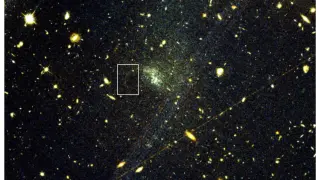
A Hubble image of the dwarf galaxy UGC 9050-Dw1 revealed Oyashio, a faint stellar stream torn from a globular cluster—potentially the first such stream found outside the Milky Way. If confirmed, it provides a pristine laboratory to study dark matter substructure as the stream’s stars can be perturbed by invisible dark matter clumps; researchers considered alternate explanations but favored the globular-cluster origin, and simulations match the observations. This discovery could pave the way for dark matter constraints across multiple galaxies with upcoming facilities like the Vera Rubin Observatory, Nancy Grace Roman Space Telescope, and Euclid.

Hidden Stellar-Math Black Hole Found in Dense Star Cluster, Hinting at Thousands More
space-and-spaceflight2 months ago

Hidden Stellar-Math Black Hole Found in Dense Star Cluster, Hinting at Thousands More

Astronomers using Hubble archival data and Webb infrared observations discovered the first stellar-mass black hole (about 4.5 solar masses) orbiting a star in the Omega Centauri globular cluster, a system named oMEGACat BH-2 with a 94-year orbital period—the longest known for a black hole binary. The find suggests Omega Centauri may harbor up to ~10,000 such black holes, helping explain black hole populations in dense clusters and their relevance to gravitational-wave sources. The team plans to continue hunting for more BHs in this cluster and others over the coming years.

Hidden Black-Hole Swarm Shapes Palomar 5's Galactic Stream
space7 months ago

Hidden Black-Hole Swarm Shapes Palomar 5's Galactic Stream

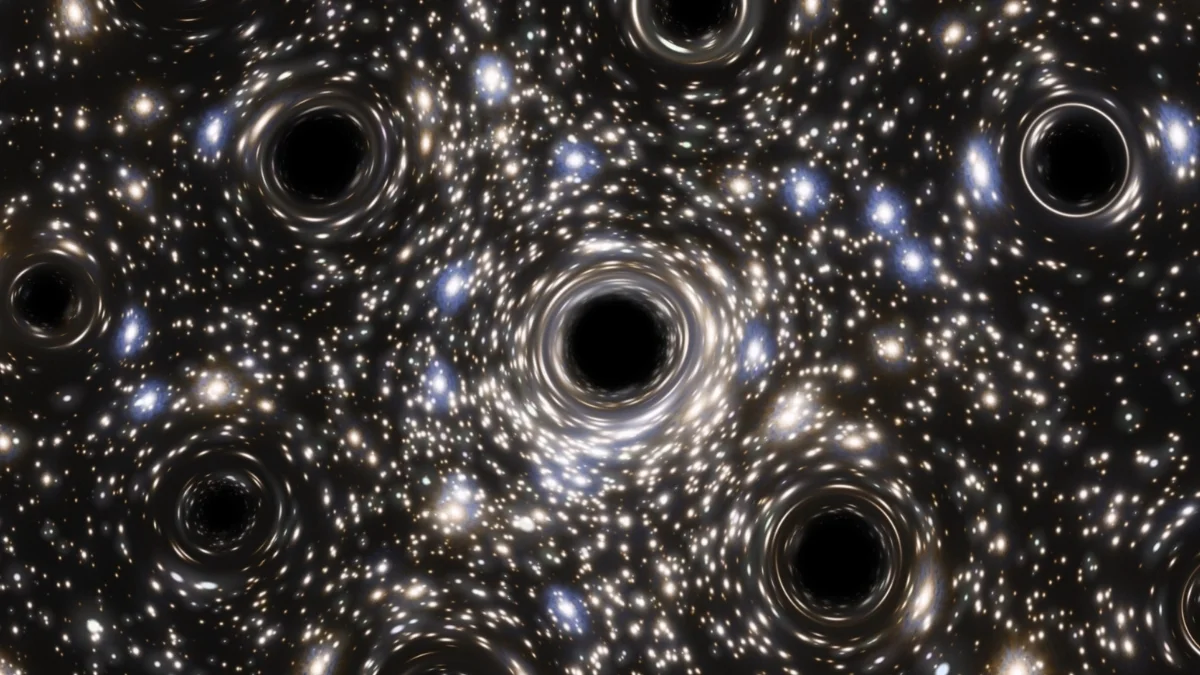
Gaia data and N-body simulations indicate Palomar 5 hosts a substantial population of stellar-mass black holes—over 20% of its mass—which drove stars into its broad tidal stream; the cluster is on track to dissolve in about a billion years, leaving a black-hole–dominated remnant, suggesting globular clusters commonly harbor black holes and are key sites for future black hole mergers, with Palomar 5 acting as a Rosetta Stone for stream formation.

Astronomers catch a rare middleweight black hole shredding a star
astronomy7 months ago

Astronomers catch a rare middleweight black hole shredding a star

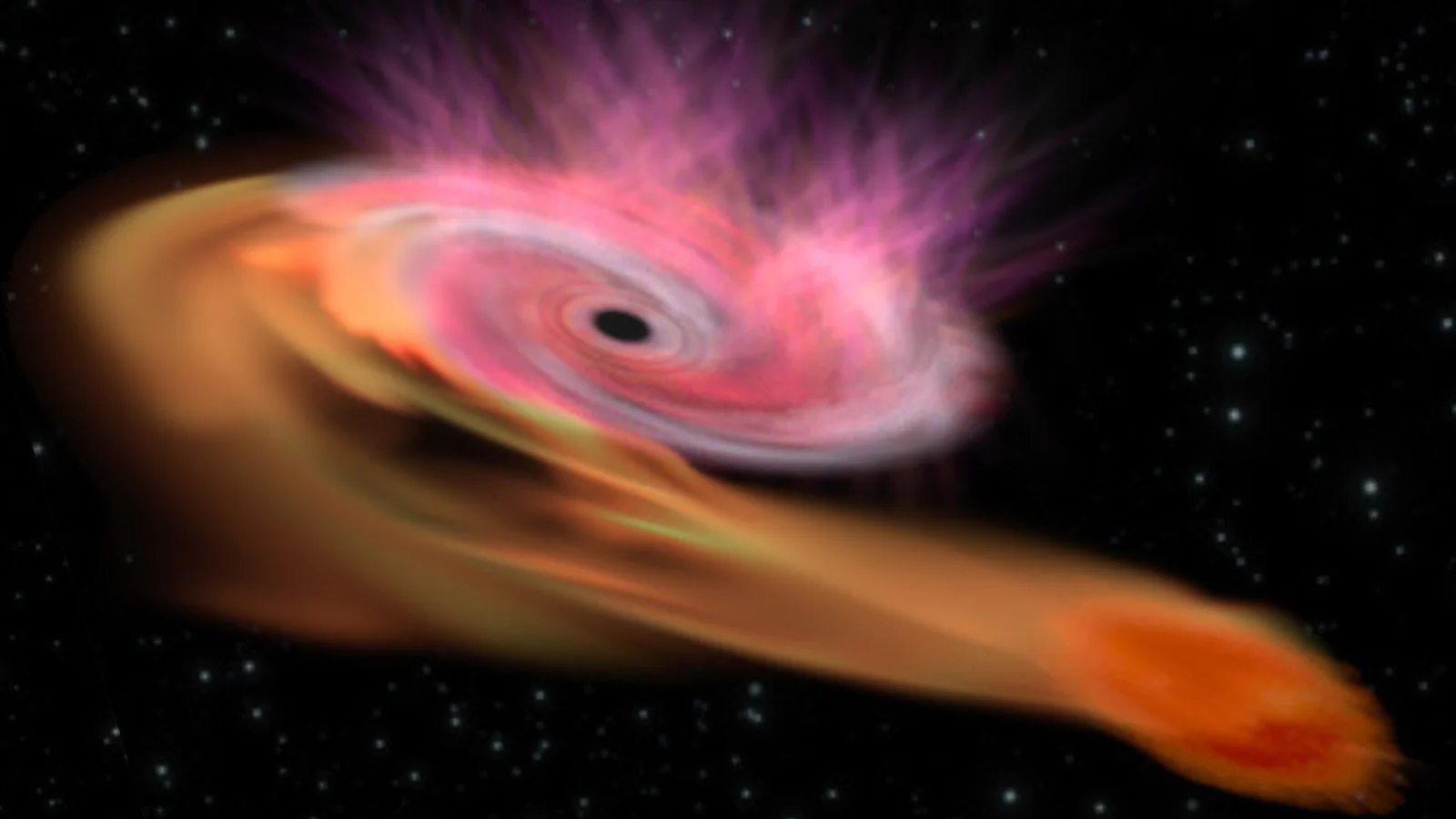
Astronomers identified AT2022zod, an off-nuclear optical flare consistent with a tidal disruption event caused by an intermediate-mass black hole. Spotted in a distant galaxy about 1.5 billion light-years away and lasting roughly a month, its off-center location and short duration suggest the presence of an IMBH outside galactic centers, possibly in a globular cluster or ultracompact dwarf galaxy. This finding adds to evidence for elusive middleweight black holes and points to Rubin Observatory’s LSST as a key tool for discovering more cases.

"NASA's Hubble Telescope Discovers Dazzling Star Cluster in Nearby Galaxy"
astronomy2 years ago

"NASA's Hubble Telescope Discovers Dazzling Star Cluster in Nearby Galaxy"

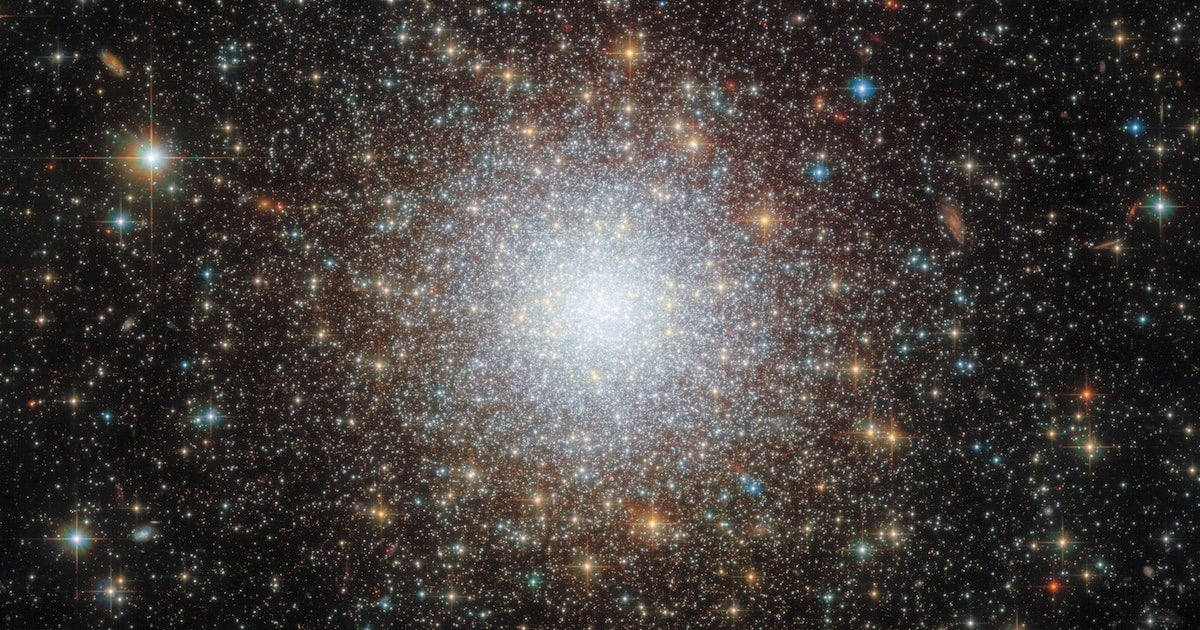
The Hubble Space Telescope has captured an image of the globular cluster NGC 1651 in the Large Magellanic Cloud, showcasing a cluster of stars about 2 billion years old and approximately 120 light-years across. The cluster is generally spherical, with a higher concentration of stars near its center, and the image also features a spiral galaxy amidst the bright stars.

"Faint Radio Signal Suggests Rare 'Missing Link' Black Hole in Ancient Star Cluster"
astronomy2 years ago

"Faint Radio Signal Suggests Rare 'Missing Link' Black Hole in Ancient Star Cluster"

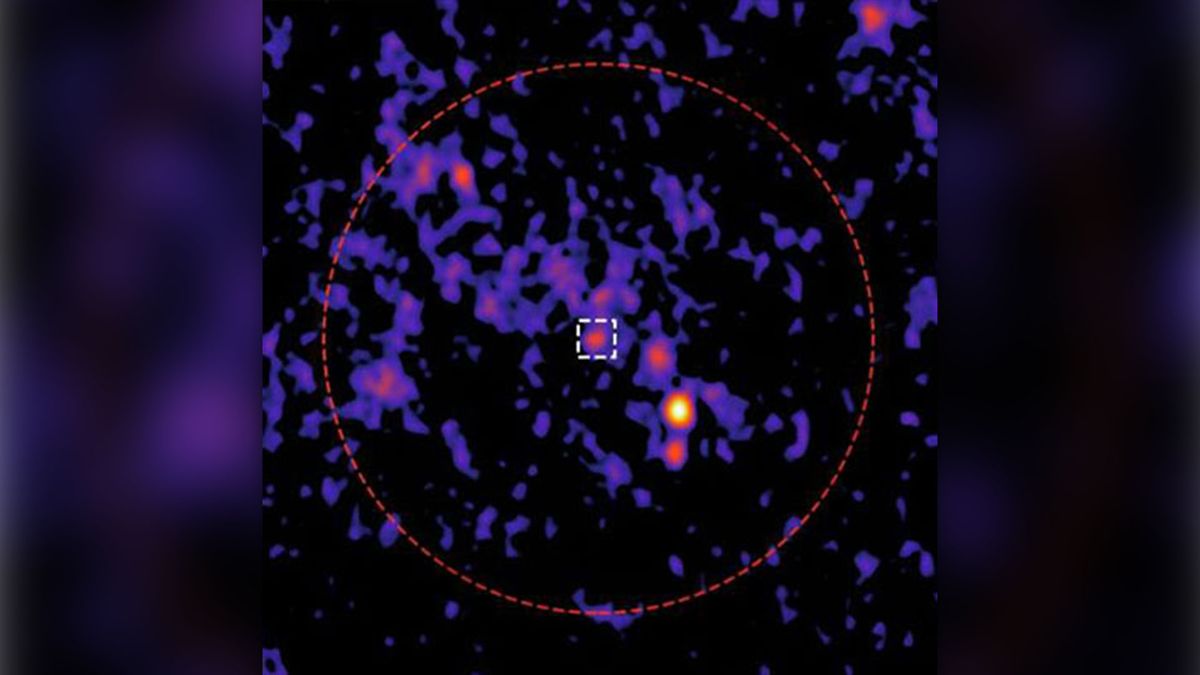
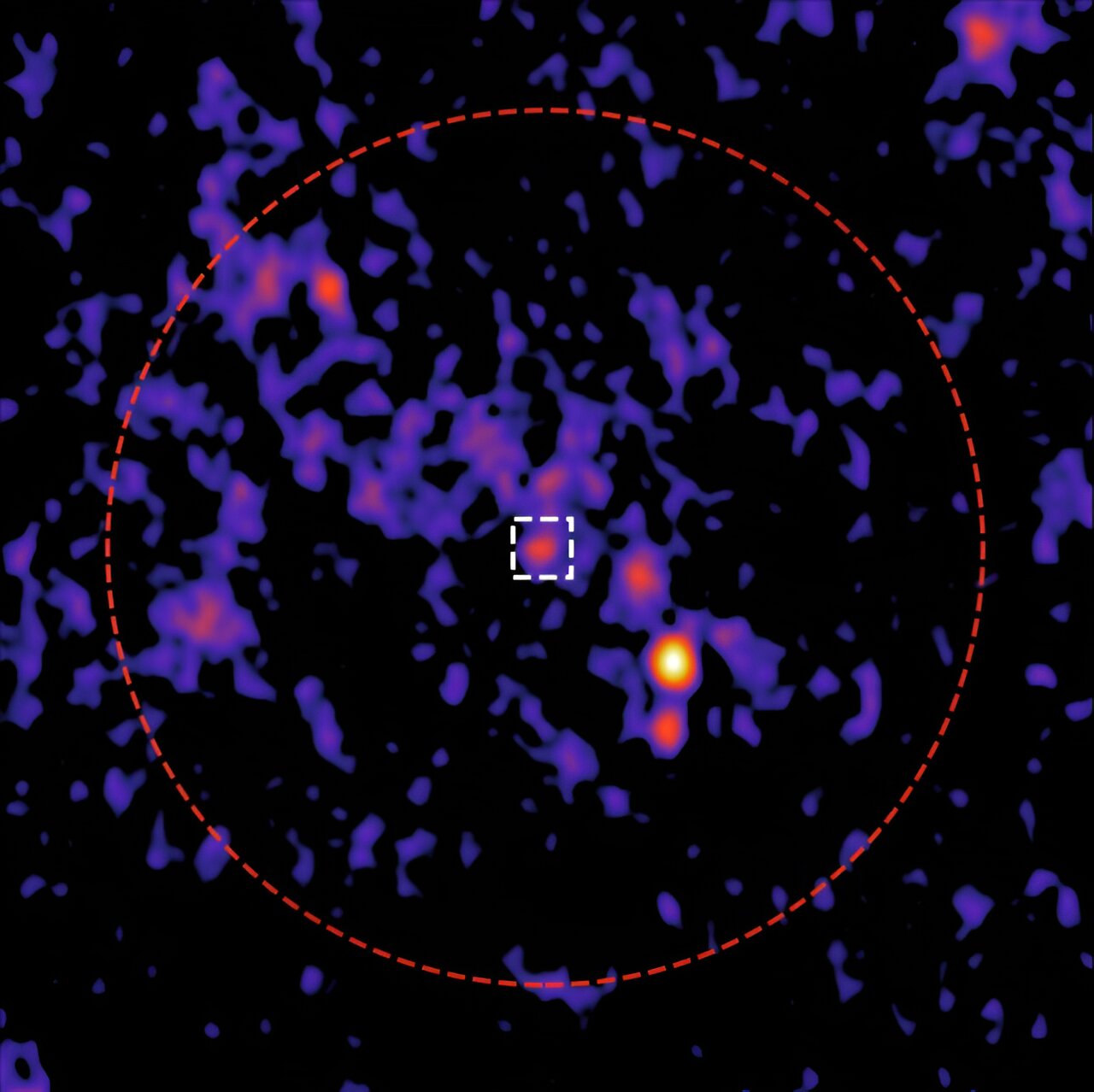
Astronomers have detected a faint radio signal at the center of an ancient globular cluster, possibly originating from a long-hidden black hole or a pulsar. The discovery, made using the Australia Telescope Compact Array, provides a highly sensitive image of the cluster 47 Tucanae, offering potential insights into the existence of intermediate-mass black holes and pulsars. This finding could pave the way for future discoveries using next-generation radio telescopes.

"Astronomers Uncover Enigmatic Cosmic Object Straddling Extreme Boundaries"
astronomy2 years ago

"Astronomers Uncover Enigmatic Cosmic Object Straddling Extreme Boundaries"

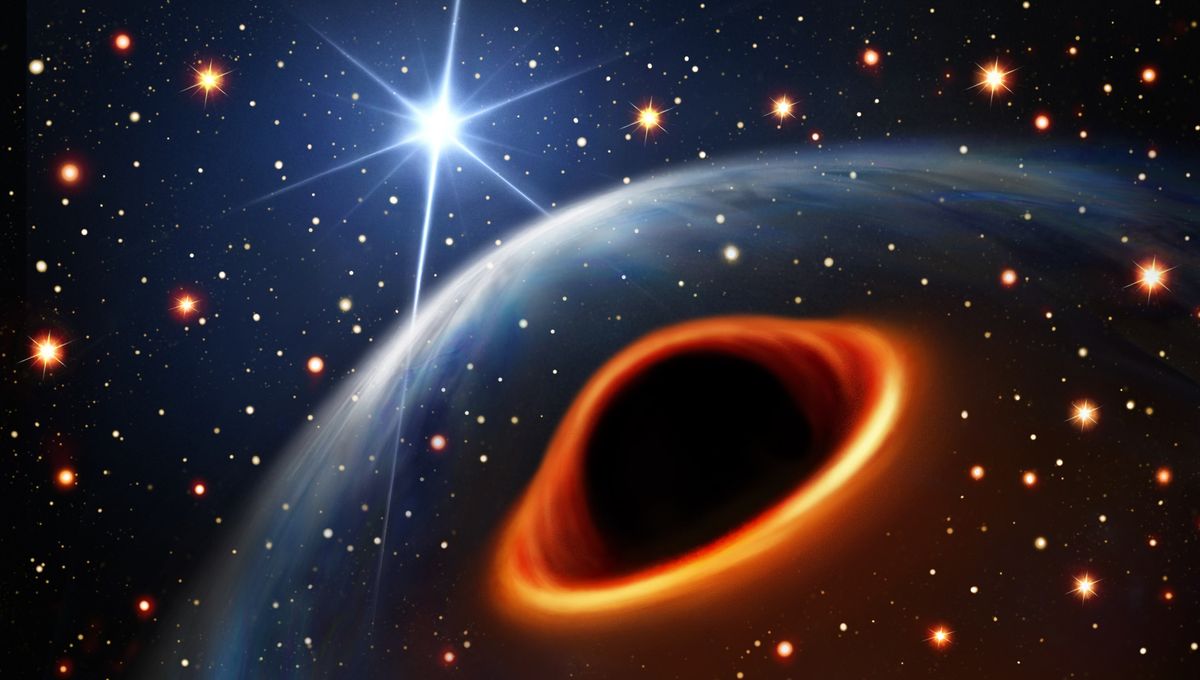
Astronomers have discovered a dense object orbiting a pulsar in a globular cluster 40,000 light-years away, which could be either the heaviest neutron star or the lightest black hole ever observed, challenging the known mass gap. The object's mass falls between the expected ranges for neutron stars and black holes, leading to two extreme possibilities. The researchers believe it may have formed from the merger of two neutron stars and are eager to uncover its true nature, as it could provide valuable insights into neutron stars, black holes, and the physics of extreme densities.

"Rare Black Hole Radio Signal Detected in Ancient Star Cluster"
astronomy2 years ago

"Rare Black Hole Radio Signal Detected in Ancient Star Cluster"

Scientists have detected mysterious radio waves emanating from the heart of the 47 Tucanae globular cluster in the Milky Way, possibly originating from a medium-sized black hole, marking a potential breakthrough discovery. The signal was discovered through 450 hours of observations by the Australia Telescope Compact Array, revealing the most detailed radio image of the cluster to date. If confirmed, this would be the first-ever radio detection of a black hole within a cluster, shedding light on the existence of intermediate-mass black holes and the process of black hole growth.

"Uncovering a Mysterious Radio Signal from an Ancient Star Cluster"
astronomy2 years ago

"Uncovering a Mysterious Radio Signal from an Ancient Star Cluster"

Astronomers have produced the most sensitive radio image ever of the ancient star cluster 47 Tucanae, revealing a previously undiscovered radio signal at its center. The image, created by a global team led by the Curtin University node of the International Centre for Radio Astronomy Research, was compiled from over 450 hours of observations using CSIRO's Australia Telescope Compact Array. The signal could potentially indicate the presence of an intermediate-mass black hole or a pulsar, and the research demonstrates the capabilities of current radio telescopes while hinting at the potential of future telescopes like the SKA.

Hubble's Stunning Discovery: Ancient Star-Stuffed Cluster Revealed
space2 years ago

Hubble's Stunning Discovery: Ancient Star-Stuffed Cluster Revealed

The Hubble Space Telescope has captured a stunning image of an ancient globular cluster located in the Large Magellanic Cloud, about 157,000 light-years from Earth. These clusters, packed with thousands or even millions of stars, provide clues about the early universe. The cluster, called NGC 2210, is estimated to be around 11.6 billion years old, making it just a few billion years younger than the universe itself. Other clusters in the Large Magellanic Cloud may be even older, with some exceeding 13 billion years in age.

Euclid's Telescope Unveils Cosmic Origins and Ancient Cluster
astronomy2 years ago

Euclid's Telescope Unveils Cosmic Origins and Ancient Cluster

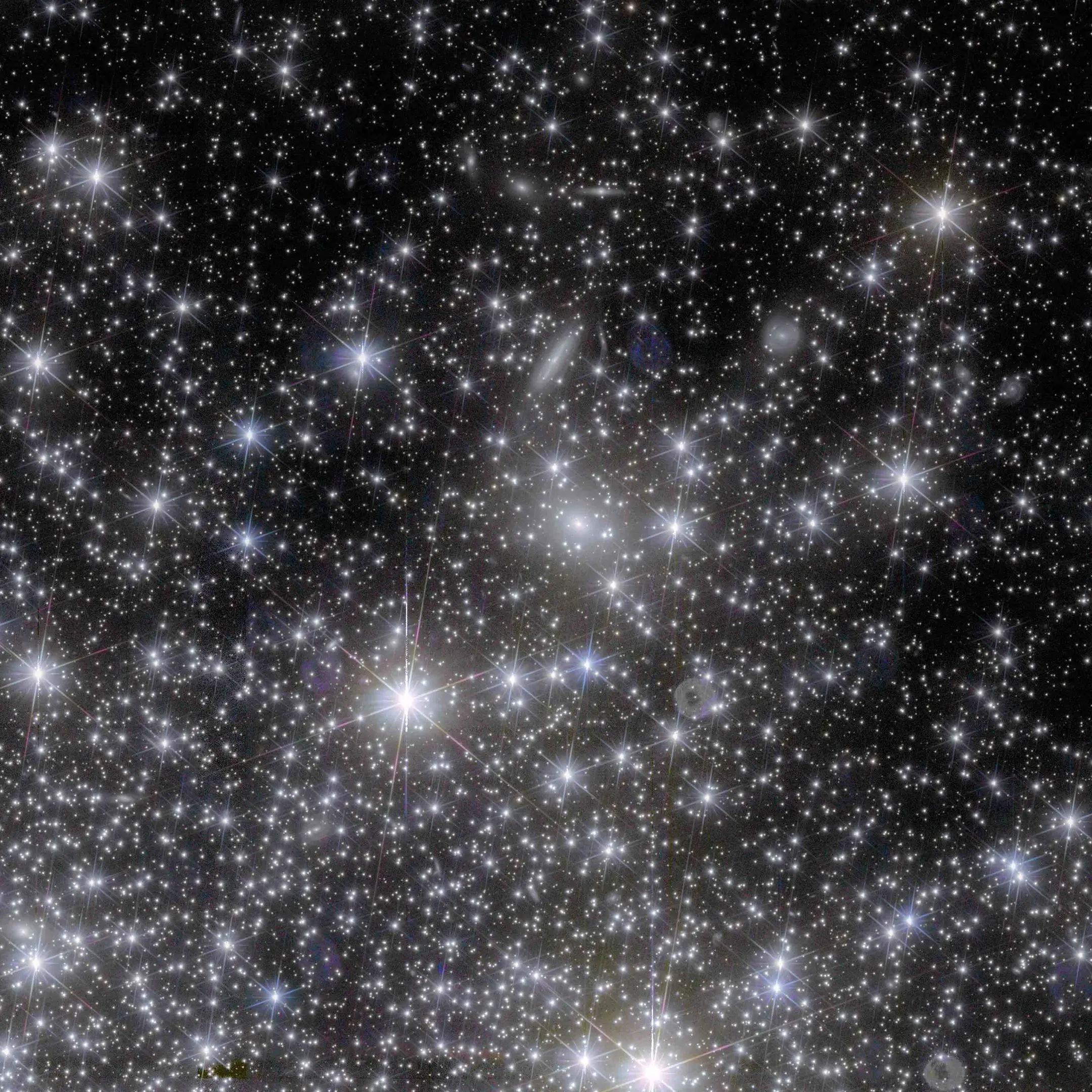
The Euclid telescope has captured a detailed image of the NGC 6397 globular cluster, located in the Milky Way's disc, revealing insights into the galaxy's history. By distinguishing faint stars in the cluster's outer regions, Euclid's capabilities enable the search for tidal tails, which can indicate past interactions and help map dark matter within the Milky Way. This comprehensive imaging may provide new insights into the role of dark matter in the galaxy and the evolution of one of its oldest stellar structures.

"Discovery of Two Pulsars in NGC 6522 Sheds Light on Stellar Evolution"
astronomy3 years ago

"Discovery of Two Pulsars in NGC 6522 Sheds Light on Stellar Evolution"

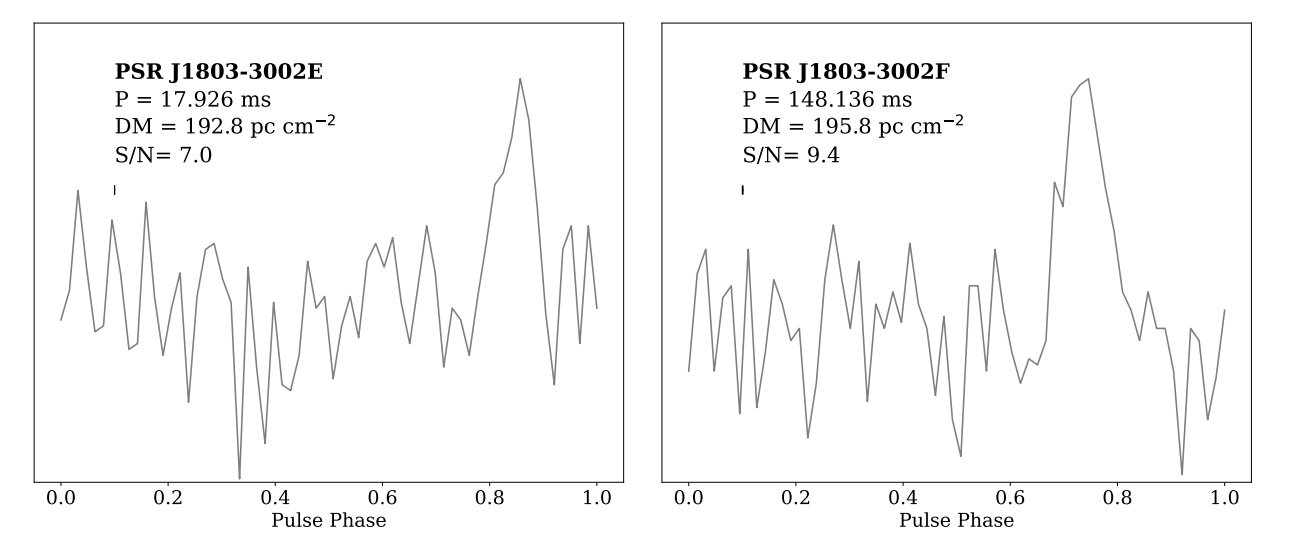
Astronomers using the MeerKAT radio telescope have discovered two new isolated pulsars in the globular cluster NGC 6522. The pulsars, designated as PSR J1803−3002E and PSR J1803−3002F, bring the total number of known pulsars in NGC 6522 to six. PSR J1803−3002E is a mildly recycled millisecond pulsar found near the center of the cluster, while PSR J1803−3002F is a slow pulsar located at a distance from the cluster's center. The discovery suggests a possible link between the formation of these pulsars and the evolutionary stage of the cluster.