
Swift Observatory to Reenter Earth's Atmosphere on Nov. 4 After Failed Rescue
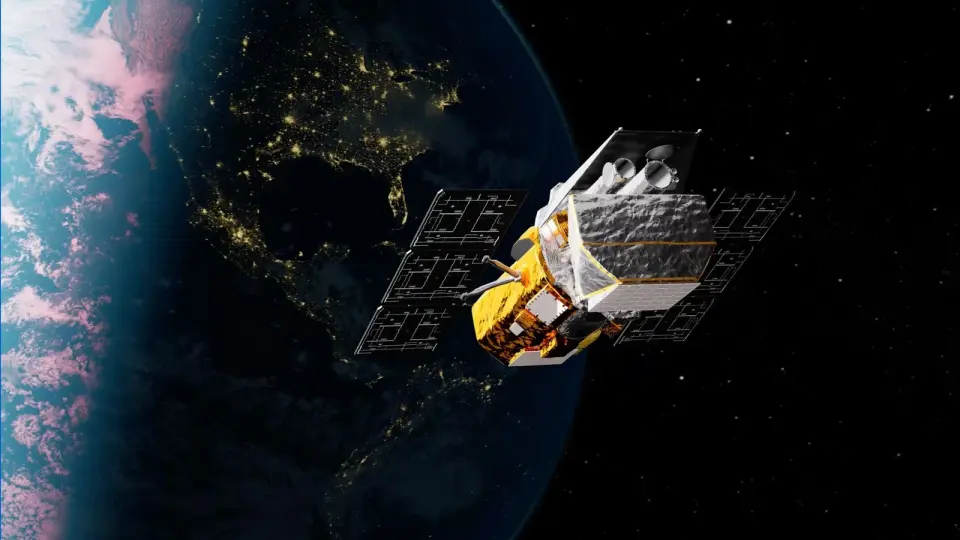
NASA's Neil Gehrels Swift Observatory, a 3,200-pound telescope launched in 2004, is predicted to reenter Earth's atmosphere on November 4, 2026. Most of the spacecraft will burn up, but some components may survive. The risk to humans is estimated at 1 in 2,100.
Key points
- The Neil Gehrels Swift Observatory is expected to reenter Earth's atmosphere on November 4, 2026, with estimates ranging from 3:30 a.m. to 7:42 a.m. EST.
- The 3,200-pound spacecraft, which studied gamma-ray bursts for 22 years, will mostly burn up, but some dense components may survive and land between 20.6 degrees north and south latitude.
- A private rescue mission by Katalyst Space Technologies failed in July 2026, leading to the telescope's uncontrolled decay and eventual shutdown on October 20.
- The risk of harm to people on Earth is estimated at 1 in 2,100, with debris potentially landing in regions including parts of the Americas, Africa, and Asia.
- NASA has issued a request for proposals to extend the life of the Hubble Space Telescope, which faces a similar orbital decay risk by 2032-2033.
Background
The Neil Gehrels Swift Observatory was launched in November 2004 to study gamma-ray bursts and other cosmic explosions. It operated for over 22 years, contributing to more than 7,000 scientific papers. The telescope's orbit began to decay in 2024 due to increased solar activity, leading to a failed rescue mission by Katalyst Space Technologies in July 2026. The observatory was officially shut down on October 20, 2026, after its orbit dropped to 171 miles above Earth.
How outlets are covering it
Live Science and NASA emphasize the imminent reentry and the low risk to humans, while CNN highlights the failed rescue mission and the potential for future satellite servicing efforts. The New York Times focuses on the specific reentry window and the risk assessment. All sources agree on the low risk to humans and the likely burnup of most of the spacecraft, but differ in their emphasis on the failed rescue mission and future implications for other telescopes like Hubble.
Why it matters
The reentry of the Swift Observatory highlights the challenges of managing orbital debris and the need for sustainable space operations. The failed rescue mission underscores the risks and costs of extending the life of aging spacecraft, while the potential for future servicing missions, such as for Hubble, suggests a growing focus on commercial satellite servicing technologies. The low risk to humans, however, reassures the public that such reentries are generally safe.
What to watch
NASA and the U.S. Space Force will continue to monitor the reentry and update predictions as the window draws closer. The agency has also issued a request for proposals to extend the life of the Hubble Space Telescope, which faces a similar orbital decay risk by 2032-2033. The success or failure of future servicing missions will depend on the outcomes of these efforts and the development of new technologies.
- A 3,200-pound NASA spacecraft could fall to Earth tonight Live Science
- A 3,200-pound NASA observatory is careening back toward Earth. Here’s what to know CNN
- A NASA Telescope Is Predicted to Crash Back to Earth Within Hours The New York Times
- NASA’s Swift Observatory to Re-Enter Atmosphere NASA Science (.gov)
- NASA's Swift satellite telescope heads for fiery re-entry 22 years after launch Reuters
Want the full story? Read the original reporting
Read on Live Science