
NASA Confirms 2024 Lunar Impact as Largest Fresh Crater in Solar System
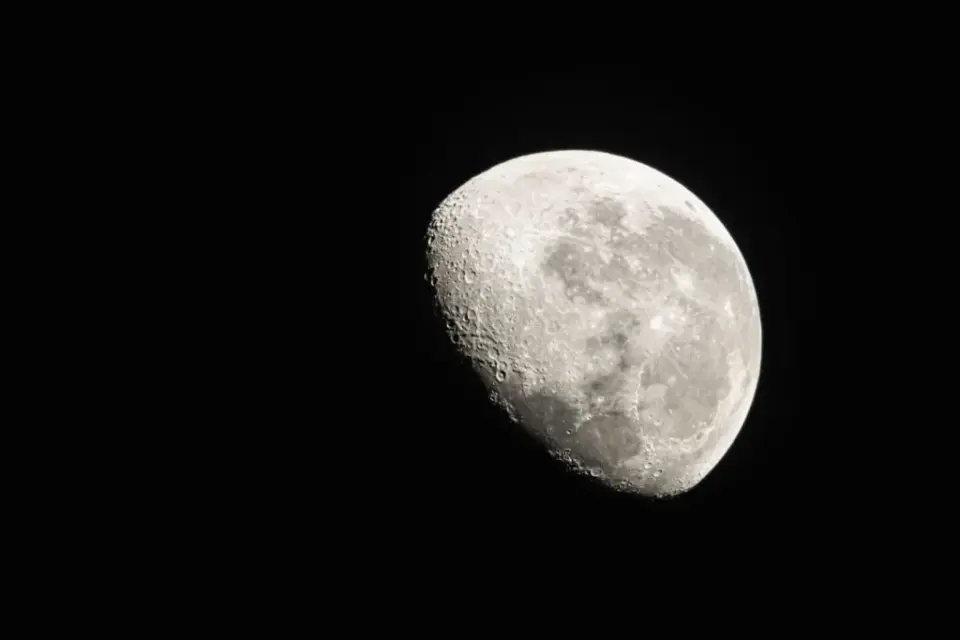
NASA’s Lunar Reconnaissance Orbiter identified McGetchin, a 222-meter-wide crater formed between April 11 and May 22, 2024, as the largest newly formed impact feature in the solar system. Discovered in October 2025 through routine image comparisons, the crater’s bright ejecta and a 4-mile-wide thermal anomaly provide a rare, precisely dated record of impact physics. The findings, published in Science Advances, highlight how distant impacts alter lunar regolith, posing risks for future surface infrastructure.
Key points
- McGetchin crater is 222 meters wide and 43 meters deep, located on the Moon’s eastern limb near a geological boundary between basalt and highland crust.
- The impact occurred between April 11 and May 22, 2024, making it the largest contemporary crater with a formation date measured in weeks rather than geological eras.
- LRO’s Diviner instrument detected a 4-mile-wide thermal anomaly around the crater, approximately 9 degrees Celsius cooler at night due to impact-loosened regolith.
- The crater was discovered on October 24, 2025, by image specialist Robert Wagner during a routine check of Wide-Angle Camera data, revealing a bright ejecta pattern.
- Models estimate such impacts occur once every 132 years, though this is a statistical average rather than a fixed schedule.
Background
This discovery follows recent attention to human-made impacts, such as the 2026 SpaceX Falcon upper-stage crash that created an 18-meter crater. While those events involved debris, McGetchin is a natural impact from an asteroid or comet fragment, offering a pristine baseline for studying natural crater formation without anthropogenic interference.
How outlets are covering it
Space Daily and NASA emphasize the scientific value of McGetchin’s precise dating and thermal data for modeling impact physics. Futura highlights the 'once-in-a-century' rarity and the implications for rover traction on disturbed regolith. All sources agree on the discovery method via LRO, but NASA and Space Daily stress the geological boundary context, while Futura focuses on the statistical frequency of such events.
Why it matters
The precise dating and thermal mapping of McGetchin provide a unique dataset for understanding how impacts alter lunar surface properties. This is critical for designing future lunar infrastructure, as distant impacts can redistribute particles and change regolith mechanics far beyond the crater rim, affecting equipment durability and rover mobility.
What to watch
Researchers plan to publish further modeling of the impactor’s size, speed, and origin. Continued LRO monitoring will track the gradual darkening of McGetchin’s ejecta due to space weathering, providing long-term data on lunar surface evolution.
- The Moon’s freshest craters are recognisable by bright rays of newly excavated rock and dust, which space weathering gradually darkens—and the new 222-metre McGetchin crater is so fresh that its ejecta still gleams, having formed sometime between 11 Ap Space Daily
- A NASA spacecraft just found a giant new crater on the moon. Here's why everyone's talking about the 'once-in-a-century' discovery space.com
- NASA orbiter spots record-sized new crater on the Moon Futura, le média qui explore le monde
- NASA’s Moon Orbiter Spots New, ‘Once-in-Century’ Moon Crater science.nasa.gov
- Asteroid the size of six-storey building crashed into moon in 'once-in-a-lifetime' moment, says NASA Sky News
Want the full story? Read the original reporting
Read on Space Daily